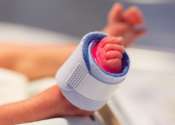
Children who had in-utero exposure to ischemic-hypoxic conditions, situations during which the brain is deprived of oxygen, were significantly more likely to develop attention deficit hyperactivity disorder later in life ...
where the brain is starved of oxygen around the time of delivery is normally treated by cooling the infant, but this only helps one baby in nine. New research from the Sahlgrenska Academy at the University ...
Oct 25, 2011
4 / 5 (1) |
0
Intrauterine hypoxia (IH, and birth asphyxia) occur when the fetus is deprived of an adequate supply of oxygen. IH is used to describe inadequate oxygen availability during the gestation period, birth asphyxia (also referred to as perinatal asphyxia or Asphyxia neonatorum ) can result from inadequate supply of oxygen immediately prior to, during or just after delivery. There is considerable controversy over the diagnosis of birth asphyxia due to medicolegal reasons. Because of its lack of precision, the term is eschewed in modern obstetrics.
IH may be due to a variety of reasons such as cord prolapse, cord occlusion, placental infarction and maternal smoking. Intrauterine growth restriction (IUGR) may cause or be the result of hypoxia. Birth asphyxia may result due to prolonged labor, breech delivery in full-term infants; placental abruption, and maternal sedation in premature infants. Oxygen deprivation is the most common cause of perinatal brain injury.
Intrauterine hypoxia and birth asphyxia can cause hypoxic ischemic encephalopathy which is cellular damage that occurs within the central nervous system (the brain and spinal cord) from inadequate oxygen. This results in an increased mortality rate, including an increased risk of Sudden infant death syndrome (SIDS). Oxygen deprivation in the fetus and neonate have been implicated as either a primary or as a contributing risk factor in numerous neurological and neuropsychiatric disorders such as epilepsy, ADHD, eating disorders and cerebral palsy. " The problem of perinatal brain injury, in terms of the costs to society and to the affected individuals and their families, is extraordinary." (Yafeng Dong, PhD)
Kick back and shut your eyes. Now stop thinking. You have just put your brain into what neuroscientists call its resting state. What the brain is doing when an individual is not focused on the outside world ...
Oscar Wilde called memory "the diary that we all carry about with us." Now a team of scientists has developed a way to see where and how that diary is written.
Diapocynin, a synthetic molecule derived from a naturally occurring compound (apocynin), has been found to protect neurobehavioral function in mice with Parkinson's Disease symptoms by preventing deficits in motor coordination.
(Medical Xpress)—A team of researchers from the U.S. and Scotland has developed a new type of retinal prostheses designed to restore sight to blind patients. In their paper published in the journal Nature Co ...
More than 1,500 pedestrians were estimated to be treated in emergency rooms in 2010 for injuries related to using a cell phone while walking, according to a new nationwide study.
(Medical Xpress)—Nitrous oxide—best known as laughing gas—is one of the world's oldest and most widely used anesthetics. Despite its popularity, however, experts have questioned its impact on the risk ...
(Medical Xpress)—There's a reason osteoarthritis is often called wear-and-tear arthritis: Repeated stress on joints over time results in degeneration of the soft cartilage that normally distributes loads ...
Women say they place a priority on a potential partner's earning prospects, and men claim to value a potential partner's physical attractiveness; these sex differences have been widely studied by psychologists for decades.
A study of vocal impersonations has shown for the first time how speech production and voice perception systems in the brain interact to influence the way our voices sound. The research, supported by the ...