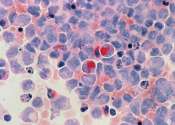
Colon Cancer

Study finds experimental drug inhibits growth in all stages of common kidney cancer

Researchers at Mayo Clinic's campus in Florida have discovered a protein that is overly active in every human sample of kidney cancer they examined. They also found that an experimental drug designed to block the protein's ...

Cancer created Apr 30, 2013 | popularity not rated yet | comments 0

Visceral fat causally linked to intestinal cancer

Visceral fat, or fat stored deep in the abdominal cavity, is directly linked to an increased risk for colon cancer, according to data from a mouse study published in Cancer Prevention Research, a journal of the American Associ ...

Cancer created Mar 06, 2013 | popularity 5 / 5 (1) | comments 0 | with audio podcast

Molecular switch identified that controls key cellular process

The body has a built-in system known as autophagy, or 'self-eating,' that controls how cells live or die. Deregulation of autophagy is linked to the development of human diseases, including neural degeneration and cancer.

Medical research created Aug 01, 2012 | popularity 5 / 5 (1) | comments 0 | with audio podcast

Women smokers may have greater risk for colon cancer than men

Smoking increased the risk for developing colon cancer, and female smokers may have a greater risk than male smokers, according to data published in Cancer Epidemiology, Biomarkers & Prevention, a journal of the American Associ ...

Cancer created Apr 30, 2013 | popularity not rated yet | comments 0

Study identifies enzymes needed to mend tissue damage after inflammation

A major risk factor for colon cancer — the second leading cause of cancer death in the United States — is chronic inflammation of the colon. Nearly 10 percent of patients with inflammatory bowel ...

Inflammatory disorders created Jun 14, 2012 | popularity 5 / 5 (3) | comments 0 | with audio podcast

Advanced cancers destined to recur after treatment with single drugs that 'target' tumor cells: study

Targeted cancer cell therapies using man-made proteins dramatically shrink many tumors in the first few months of treatment, but new research from Johns Hopkins scientists finds why the cells all too often become resistant, ...

Cancer created Jun 13, 2012 | popularity 4 / 5 (1) | comments 0 | with audio podcast

Spanish group patents an automatic suture system for colon cancer operations

The Spanish research centre Innotex has developed a device that enables automatic suturing of the large intestine after being sectioned during cancer colon surgery. The novelty of the system, called Insewing, ...

Cancer created Apr 25, 2013 | popularity not rated yet | comments 0

Scientists pair blood test and gene sequencing to detect cancer

Scientists at the Johns Hopkins Kimmel Cancer Center have combined the ability to detect cancer DNA in the blood with genome sequencing technology in a test that could be used to screen for cancers, monitor cancer patients ...

Cancer created Nov 28, 2012 | popularity not rated yet | comments 0 | with audio podcast

Inhibiting enzymes in the cell may lead to development and proliferation of cancer cells

Blocking certain enzymes in the cell may prevent cancer cell division and growth, according to new findings from researchers at the Graduate School of Biomedical Sciences at the Icahn School of Medicine at Mount Sinai. The ...

Cancer created Apr 25, 2013 | popularity 5 / 5 (1) | comments 1

'Two-faced' cells discovered in colon cancer: Immune cells can suppress or promote tumor growth

Northwestern Medicine researchers have discovered a "two-faced" group of cells at work in human colon cancer, with opposing functions that can suppress or promote tumor growth. These cells are a subset of T-regulatory (Treg) ...

Cancer created Dec 13, 2012 | popularity not rated yet | comments 0 | with audio podcast

Scientists identify a new layer of complexity within colon cancer

Cancer scientists led by Dr. John Dick at the Princess Margaret Cancer Centre have found a way to follow single tumour cells and observe their growth over time. By using special immune-deficient mice to propagate human colorectal ...

Cancer created Dec 13, 2012 | popularity not rated yet | comments 0 | with audio podcast

Rice-cell cocktail kills cancer cells, leaves normal cells alone

(Medical Xpress)—Juice from rice cells knocked out two kinds of human cancer cells as well or better than the potent anti-cancer drug Taxol in lab tests conducted by a Michigan Technological University ...

Cancer created Jan 14, 2013 | popularity 4.9 / 5 (8) | comments 0 | with audio podcast

Researchers reveal a chemo-resistant cancer stem cell as cancer's 'Achilles' heel'

Scientists at Mount Sinai School of Medicine have discovered a subpopulation of cells that display cancer stem cell properties and resistance to chemotherapy, and participate in tumor progression. This breakthrough could ...

Cancer created Sep 10, 2012 | popularity not rated yet | comments 0

Study: Colonoscopy cuts colon cancer death risk

(AP) -- Millions of people have endured a colonoscopy, believing the dreaded exam may help keep them from dying of colon cancer. For the first time, a major study offers clear evidence that it does.

Cancer created Feb 22, 2012 | popularity not rated yet | comments 0

Over 50? Checklist may predict if you'll be alive in 10 years

(HealthDay)—A simple checklist could help doctors estimate whether an older patient will be alive 10 years from now, according to a new study.

Health created Mar 05, 2013 | popularity 3 / 5 (3) | comments 2 | with audio podcast


Colorectal cancer, commonly known as bowel cancer, is a cancer from uncontrolled cell growth in the colon, rectum, or appendix. Symptoms typically include rectal bleeding and anemia which are sometimes associated with weight loss and changes in bowel habits.

Most colorectal cancer occurs due to lifestyle and increasing age with only a minority of cases associated with underlying genetic disorders. It typically starts in the lining of the bowel and if left untreated, can grow into the muscle layers underneath, and then through the bowel wall. Screening is effective at decreasing the chance of dying from colorectal cancer and is recommended starting at the age of 50 and continuing until a person is 75 years old. Localized bowel cancer is usually diagnosed through sigmoidoscopy or colonoscopy.

Cancers that are confined within the wall of the colon are often curable with surgery while cancer that has spread widely around the body is usually not curable and management then focuses on extending the person's life via chemotherapy and improving quality of life. Colorectal cancer is the fourth most commonly diagnosed cancer in the world, but it is more common in developed countries. Around 60% of cases were diagnosed in the developed world. It is estimated that worldwide, in 2008, 1.23 million new cases of colorectal cancer were clinically diagnosed, and that it killed 608,000 people.

This text uses material from Wikipedia and is available under the GNU Free Documentation License.

Latest Spotlight News

Researchers identify first drug targets in childhood genetic tumor disorder

Two mutations central to the development of infantile myofibromatosis (IM)—a disorder characterized by multiple tumors involving the skin, bone, and soft tissue—may provide new therapeutic targets, according to researchers ...

Hormone levels may provide key to understanding psychological disorders in women

Women at a particular stage in their monthly menstrual cycle may be more vulnerable to some of the psychological side-effects associated with stressful experiences, according to a study from UCL.

Engineered cytomegalovirus protects monkeys from HIV equivalent

(Medical Xpress)—A new study by researchers in the US has shown that an ancient virus can be modified to help in the fight against the simian immunodeficiency virus SIV, which is the equivalent in monkeys ...

Going live: Immune cell activation in multiple sclerosis

Biological processes are generally based on events at the molecular and cellular level. To understand what happens in the course of infections, diseases or normal bodily functions, scientists would need to ...

Controlling mood through the motions of mitochondria

(Medical Xpress)—Regulating the distribution of power in neurons is done by a system that makes the national electric grid look simple by comparison. Each neuron has several thousand mitochondria confined ...

Depression raises diabetics' risk of severe low blood sugar episodes

(Medical Xpress)—Patients with diabetes who are depressed are much more likely to develop episodes of dangerously low blood sugars, or hypoglycemia, than are those who are not depressed, a new study has ...

Diabetes' genetic underpinnings can vary based on ethnic background, studies say

Ethnic background plays a surprisingly large role in how diabetes develops on a cellular level, according to two new studies led by researchers at the Stanford University School of Medicine.

Scientists discover cinnamon compounds' potential ability to prevent Alzheimer's

Cinnamon: Can the red-brown spice with the unmistakable fragrance and variety of uses offer an important benefit? The common baking spice might hold the key to delaying the onset of –– or warding off ...

Study reveals new mechanism for estrogen suppression of liver lipid synthesis

By discovering the new mechanism by which estrogen suppresses lipid synthesis in the liver, UC Irvine endocrinologists have revealed a potential new approach toward treating certain liver diseases.

Ferrets, pigs susceptible to H7N9 avian influenza virus

Chinese and U.S. scientists have used virus isolated from a person who died from H7N9 avian influenza infection to determine whether the virus could infect and be transmitted between ferrets. Ferrets are often used as a mammalian ...