Sickle Cell Anemia

Chicago woman cured of sickle cell disease

(Medical Xpress) -- Chicagoan Ieshea Thomas is the first Midwest patient to receive a successful stem cell transplant to cure her sickle cell disease without chemotherapy in preparation for the transplant.

Jun 19, 2012
popularity 5 / 5 (3) | comments 0

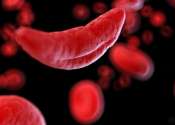
Sickle-cell disease (SCD), or sickle-cell anaemia (or anemia, SCA) or drepanocytosis, is an autosomal recessive genetic blood disorder with overdominance, characterized by red blood cells that assume an abnormal, rigid, sickle shape. Sickling decreases the cells' flexibility and results in a risk of various complications. The sickling occurs because of a mutation in the hemoglobin gene. Life expectancy is shortened. In 1994, in the US, the average life expectancy of persons with this condition was estimated to be 42 years in males and 48 years in females, but today, thanks to better management of the disease, patients can live into their 50s or beyond. In the UK, the current life expectancy is estimated to be 53–60 years of age.

Sickle-cell disease, usually presenting in childhood, occurs more commonly in people (or their descendants) from parts of tropical and sub-tropical regions where malaria is or was common. One-third of all indigenous inhabitants of Sub-Saharan Africa carry the gene, because in areas where malaria is common, there is a fitness benefit in carrying only a single sickle-cell gene (sickle cell trait). Those with only one of the two alleles of the sickle-cell disease, while not totally resistant, are more tolerant to the infection and thus show less severe symptoms when infected.

The prevalence of the disease in the United States is approximately 1 in 5,000, mostly affecting Americans of Sub-Saharan African descent, according to the National Institutes of Health. In the United States, about 1 out of 500 African-American children born will have sickle-cell anaemia.

Sickle-cell anaemia is the name of a specific form of sickle-cell disease in which there is homozygosity for the mutation that causes HbS. Sickle-cell anaemia is also referred to as "HbSS", "SS disease", "haemoglobin S" or permutations thereof. In heterozygous people, who have only one sickle gene and one normal adult haemoglobin gene, it is referred to as "HbAS" or "sickle cell trait". Other, rarer forms of sickle-cell disease include sickle-haemoglobin C disease (HbSC), sickle beta-plus-thalassaemia (HbS/β+) and sickle beta-zero-thalassaemia (HbS/β0). These other forms of sickle-cell disease are compound heterozygous states in which the person has only one copy of the mutation that causes HbS and one copy of another abnormal haemoglobin allele.

The term disease is applied, because the inherited abnormality causes a pathological condition that can lead to death and severe complications. Not all inherited variants of haemoglobin are detrimental, a concept known as genetic polymorphism.

This text uses material from Wikipedia licensed under CC BY-SA

Latest Spotlight News

Mindfulness can increase wellbeing and reduce stress in school children

Mindfulness – a mental training that develops sustained attention that can change the ways people think, act and feel – could reduce symptoms of stress and depression and promote wellbeing among school children, according ...

Efficient signal transmission at sensory system synapses

(Medical Xpress)—Neurophysiologist like to think of neurons as communicating with spikes. If that were the whole story, it might be possible to imagine spike codes which could then be used to estimate the ...

New MERS virus spreads easily, deadlier than SARS, researchers show

A mysterious new respiratory virus that originated in the Middle East spreads easily between people and appears more deadly than SARS, doctors reported Wednesday after investigating the biggest outbreak in ...

Fate of the heart: Researchers track cellular events leading to cardiac regeneration

In a study published in the June 19 online edition of the journal Nature, a scientific team led by researchers from the University of California, San Diego School of Medicine visually monitored the dynami ...

A shot in the arm for old antibiotics: Silver boosts antibiotics

Slipping bacteria some silver could give old antibiotics new life, scientists at the Wyss Institute for Biologically Inspired Engineering at Harvard University reported June 19 in Science Translational Me ...

Researchers explain how neural stem cells create new and varied neurons

A new study examining the brains of fruit flies reveals a novel stem cell mechanism that may help explain how neurons form in humans. A paper on the study by researchers at the University of Oregon appeared ...

Restoring appropriate movement to immune cells may save seriously burned patients

Advances in emergency medicine and trauma surgery have had a significant impact on survival of patients in the days immediately after major injuries, including burns. Patients who survive the immediate aftermath of their ...

Scientists create way to see structures that store memories in living brain

Oscar Wilde called memory "the diary that we all carry about with us." Now a team of scientists has developed a way to see where and how that diary is written.

Brain can plan actions toward things the eye doesn't see

People can plan strategic movements to several different targets at the same time, even when they see far fewer targets than are actually present, according to a new study published in Psychological Science, a jour ...

Validating maps of the brain's resting state

Kick back and shut your eyes. Now stop thinking. You have just put your brain into what neuroscientists call its resting state. What the brain is doing when an individual is not focused on the outside world ...