Pancreas betrayed by 'double agent'
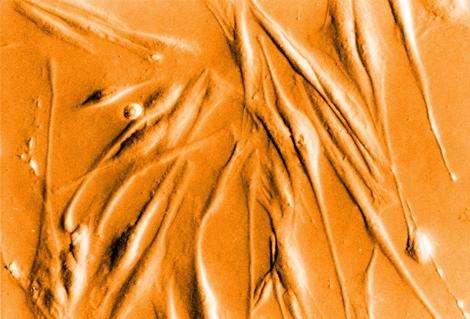
(Medical Xpress) -- Stellate cells, a type of cell in the pancreas which normally helps the body respond to damage or disease of the pancreas, can act as a double agent when it comes to cancer.
These mysterious cells become ‘partners in crime’ with pancreatic cancer cells, Oxford University researchers have shown, stimulating growth of the cancer cells and protecting them against radiotherapy.
The research, led by Professor Thomas Brunner at the Gray Institute for Radiation Oncology and Biology, suggests that developing drugs to remove specific communication lines between the pancreatic cancer cells and the stellate cells could improve patients’ response to radiotherapy in the future.
Most people diagnosed with pancreatic cancer are told that they may have less than 1 year to live. Part of the reason is that by the time someone is diagnosed, the cancer is often quite advanced. Cancer Research UK figures show that around 20 in every 100 people diagnosed with pancreatic cancer live for 1 year or more, and that only 5 out of every 100 people live for more than 5 years.
In terms of treatments, surgery is currently the only way to cure the disease – but less than 20% of all patients can be operated on, and only 5% of these patients will be alive 5 years later. Chemotherapy helps to prolong survival after an operation, and is also used when the cancer has spread elsewhere. Radiotherapy is used along with chemotherapy in patients without spread of the disease to other organs and where surgery isn’t an option.
Stellate cells – so-called because they are star shaped – normally make up around 4% of the cells in the pancreas. But upon any type of trauma (pancreatitis as well as cancer) these cells can drive an inflammatory reaction that leads to the formation of a fibrous mass. It can be up to 90% of the mass of a pancreatic tumour, for example.
"It’s like a non-healing wound," says Thomas Brunner. His group has just published the first paper demonstrating the influence of the pancreatic stellate cells on how effective radiotherapy is in destroying the cancer cells. The results can be found in the journal Cancer Research.
"We’ve tended to be so focused on the cancer that we’ve neglected what’s around,’ he adds. ‘Sherlock Holmes would not be impressed. We have forgotten there may be more to the disease in the environment surrounding the tumor."
The group looked at the survival of pancreatic cancer cells in the lab when dosed with radiation. When the cancer cells were co-cultured with the noncancerous stellate cells, the radiation had far less effect in killing off the cancer cells.
In mouse models, tumor growth was faster with the pancreatic stellate cells present and the stellate cells provided something of a protective shield, reducing the effect of radiotherapy on the cancer.
"It turns out that stellate cells are partners in crime with the cancer cells," says Professor Brunner. "They actively help the tumor cells and have a protective effect against radiotherapy.
"While they normally help defend the pancreas against injury – wound healing is very critical – this response needs to stop at some point or it is harmful. In pancreatic cancer, this wound-healing response becomes active forever and that’s counterproductive in the end."
The researchers looked at a number of signalling pathways that might be responsible for this effect by enabling the cancer cells and the stellate cells to communicate. They found that some molecules on the surface of the cells called integrins were likely to be involved.
"Blocking the integrin signalling gets rid of any protective effect against radiotherapy,’ says Thomas Brunner. ‘By finding the mechanism behind this effect, we ultimately may be able to develop a drug to target this process and improve the outcome of radiotherapy."


