New procedure treats atrial fibrillation
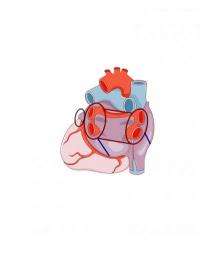
Doctors at Washington University School of Medicine in St. Louis are performing a new procedure to treat atrial fibrillation, a common irregular heartbeat.
Available at only a handful of U.S. medical centers, this "hybrid" procedure combines minimally invasive surgical techniques with the latest advances in catheter ablation, a technique that applies scars to the heart's inner surface to block signals causing the heart to misfire. The two-pronged approach gives doctors access to both the inside and outside of the heart at the same time, helping to more completely block the erratic electrical signals that cause atrial fibrillation.
Atrial fibrillation affects more than 2 million Americans, a number that continues to increase as the population ages. While not fatal in itself, patients who suffer from atrial fibrillation are at increased risk of stroke and congestive heart failure. And many, especially those who feel the fibrillations, have shortness of breath, chest pain, fatigue and feelings of anxiety, among other problems.
"For some patients, it's a difficult way to live," says Phillip S. Cuculich, MD, assistant professor of medicine at Washington University School of Medicine in St. Louis and a cardiac electrophysiologist who treats patients with atrial fibrillation at Barnes-Jewish Hospital.
Atrial fibrillation occurs when the smaller upper chambers of the heart, called atria, get irregular electrical signals that disrupt the coordinated pumping of blood through the heart to the rest of the body. Instead of a normal beat, these signals cause weak flutters that prevent adequate blood flow to the ventricles, the heart's main pumps.
Despite its prevalence, atrial fibrillation remains tricky to treat. Medications that maintain a normal heart rhythm often stop working after a period of time.
When medication is no longer effective, doctors typically recommend catheter ablation, which involves threading long, thin tubes through a vein in the groin into the heart. The tips of these catheters can be heated, allowing doctors to perform a series of ablations, or burns, on the heart's inner surface. The goal of ablation therapy is to create scar tissue that isolates the irregular electrical signals and blocks them from spreading over the heart and causing fibrillation. After a catheter ablation procedure, about 70 percent of patients remain free of symptoms after one year.
Although success rates for catheter ablation are better than medication, catheter ablation does not always work. Some patients may require a second or third procedure to achieve a successful result.
"The heart is a remarkable thing," Cuculich says, "It's very sturdy and can reconnect across those ablation lines."
For hard-to-treat patients, doctors have recommended the Cox-Maze surgical procedure, developed in 1987 by James L. Cox, MD, at Washington University.
The Cox-Maze surgical procedure has a high success rate and is considered the gold standard of atrial fibrillation treatment. The original Cox-Maze procedure has been refined by Ralph J. Damiano Jr., MD, the John M. Shoenberg Professor of Surgery at Washington University, and is effective in 90 percent of patients who undergo it. Damiano has made the procedure easier to perform and more widely available. But many patients consider it too invasive to treat their atrial fibrillation.
"If you have other cardiac surgery that you need, like bypass surgery or valve surgery, and you have atrial fibrillation, the Cox-Maze procedure is an excellent choice to do at the same time," Cuculich says. "But most of my patients just have atrial fibrillation."
To better help these patients, the new hybrid procedure attempts to combine the success rates of the Cox-Maze procedure with the minimally invasive nature and shorter recovery times associated with catheter ablation.
The key is blocking signals that cause the erratic rhythm from both inside and outside the heart at the same time. Because catheters enter through a vein, electrophysiologists only have access to the inside of the heart. A surgeon, in contrast, can provide access to the outside.
"By applying the energy to make scars from both the inside and outside of the heart, we're better able to achieve a full-thickness ablation," says Hersh S. Maniar, MD, assistant professor of surgery at the School of Medicine who performs the new hybrid procedure and the Cox-Maze. "A complete scar that crosses through the full thickness of the heart wall will more permanently block atrial fibrillation signals."
To avoid open surgery, the hybrid procedure is performed through three small incisions under each of the patient's armpits. The surgeons view their work by inserting a small camera into one of the incisions.
After the surgeon has performed the ablations on the outside of the heart, the electrophysiologist uses the catheters inside the heart to attempt to induce a fibrillation, testing the integrity of the ablation lines. If the atrial fibrillation persists, the electrophysiologist can touch up the ablation lines inside the heart until fibrillation can no longer be induced. Finally, the surgeon closes off the left atrial appendage, the area of the heart where most stroke-causing blood clots originate.
According to Maniar, the goal of the hybrid procedure is to develop a minimally invasive, yet highly effective procedure that reduces the risk of stroke and allows more patients with atrial fibrillation to be treated effectively with a single procedure.
A clinical trial is planned to compare the new hybrid procedure to catheter ablation in patients whose atrial fibrillation is persistent, meaning it does not start and stop on its own, and whose left atrium is enlarged. This group of patients has not done well historically with catheter ablation.
But outside the clinical trial, the procedure is now available to any patient with atrial fibrillation after consultation with his or her doctor.
"Right now we're doing this for people who have persistent atrial fibrillation and for people who have had a failed catheter ablation procedure," Cuculich says. "I think this is an important step forward in improving patient quality of life in a less invasive way than traditional surgery."


