From religion to politics: why it matters if we think someone is watching
June 17, 2011 in Psychology & Psychiatry
People express greater disapproval of moral transgressions if they feel they are being watched.
(Medical Xpress) -- People are more likely to condemn the bad behaviour of others when they sense someone else may be watching, research by a PhD student in the Department of Philosophy at the University of Sydney shows.
The research, published in Evolutionary Psychology, confirmed the prediction that participants who believed they were being watched, although possibly not conscious of that thought, would express greater disapproval of moral transgressions, than those did not.
The increased expression of disapproval is attributed to people's sensitivity to perceptions of their own reputation.
The research was done by Pierrick Bourrat from the University of Sydney together with colleagues Nicolas Baumard from the University of Pennsylvania and Ryan McKay from the University of London.
To test their hypothesis the researchers presented participants with two stories of moral transgressions - keeping money found in a lost wallet and faking a resume.
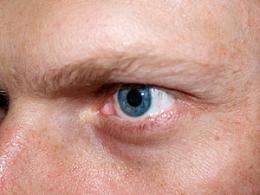
Half the participants were given the stories on a piece of paper which had a picture of a pair of eyes while it was an image of flowers for the other half.
Those given stories accompanied by eyes rated the actions as less morally acceptable than those given stories showing flowers.
Pierrick Bourrat explains: "We concluded that the surveillance cues - that is the image of eyes - may have triggered people's internalised moral norms or what has been termed private self-awareness.
"Alternatively, or additionally, as the two explanations are not mutually exclusive, it may be explained by saying it activated the mental mechanisms involved when we believe our behavior is being observed.
"In this case it is our 'public self-awareness' that is involved - our awareness of the impression we are making on others and our actions to adjust it according to our understanding of accepted moral standards."
"The people who demonstrate explicit support for shared standards of behaviour may be acting to maintain their reputations. Failure to express support for prevailing moral norms may arouse suspicion in others."
Evidence that people regulate their public expression of moral judgments depending on how those judgements are being scrutinized and how it might influence their reputation suggest that such public declarations play an important role in cooperative behavior.
The relevance of these findings is broad including shedding light on both politics and religion.
"We are all familiar with the politician who is known to have expressed one view privately or to their party colleagues on a moral issue but a different or more stridently condemnatory viewpoint when it is expressed publicly," Pierrick Bourrat said.
"The research is also part of Explaining Religion, a three-year, multinational project looking at religious practice and the kinds of behavior, involving moral judgement, that religion often claims to control."
The findings do not prove belief in the existence of a judgmental god plays a role in cooperation. The reaction to the scenario with the pair of eyes does however demonstrate the existence of a mental process that aligns with being sensitive to the judgements of an all-knowing, all-seeing presence.
The project was supported by the European Commission and the John Templeton Foundation.
Provided by University of Sydney
-
Morality research sheds light on the origins of religion
Feb 08, 2010 |
not rated yet |
0
-
Moral dilemma scenarios prone to biases
Dec 14, 2009 |
not rated yet |
0
-
Different views of God may influence academic cheating
Apr 20, 2011 |
not rated yet |
0
-
Study says media reports about uncommon acts of goodness can make good people even better
Mar 30, 2011 |
not rated yet |
0
-
Being naughty or nice may boost willpower, physical endurance
Apr 19, 2010 |
not rated yet |
0
-
Limits to growth: Scientists identify key metastasis-enabling enzyme
May 22, 2012 |
5 / 5 (3) |
0
-
Seeing is as seeing does: Spatially-structured retinal input in early development of cortical maps
Apr 26, 2012 |
5 / 5 (4) |
1
-
Dreamless nights: Brain activity during nonrapid eye movement sleep
Apr 09, 2012 |
4.4 / 5 (12) |
0
-
Take your time: Neurobiology sheds light on the superiority of spaced vs. massed learning
Mar 28, 2012 |
4.5 / 5 (21) |
3
-
Your brain on 'shrooms: fMRI elucidates neural correlates of psilocybin psychedelic state
Feb 29, 2012 |
4.9 / 5 (42) |
45
-
A question about drug tolerance
May 23, 2012
-
Poor nutrition leading to overeating?
May 23, 2012
-
Math and dyslexia?
May 21, 2012
-
portable metabolism meter?
May 21, 2012
-
Rare medical conditions on 20/20 tonight
May 18, 2012
-
"Good" Cholesterol in Doubt
May 17, 2012
- More from Physics Forums - Medical Sciences
More news stories
Feeling strong emotions makes peoples' brains 'tick together'
Experiencing strong emotions synchronises brain activity across individuals, research team at Aalto University and Turku PET Centre in Finland has revealed.
Psychology & Psychiatry
16 hours ago |
not rated yet |
0
Formal recognition of PMDD will lift stigma for women
A decision to recognise premenstrual dysphoric disorder as a genuine psychiatric condition will finally provide validation for this awful and poorly understood syndrome and alleviate the stigma ...
Psychology & Psychiatry
19 hours ago |
2 / 5 (1) |
0
Long-term meditation leads to different brain organization
(Medical Xpress) -- People who practice mindfulness meditation learn to accept their feelings, emotions, and states of mind without judging or resisting them. They simply live in the moment.
Psychology & Psychiatry
19 hours ago |
5 / 5 (3) |
0
|
Older African-Americans use religious songs to cope with stress, study shows
(Medical Xpress) -- New research from the University of North Carolina Chapel Hill School of Nursing has shown that older African-Americans use religious songs in a personal way to cope with stressful life events. Songs long ...
Psychology & Psychiatry
20 hours ago |
not rated yet |
0
Spatial configuration can spark deja vu, psychology study reveals
(Medical Xpress) -- Déjà vu - that strange feeling of having experienced something before - is more likely to occur when a scene's spatial layout resembles one in memory, according to groundbreaking new research ...
Psychology & Psychiatry
21 hours ago |
not rated yet |
0
|
Like curry? New biological role identified for compound used in ancient medicine
Scientists have just identified a new reason why some curry dishes, made with spices humans have used for thousands of years, might be good for you.
Amino acid consumption associated with how fast cancer cells divide
For almost a century, researchers have known that cancer cells have peculiar appetites, devouring glucose in ways that normal cells do not. But glucose uptake may tell only part of cancer's metabolic story. Researchers from ...
Thioridazine kills cancer stem cells in human while avoiding toxic side-effects of conventional cancer treatments
A team of scientists at McMaster University has discovered a drug, thioridazine, successfully kills cancer stem cells in the human while avoiding the toxic side-effects of conventional cancer treatments.
'Personality genes' may help account for longevity
"It's in their genes" is a common refrain from scientists when asked about factors that allow centenarians to reach age 100 and beyond. Up until now, research has focused on genetic variations that offer a physiological advantage ...
Gene discovery points towards non-hormonal male contraceptive
A new type of male contraceptive could be created thanks to the discovery of a key gene essential for sperm development.
Cyber exercise partners help you go the distance: Motivation gains can double
A new study testing the benefits of a virtual exercise partner shows the presence of a moderately more capable cycling partner can significantly boost the motivation by as much as 100 percent ...
Jun 17, 2011
Rank: 5 / 5 (1)
"Big brother" is either good, bad, both, or meaningless.
Experience dictates the choices.
Jun 17, 2011
Rank: 5 / 5 (3)
Jun 17, 2011
Rank: 2.4 / 5 (7)
Jun 18, 2011
Rank: 2.3 / 5 (3)
Just when you think pseudo-research cannot get more idiotic ...
Jun 18, 2011
Rank: 4 / 5 (4)
Woe the one who's thoughts have been spotted from above! No place upstairs.
Jun 18, 2011
Rank: 1 / 5 (3)
Do bible folks disapprove of EVERYTHING?
Jun 19, 2011
Rank: 1 / 5 (1)
How's that, a one word self-referential conundrum, like "this statement is a lie."
Jun 19, 2011
Rank: not rated yet
We have to watch people to keep them on "the right track".
Jun 19, 2011
Rank: 1.5 / 5 (8)
Jun 20, 2011
Rank: 5 / 5 (5)
Jun 20, 2011
Rank: 1 / 5 (3)
"Lacking a moralizing god made the most unfair offers to
strangers"
Jun 20, 2011
Rank: 5 / 5 (2)
The industry standard for psychopathy is the PCR. The PCR shows that out of 100 people, 1 can be considered a psychopath to any extent. There have been no studies on psychopathy and religion due to the manipulative nature of psychopaths.
That brings to mind the fact that there's another group that's known for manipulation, men and women in clergy. Another of note, politicians.
Whoa re some of the most outwardly godly people you know? I'd say politicians and clergy.
Jun 20, 2011
Rank: 1 / 5 (3)
Noun: A person suffering from chronic mental disorder with abnormal or violent social behavior.
Like I said .. abnormal behavior. YOU may think giving a person a 'raw deal' is NORMAL but I think it is ABnormal. Sooo again , as I said , the definition of psychopath is relative to WHOM you speak to. By definition.
Jun 20, 2011
Rank: 1 / 5 (3)
Noun: A person suffering from chronic mental disorder with abnormal or violent social behavior.
I see no mention of manipulation. I see abnormal behavior. I see it is EASILY open to 'interpretation'. YOU believe giving someone a 'raw deal' is no big thang whereas me .. I believe it is abnormal therefore making YOU a psycho ..
Jun 21, 2011
Rank: 5 / 5 (2)
Jun 22, 2011
Rank: 1 / 5 (1)
Jun 22, 2011
Rank: 5 / 5 (1)
AND CHRONIC mental disorder.
This is simple social human evolution. Our reputations matter, and they mattered even more for the bulk of our evolution, which is prehistoric.