UH professor given commendation for medical innovation in asthma
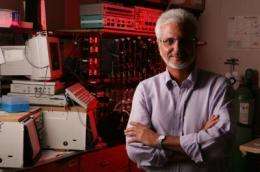
A University of Houston (UH) pharmacy professor's decade-long questioning of conventional medical dogma in the treatment of asthma earned him a prestigious international honor as a top medical innovator.
Pharmacologist and two-time UH alumnus Richard A. Bond is the only researcher from the United States to be recognized at the 2011 Medical Futures Innovation Awards (MFIA) ceremony in London June 6. Striving to bring innovative ideas to the commercial marketplace and improve patient care, MFIA is giving Bond a commendation for his work on the use of beta blocker drugs to treat asthma and other airway diseases.
Each year, the not-for-profit organization invites scientific and medical innovators to submit proposals for the opportunity to earn the MFIA's critical recognition and endorsement, assistance in articulating their ideas and securing funding, and gaining introductions to professional and commercial contacts vital in taking their ideas to the next level.
From hundreds of entries from around the world, only a handful is invited to present their proposals in person and undergo a rigorous interview by experts in given fields for each category. Of the 12 entries that were presented to the respiratory panel of judges this year, just four were selected for an award, and one commendation was made to Bond and Inverseon, which is the company he founded that holds the patent for a proprietary formulation of the inverse agonist beta blocker nadolol.
For the past decade, Bond and his UH, Baylor College of Medicine and M.D. Anderson Cancer Center collaborators have been investigating the once-controversial use of a class of compounds called inverse agonist beta blockers to treat mild, chronic asthma. Their research has shown that while this type of medication triggers an initial short-term negative effect of increased airway constriction, the effect appears to reverse with long-term use.
Successful introduction of inverse agonist beta blockers into the marketplace could result in an improved quality of life for millions of patients who suffer from a host of airway diseases, including asthma, Chronic Obstructive Pulmonary Disease (COPD) and chronic bronchitis.
"Innovation is the lifeblood for any organization, especially in current frugal times of economic uncertainty," said orthopedic surgeon Dr. Andy Goldberg, founder and chair of MFIA. "The Medical Futures judges were blown away by the sheer volume and quality of brilliant ideas that have the potential to change people's lives. The judges were encouraged by Dr. Bond's 'out-of-the-box' thinking on using beta blockers in COPD, an area of huge unmet need and, historically, where such drugs have deliberately been avoided."
After years of being rejected by scientific journals and publicly funded national research agencies, the tide has begun to turn in the past two years, with Bond's work being published and reviewed in such journals as the Proceedings of the National Academy of Sciences and The Lancet, as well as being awarded a U.S. Patent and receiving nearly $1 million in research funding from the National Institutes of Health.
Although inverse agonist beta blocker therapy is not intended to replace "rescue" inhalers for immediately relieving acute asthma attacks, Bond has suggested that a daily dose of the medication he is proposing could prevent or limit the severity or frequency of such attacks.
"I'm truly honored that our work is being recognized by the same organization that presented my mentor and friend, Sir James Black, with a Lifetime Achievement Award," Bond said, referring to the late British physician, known as the "Father of Beta Blockers."
Previous research into the use of beta-inverse agonists transformed the medical community's view of the drugs from being considered among the worst possible medication to administer for congestive heart failure (CHF) patients to what is now the standard of care for the disease.
"I still don't think of such honors as the Medical Futures commendation as a 'vindication' per se, because I've always said I could be wrong," Bond said. "However, I've maintained that investigations need to be done so we can be sure we aren't making a similar mistake as we did with CHF."
While Bond assigned his patent rights to Inverseon, the San Francisco-based biotechnology company for which he serves as scientific founder, UH would share in any royalties from the drug's commercialization.


