Stopping a daily aspirin routine increases heart attack risk
July 21, 2011
by Deborah Braconnier
in Cardiology
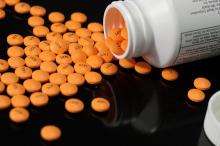
Coated aspirin tablets. Image: Wikimedia Commons.
(Medical Xpress) -- A new study published in the British Medical Journal suggests that people who have been diagnosed with heart disease and placed on a daily aspirin dose are at an increased risk of a heart attack if they stop taking the aspirin.
Low dose aspirin, usually in a dose range between 75 and 300 milligrams, are prescribed to patients to reduce the risk of blood clots and a possible heart attack. However, for many different reasons, half of these patients eventually stop this routine.
The researchers, led by Dr. Luis Garcia Rodriguez from the Spanish Center for Pharmacoepidemiologic Research, gathered data from medical records located in a large database in the United Kingdom called the Health Improvement Network. They looked at 39,513 patients between the ages of 50 and 84 that had been prescribed low dose aspirin between 2000 and 2007.
What they discovered after a three year follow-up was that there was a 60 percent increase of a non-fatal heart attack in those patients who had discontinued taking their aspirin therapy. This breaks down to about four heart attacks per 1,000 patients who cease taking their aspirin therapy.
Rodriguez emphasizes that patients should never stop taking their aspirin therapy unless directed to do so by their physician. This research shows how important just a tiny little pill once a day can make a big difference in decreasing the risk of another heart attack.
The authors believe that more research needs to be done to look at what reasons might be causing patients to stop their aspirin therapy. Researchers believe that reasons such as simply forgetting, not believing it is therapeutically beneficial or possible adverse reactions that are not being discussed with their physician could be behind the discontinuation of aspirin treatment.
They believe that more awareness needs to be made on the importance of adhering to an aspirin therapy treatment plan and advise all patients currently on aspirin therapy to make sure they take their aspirin every day to reduce their risk of another heart attack.
More information: Discontinuation of low dose aspirin and risk of myocardial infarction: case-control study in UK primary care, BMJ 2011; 343:d4094 doi: 10.1136/bmj.d4094 (Published 19 July 2011)
© 2010 PhysOrg.com
-
Increased risk of heart attack or stroke for patients who are resistant to aspirin
Jan 18, 2008 |
not rated yet |
0
-
Aspirin in Heart Attack Prevention: How Much, How Long?
Jan 15, 2008 |
not rated yet |
0
-
Higher daily dose of aspirin could play key role in preventing heart attacks for those with diabetes
Jul 05, 2011 |
not rated yet |
0
-
Aspirin may be less effective heart treatment for women than men
Apr 27, 2007 |
not rated yet |
0
-
Study: Aspirin good for men and women
Jan 17, 2006 |
not rated yet |
0
-
Motion perception revisited: High Phi effect challenges established motion perception assumptions
Apr 23, 2013 |
3 / 5 (2) |
2
-
Anything you can do I can do better: Neuromolecular foundations of the superiority illusion (Update)
Apr 02, 2013 |
4.5 / 5 (11) |
5
-
The visual system as economist: Neural resource allocation in visual adaptation
Mar 30, 2013 |
5 / 5 (2) |
9
-
Separate lives: Neuronal and organismal lifespans decoupled
Mar 27, 2013 |
4.9 / 5 (8) |
0
-
Sizing things up: The evolutionary neurobiology of scale invariance
Feb 28, 2013 |
4.8 / 5 (10) |
14
-
Is energy convertible to matter?
1 hour ago
-
Rotating electron as a dipole is this right?
3 hours ago
-
Dipole term in multipole expansion
7 hours ago
-
Bubbles in a Pre-Boiling/Boiling pot of water
9 hours ago
-
Assumptions of Griffith's fracture theory
19 hours ago
-
Current leading voltage or vice versa concept
21 hours ago
- More from Physics Forums - Classical Physics
More news stories
Biodegradable stent proves non-inferior to drug-eluting stent
The Orsiro stent, which is a novel stent platform eluting sirolimus from a biodegradable polymer, demonstrated non-inferiority to the Xience Prime everolimus-eluting stent for the primary angiographic endpoint of in-stent ...
Cardiology
4 hours ago |
not rated yet |
0
Post-approval TAVI registry shows high rates of device success at one year
One-year results from SOURCE XT – one of the largest, post-approval transcatheter aortic valve implantation (TAVI) registries to-date – reported today at EuroPCR 2013 show good clinical outcomes in routine clinical practice, ...
Cardiology
4 hours ago |
not rated yet |
0
Antidepressant reduces stress-induced heart condition
A drug commonly used to treat depression and anxiety may improve a stress-related heart condition in people with stable coronary heart disease, according to researchers at Duke Medicine.
Cardiology
6 hours ago |
not rated yet |
0
|
Study identifies superior hypertension treatment, efficacy between sexes
(Medical Xpress)—In a recent subgroup analysis of the largest blood pressure treatment trial in history, University of Alabama at Birmingham (UAB) researchers found that women and men react the same to ...
Cardiology
14 hours ago |
5 / 5 (1) |
0
Evaluating a new way to open clogged arteries
Over the past few decades, scientists have developed many devices that can reopen clogged arteries, including angioplasty balloons and metallic stents. While generally effective, each of these treatments ...
Cardiology
14 hours ago |
4.8 / 5 (4) |
0
|
If you can remember it, you can remember it wrong
(Medical Xpress)—Native peoples in regions where cameras are uncommon sometimes react with caution when their picture is taken. The fear that something must have been stolen from them to create the photo ...
B vitamins could delay dementia
(Medical Xpress)—Despite spending billions of dollars on research and development, drug companies have been unable to come up with effective treatments for dementia and Alzheimer's Disease (AD). Now, A. ...
New sleeping pill poised to hit US markets
An experimental sleeping pill from US drug company Merck is effective at helping people fall and stay asleep, according to reviewers at the US Food and Drug Administration, which could soon approve the new drug.
Reducing caloric intake delays nerve cell loss
Activating an enzyme known to play a role in the anti-aging benefits of calorie restriction delays the loss of brain cells and preserves cognitive function in mice, according to a study published in the May ...
Insight into the dazzling impact of insulin in cells
Australian scientists have charted the path of insulin action in cells in precise detail like never before. This provides a comprehensive blueprint for understanding what goes wrong in diabetes.
Drugs found to both prevent and treat Alzheimer's disease in mice
Researchers at USC have found that a class of pharmaceuticals can both prevent and treat Alzheimer's Disease in mice.