Doctors, nurses often use holistic medicine for themselves
August 19, 2011 By Milly Dawson in Health
U.S. health care workers, especially doctors and nurses, use complementary and alternative medicine (CAM) far more than do workers in other fields, according to a new study. CAM includes diverse therapies outside the realm of conventional medicine. Overall, 76 percent of health care workers report CAM usage, compared with 63 percent of the general working population.
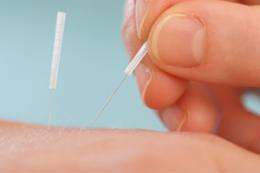
Health care workers use chiropractic treatment, massage and acupuncture for conditions that conventional medicine does not address well, said study co-author Lori Knutson, executive director of the Penny George Institute for Health and Healing with Allina Hospitals and Clinics in Minneapolis. While conventional providers often treat common issues such as back pain with pain medication, holistic providers address root causes, she said.
The researchers used data from the 2007 National Health Interview Survey, analyzing responses from 14,329 working adults. Their findings appear online in the journal Health Services Research.
Among respondents, 1,280 worked in health care and fell into four categories: (1) providers including doctors and nurses; (2) technicians, for instance, sonographers; (3) support workers such as nursing assistants and (4) administrative personnel not providing patient care.
The study looked at practitioner-based CAM, such as acupuncture; self-treatment with CAM, such as practicing Pilates; and any CAM usage such as following a vegetarian diet, meditating and taking certain herbs.
Doctors and nurses had more than twice the odds of having used a practitioner-based CAM method during the prior year and nearly three times the use of self-treatment with CAM than support workers.
As insiders, health care workers understand whats missing in our medical system. Theyre more educated than others about orthodox and alternative medicine, said Joya Lynn-Schoen, M.D., a psychiatrist by training who instead practices alternative medicine, offering patients homeopathy, nutrition and chelation therapies. Mainstream medicine will say, Heres a pill or Have an operation or Theres nothing wrong with you. Youre just tired.
We may be opening Pandoras box by disclosing utilization of CAM by conventional providers, Knutson said. I prefer to believe that this will create an opening for both provider and patient in optimizing health for the whole person. Knutson added that consumers ought to know that providers use CAM and that health care workers should know that their peers use CAM, although perhaps without discussing it.
How shocked consumers would actually be by their doctors use of CAM is questionable, however. The researchers used a broad definition of CAM that includes practices as commonplace as deep breathing, meditation and massage, and ones as complex as biofeedback, hypnosis and chelation therapy, which involves administration of chemicals called chelating agents to eliminate heavy metals such as lead, arsenic or mercury from the body. To discover the depth of doctors and nurses involvement with the more esoteric approaches will require further research.
More information: Johnson PF, et al. Personal use of complementary and alternative medicine (CAM) by US healthcare workers. Health Serv Res online, 2011.
Provided by
Health Behavior News Service
-
More white Americans turn to lower-cost alternative meds
Feb 01, 2011 |
not rated yet |
0
-
Survey explores medical care for children with autism using complementary alternative medicine
Mar 12, 2009 |
not rated yet |
0
-
Americans spent $33.9 billion out-of-pocket on complementary and alternative medicine
Jul 30, 2009 |
not rated yet |
0
-
Growing use of alternative medicine in pregnancy highlights need for more knowledge
Feb 28, 2011 |
not rated yet |
0
-
Alternative medicine use increasing for patients suffering with chronic rhinosinusitis
Oct 05, 2009 |
not rated yet |
0
-
Motion perception revisited: High Phi effect challenges established motion perception assumptions
Apr 23, 2013 |
3 / 5 (2) |
2
-
Anything you can do I can do better: Neuromolecular foundations of the superiority illusion (Update)
Apr 02, 2013 |
4.5 / 5 (11) |
5
-
The visual system as economist: Neural resource allocation in visual adaptation
Mar 30, 2013 |
5 / 5 (2) |
9
-
Separate lives: Neuronal and organismal lifespans decoupled
Mar 27, 2013 |
4.9 / 5 (8) |
0
-
Sizing things up: The evolutionary neurobiology of scale invariance
Feb 28, 2013 |
4.8 / 5 (10) |
14
-
Classical and Quantum Mechanics via Lie algebras
Apr 15, 2011
- More from Physics Forums - Independent Research
More news stories
Youth who have their first drink during puberty have higher levels of later drinking
Research shows that the earlier the age at which youth take their first alcoholic drink, the greater the risk of developing alcohol problems. Thus, age at first drink (AFD) is generally considered a powerful predictor of ...
Health
16 hours ago |
not rated yet |
0
British MPs concerned about parliamentary boozing
One quarter of British lawmakers believe there is an "unhealthy" drinking culture in the Houses of Parliament, according to a survey published on Friday.
Health
21 hours ago |
not rated yet |
0
Patient openness to research can depend on race and sex of study personnel
Researchers at the University of Cincinnati (UC) have found that the race and sex of study personnel can influence a patient's decision on whether or not to participate in clinical research.
Health
22 hours ago |
not rated yet |
0
Clinical support for patient self-management is rhetoric rather than reality
The processes to allow people to self-manage their own illness are not being used appropriately by health professionals to the benefit of their patients, new research suggests.
Health
23 hours ago |
not rated yet |
0
Control of heart disease risk factors varies among outpatient practices
Control of heart disease risk factors varies widely among outpatient practices, according to a study presented at the American Heart Association's Quality of Care and Outcomes Research Scientific Sessions 2013.
Health
May 17, 2013 |
not rated yet |
0
AIDS science at 30: 'Cure' now part of lexicon
Big names in medicine are set to give an upbeat assessment of the war on AIDS on Tuesday, 30 years after French researchers identified the virus that causes the disease.
For combat veterans suffering from post-traumatic stress disorder, 'fear circuitry' in the brain never rests
Chronic trauma can inflict lasting damage to brain regions associated with fear and anxiety. Previous imaging studies of people with post-traumatic stress disorder, or PTSD, have shown that these brain regions can over-or ...
Melon focus headband turns to Kickstarter for rollout plans
(Medical Xpress)—What if the quality of your work depends more on your focus on the piano keys or canvas or laptop than your musical or painting or computing skills? If target users can be convinced, they ...
Temporal processing in the olfactory system
The neural machinery underlying our olfactory sense continues to be an enigma for neuroscience. A recent review in Neuron seeks to expand traditional ideas about how neurons in the olfactory bulb might encode information about ...
Now we know why old scizophrenia medicine works on antibiotics-resistant bacteria
In 2008 researchers from the University of Southern Denmark showed that the drug thioridazine, which has previously been used to treat schizophrenia, is also a powerful weapon against antibiotic-resistant bacteria such as ...
23 dead in initiation rites in South Africa
(AP)—Twenty-three youths have died in the past nine days at initiation ceremonies that include circumcisions and survival tests, South African police said Friday.