GABA link to impulsive males
August 11, 2011 in Psychology & Psychiatry

GABA link to impulsive males

(Medical Xpress) -- The reason why some men are more impulsive, act aggressively, drink and take drugs could lie in the fact that they have lower levels of a naturally occurring substance in a specific part of their brain, University research has uncovered.

Using the latest brain imaging techniques scientists from Cardiff University’s Brain Imaging Research Imaging Center (CUBRIC) and University College London have identified a new link between impulsiveness and levels of GABA, a very common neurotransmitter, in a very specific part of the brain.

"Advances in brain imaging techniques mean we are able to investigate different and specific areas of the human brain and see how they regulate people’s behavior," according to Dr. Frederic Boy, School of Psychology, who led the research published in the journal Biological Psychiatry and funded by the Wellcome Trust.

"What is clear is that the way people behave results from a complex interaction between a number of genetic, social and environmental factors, what we’ve found is that one of the reasons why some men act impulsively may be related to the lower concentration of GABA in a specific part of men’s brains."

The scientists studied male undergraduate students with no history of or substance dependence.

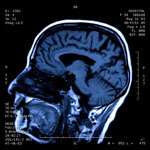
They underwent a specialized magnetic resonance spectroscopy brain scan, an imaging technique that allows measuring the amount of GABA in small regions of the brain followed by a questionnaire which helped assess different aspects of impulsivity, an important component of self-control.

The team found that individuals with more prefrontal GABA had lower scores in one aspect of impulsivity called the "feeling of urgency", the tendency to act rashly in response to distress or other strong emotions and urges. Inversely individuals with lower GABA tended to have higher urgency ratings.

The link with GABA was specific to the dorsolateral prefrontal cortex, a region previously implicated in higher cognitive functions.

The team hope that their research helps show a specific relationship between the brain’s basic physiology, such as GABA-mediated signalling, and complex behavioral regulation can be uncovered.

Dr. Boy adds: "The ability to regulate our behaviour in response to a constantly changing physical and social world is key to adapted life.

"Failure in this finely tuned mechanism is particularly important in most psychiatric disorders, where impulsivity is the second most common symptom. We hope this research will lead to further studies and help bridge the gap between recent genetic studies and imaging studies of psychiatric disorders. "

Provided by Cardiff University search and more info website

5 /5 (7 votes)  

Filter


Move the slider to adjust rank threshold, so that you can hide some of the comments.


Display comments: newest first

NANOBRAIN
Aug 11, 2011

Rank: not rated yet
I think your on the right track 100%.
Rank 5 /5 (7 votes)
Relevant PhysicsForums posts

More news stories

'Boys will be boys' in US, but not in Asia

A new study shows there is a gender gap when it comes to behavior and self-control in American young children – one that does not appear to exist in children in Asia.

Psychology & Psychiatry created 8 hours ago | popularity not rated yet | comments 0

Brain can be trained in compassion, study shows

Until now, little was scientifically known about the human potential to cultivate compassion—the emotional state of caring for people who are suffering in a way that motivates altruistic behavior.

Psychology & Psychiatry created 9 hours ago | popularity 5 / 5 (2) | comments 2 | with audio podcast

Good marriage can buffer effects of dad's depression on young children

What effect does a father's depression have on his young son or daughter? When fathers report a high level of emotional intimacy in their marriage, their children benefit, said a University of Illinois study.

Psychology & Psychiatry created 9 hours ago | popularity not rated yet | comments 0

American, Nepalese kids a world apart on social duties

(Medical Xpress)—Preschoolers universally recognize that one's choices are not always free – that our decisions may be constrained by social obligations to be nice to others or follow rules set by parents ...

Psychology & Psychiatry created 17 hours ago | popularity not rated yet | comments 0

Ethicists' behavior not more moral, study finds

(Medical Xpress)—Do ethicists engage in better moral behavior than other professors? The answer is no. Nor are they more likely than nonethicists to act according to values they espouse, according to researchers from the ...

Psychology & Psychiatry created 17 hours ago | popularity 5 / 5 (1) | comments 0


Rate of bicycle-related fatalities significantly lower in states with helmet laws

Existing research shows that bicyclists who wear helmets have an 88 percent lower risk of brain injury, but researchers at Boston Children's Hospital found that simply having bicycle helmet laws in place showed a 20 percent ...

Slowing the aging process—only with antibiotics

Swiss scientists reveal the mechanism responsible for aging hidden deep within mitochondria—and dramatically slow it down in worms by administering antibiotics to the young.

Researchers complete largest genetic sequencing study of human disease

Researchers from Queen Mary, University of London have led the largest sequencing study of human disease to date, investigating the genetic basis of six autoimmune diseases.

Having both migraines, depression may mean smaller brain

(HealthDay)—Migraines and depression can each cause a great deal of suffering, but new research indicates the combination of the two may be linked to something else entirely—a smaller brain.

Novel approach for influenza vaccination shows promise in early animal testing

A new approach for immunizing against influenza elicited a more potent immune response and broader protection than the currently licensed seasonal influenza vaccines when tested in mice and ferrets. The vaccine ...

Calorie information in fast food restaurants used by 40 percent of 9-18 year olds when making food choices

A new study published online today (Thursday) in the Journal of Public Health has found that of young people who visited fast food or chain restaurants in the U.S. in 2010, girls and youth who were obese were more likely ...