Call for mental health needs of child refugees to be met
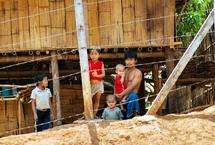
Prolonged and bureaucratic asylum processes in the West are having negative effects on children’s mental health, according to Oxford University psychiatrists and colleagues.
The increasingly restrictive asylum policies of many high-income countries are also leaving low- and middle-income countries to cope with large numbers of displaced children without the necessary resources to prevent poor mental health outcomes, they write in the medical journal The Lancet.
The researchers from Oxford, Harvard and Yale universities say there is an urgent need for high-income countries and international agencies to contribute towards tackling the significant mental health needs of some of the world’s most vulnerable children.
They also call for high-income countries to implement immigration, healthcare and social policies that support family units and keep detrimental effects on child mental health to a minimum.
Dr. Mina Fazel of the Department of Psychiatry at Oxford University, who led the work, says, "It is not only human to help others, especially children who have rarely played a role in the atrocities from which they flee, but high-income nations are signatories to international conventions – refugee, child, human rights – all agreeing to uphold universal principles to care for those at risk and more vulnerable in society, regardless of where they live."
In 2009, approximately 35,000 people came to the UK and claimed asylum. Of these approximately 5,000 were unaccompanied minors and probably 10,000 were under 18.
Mental health problems are higher in this group than the average population. In adults around 30% are likely to be suffering from post-traumatic stress disorder and/or depression. In a study the Oxford researchers conducted in 2002 (when immigration policies were less restrictive), approximately a quarter of the refugee children at schools in Oxford were reported by a teacher questionnaire to be suffering severe emotional and behavioural difficulties.
"The time taken to determine asylum cases can vary from weeks to years. The arbitrary nature of the process is one of the more distressing aspects of how asylum seekers are treated in the UK and adds to their psychological difficulties," says Dr. Fazel.
"Reports from children and parents are that immigration detention centres can be highly distressing for children. There are other serious concerns as well: the risk of rapid deportation back to countries of origin, the difficulties in family reunification, lack of educational and employment opportunities."
Dr. Fazel argues that if the manner in which child asylum cases are dealt with is shown to exacerbate or prolong or even generate mental health problems, then these should be stopped. "This is particularly important for children for whom mental health difficulties can affect their lives in the long term as they are less likely to achieve at school, are more likely to suffer poor peer relations and have worse longer term mental health," she says.
The researchers reviewed the evidence for factors that affect the mental health of displaced children in different countries. A total of 71 studies involving over 11,500 children and adolescents were included in the analysis.
Worldwide, there are estimated to be 18 million child refugees as a result of conflict and persecution. More children are forced to migrate as a result of economic pressures and natural disasters. Most of these children remain within or near their country of origin, with just 0.5 million seeking asylum in the West every year.
Exposure to violence was identified as the strongest risk factor for poor mental health. Children may have been separated from friends and families and will often have faced traumatic events, such as witnessing the death of relatives, the destruction of homes, bombardment, and mass killings, and suffered difficult and dangerous journeys over long distances.
The researchers also found worse mental health outcomes for children who were displaced internally within their own country and for those who settled in a refugee camp.
"Studies have shown that children have experienced ongoing exposure to violence or other abuses in refugee camps," says Dr. Fazel. "By their very nature, these camps are not well positioned to offer education, health, community life, etc, limiting the developmental opportunities for children who not only have physical and education milestones to achieve but social, emotional and behavioural ones too."
Lynne Jones, a child psychiatrist and humanitarian relief worker at the Radcliffe Institute for Advanced Study, Harvard University, and a co-author on these studies, says: "Mental health is not a priority [among agencies working with child refugees] in spite of the fact that quite simple preventive interventions including keeping families together, creating security in camps and normal activities for children would do a lot to address many problems."
She adds: "There is a good evidence base suggesting that adding a simple mental health intervention like infant stimulation to emergency nutrition programs improves children's long-term developmental outcomes."
The stress of adjusting to a foreign country plays an important role in the mental health status of children, the researchers found. Rapid and stable settlement in their new country seems to be very important for refugee children.
In children forcibly displaced to high-income countries, being exposed to further violence after migration or having several changes of residence resulted in worse outcomes, whereas high levels of support from family and peers and a positive school experience were protective.
But the researchers did identify a lack of research which has limited the understanding of the factors that are causally associated with psychological outcomes. The practical difficulties of doing research in dangerous conflict situations has also hampered the identification of interventions that can improve mental health outcomes, they say.


