Researchers discover gene defect that predisposes people to leukemia
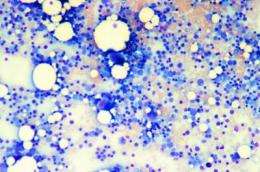
A new genetic defect that predisposes people to acute myeloid leukemia and myelodysplasia has been discovered. The mutations were found in the GATA2 gene. Among its several regulatory roles, the gene acts as a master control during the transition of primitive blood-forming cells into white blood cells.
The researchers started by studying four unrelated families who, over generations, have had several relatives with acute myeloid leukemia, a type of blood cancer. Their disease onset occurred from the teens to the early 40s. The course was rapid.
The findings will be reported Sept. 4 in Nature Genetics. The results come from an international collaboration of scientists and the participation of families from Australia, Canada, and the United States.
In collaboration with Dr. Hamish Scott and Dr. Richard J. D'Andrea at the Centre for Cancer Biology, University of Australia, Adelaide, the U.S. portion of the study was conducted by Dr. Marshall Horwitz, University of Washington (UW) professor of pathology. Horwitz practices genetic medicine at UW Medical Center and the UW Center for Human Development and Disability, both in Seattle.
The genetic mutation was first discovered in a patient from central Washington. The research participant had been successfully treated for leukemia in 1992 through a bone marrow transplant at UW Medical Center. At that time, Horwitz decided to seek a possible genetic reason after learning his patient had several family members with myelodysplastic syndrome, myeloid leukemia, and intractable mycobacteria infections.
Myelodysplastic syndrome is a difficulty in producing certain kinds of blood cells. The problem originates in the bone marrow with a decline in the number and quality of blood-forming cells. Patients often have severe anemia and need frequent blood transfusions. The disease generally worsens due to bone marrow failure and low blood counts. About one- third of those with the syndrome soon develop acute myeloid leukemia, in which abnormal white cells build up in the bone marrow and interfere with normal blood production.
Horwitz's Australian colleagues had described a family with a similarly inherited blood disorder. Eighteen years later, after rifling through many candidate genes, the researchers on both continents were relieved finally to have hit upon the mutated gene responsible for the leukemia that affect these families. They have gone on to identify abnormal GATA2 genes in more than 20 families and individuals.
"It's likely that this inherited error is more common than we had thought," the researchers noted. In some families with a GATA2 mutation, the over-riding concern has been leukemia, while others suffer dangerous infections from bacteria, viruses and fungi because of a lack of white blood cells to fight off germs.
The lab of Dr. Dennis Hickstein, formerly of the UW School of Medicine and the Puget Sound Veterans Affairs Health System and now at the National Institute of Health, in
collaboration with NIH colleague Dr. Steven Holland, associated the mutation with mycobacteria infections. Those results were reported in separate study appearing in the journal Blood.
Another paper appearing Sept. 4 in Nature Genetics from a London group found similar mutations of GATA2 in leukemia patients with lymphedema and, in some cases, deafnesss. By blocking the vessels that drain fluid from the body's tissues, lympedema causes swelling of the arms or legs.
Ongoing work in Seattle and Adelaide has identified a congenital syndrome associated with developmental delay and a risk of myelodysplasia. This syndrome results from chromosomal loss of GATA2 and adjacent genes.
Comparable GATA2 mutations also have been found in people with the more common, non-inherited leukemias.
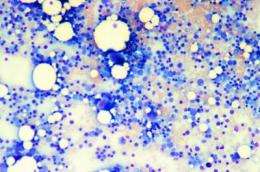
Scientists are trying to figure out why apparently similar gene mutations in GATA 2 cause such assorted health problems. Also perplexing is how hard it has been to find genetic errors underlying blood cancers, compared with other cancers.
"While several genes have been discovered and linked to solid, malignant tumors such as breast cancer in families susceptible to those types of cancer, so far very few inherited mutations have been uncovered for blood cancers," Horwitz said.
Previously, other scientists linked mutations in two other genes -- RUNX1 and CEBPA – to injerited forms of myelodysplastic syndrome and acute myeloid leukemia. These genes bind to DNA and control the copying of information encoded in this molecule.
Keeping this in mind, researchers looked for mutations in similar genes in families who did not have the RUNX1 and CEBPA mutations and who had no other explanations for their inherited blood cancer. In so doing, the researchers identified the GATA2 mutations. They also observed that these mutations relate to loss of function by making the gene unable to perform the molecular duties necessary to manufacture healthy white blood cells.
According to Horwitz, the GATA2 mutations in DNA occur adjacent to an amino acid mutated in some patients with terminal chronic myeloid leukemia. This proximity suggests a common pathway may be critical for several types of myeloid malignancies, he said.
People at risk because of their pedigree eventually may obtain tests to detect this genetic error before symptoms emerge. Learning that they have the gene mutation might help patients and their doctors decide on appropriate follow-up for early diagnosis and treatment of problems that might arise.
Additional knowledge about how the GATA2 gene and its mutations operate may foster the development of new therapeutic agents.
More information: "Heritable GATA2 Mutations Associated with Familial Myelodysplastic Syndrome and Acute Myeloid Leukemia," Nature Genetics.


