Social hierarchy prewired in the brain
September 30, 2011 by Deborah Braconnier in Neuroscience
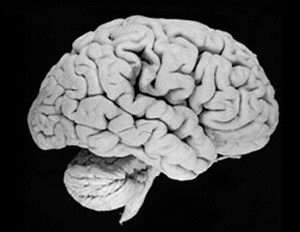
Modern human brain. Image source: Univ. of Wisconsin-Madison Brain Collection.
(PhysOrg.com) -- If you find yourself more of a follower than a social leader, it may something to do with the wiring in your brain. According to a new study in Science, researchers from the Chinese Academy of Science have discovered a location in the brain that is active in alpha mice but not in their subordinate cage mates.
The researchers, led by Hailan Hu from the Chinese Institute of Neuroscience, discovered that in social dominant mice, there were stronger electrical connections occurring in the medial prefrontal cortex, or mPFC, of the brain. This study was designed to test just what impact this activity had on social ranking.
To begin, the researchers had to determine which mice were the social dominant mice. Using a clear two, a mouse was placed at either end. The more dominant mouse would push through to get to the other end while the subordinate mouse would retreat.
Once the subordinate mice were determined, the researchers injected them with a virus that inserts the gene GluR4 into the mPFC neurons. The role of GluR4 is to amplify the electrical signals. The tube test was then repeated. These previously timid mice that retreated in the tube were now the dominant mice and pushed forward. In looking at brain slices from the mice, the researchers noted that the mice that received this virus now had electrical connections almost twice as strong as the control mice.
In another test, the researchers injected the dominate mice with another virus that implanted the R4Ct gene which reduces electrical transmissions. This gene reduced the neuron connections by 71% of those found in control mice. When the electrical signals were reduced, these previously dominate mice were now subordinate.
While this brain activity shows a role in social standing in mice, Hu cautions that in humans it is a much more complex relationship. Where social standing in mice is more relative to temperament, human social ranking is also influenced by outside factors such as wealth, heritage and education.
More information: Bidirectional Control of Social Hierarchy by Synaptic Efficacy in Medial Prefrontal Cortex, Science DOI:10.1126/science.1209951. http://www.science … ence.1209951
ABSTRACT
Dominance hierarchy profoundly impacts animals survival, health, and reproductive success, but its neural circuit mechanism is virtually unknown. We found that dominance ranking in mice is transitive, relatively stable, and highly correlates among multiple behavior measures. Recording from layer V pyramidal neurons of the medial prefrontal cortex (mPFC) showed higher strength of excitatory synaptic inputs in mice with higher ranking, as compared with their subordinate cage mates. Furthermore, molecular manipulations that resulted in an increase and decrease in the synaptic efficacy in dorsal mPFC neurons caused an upward and downward movement in the social rank, respectively. These results provide direct evidence for mPFCs involvement in social hierarchy and suggest that social rank is plastic and can be tuned by altering synaptic strength in mPFC pyramidal cells.
© 2011 PhysOrg.com
-
Serotonin plays active role in the sexual preference of mice
Mar 25, 2011 |
not rated yet |
0
-
New brain nerve cells key to stress resilience, researchers find
Mar 31, 2010 |
not rated yet |
0
-
Your brain on nicotine: Nicotine receptors affect social behavior
Jun 30, 2011 |
not rated yet |
0
-
Gene limits learning and memory in mice
Sep 17, 2010 |
not rated yet |
0
-
Functional connection between hippocampus and cortex modulates anxiety
Jan 27, 2010 |
not rated yet |
0
-
Of mice and mental models: Neuroscientific implications of risk-optimized behavior in the mouse
May 25, 2012 |
not rated yet |
0
-
Limits to growth: Scientists identify key metastasis-enabling enzyme
May 22, 2012 |
5 / 5 (4) |
0
-
Seeing is as seeing does: Spatially-structured retinal input in early development of cortical maps
Apr 26, 2012 |
5 / 5 (4) |
1
-
Dreamless nights: Brain activity during nonrapid eye movement sleep
Apr 09, 2012 |
4.4 / 5 (12) |
0
-
Take your time: Neurobiology sheds light on the superiority of spaced vs. massed learning
Mar 28, 2012 |
4.5 / 5 (21) |
3
-
Potential Breakthrough in Seizure Control
5 hours ago
-
Popping/Cracked sternum.
10 hours ago
-
Which Mental Illness Encompasses This Problem?
10 hours ago
-
A question about drug tolerance
May 23, 2012
-
Poor nutrition leading to overeating?
May 23, 2012
-
Math and dyslexia?
May 21, 2012
- More from Physics Forums - Medical Sciences
More news stories
Of mice and mental models: Neuroscientific implications of risk-optimized behavior in the mouse
(Medical Xpress) -- Regardless of an organism’s biological complexity, every encephalized animal continuously makes under-informed behavioral choices that can have serious consequences. Despite its ubiquity, ...
Neuroscience
May 25, 2012 |
not rated yet |
0
|
Persistent sensory experience is good for aging brain
Despite a long-held scientific belief that much of the wiring of the brain is fixed by the time of adolescence, a new study shows that changes in sensory experience can cause massive rewiring of the brain, even as one ages. ...
Neuroscience
May 24, 2012 |
not rated yet |
0
Boundary stops molecule right where it needs to be
A molecule responsible for the proper formation of a key portion of the nervous system finds its way to the proper place not because it is actively recruited, but instead because it can't go anywhere else.
Neuroscience
May 24, 2012 |
not rated yet |
0
|
Locating ground zero: How the brain's emergency workers find the disaster area
Like emergency workers rushing to a disaster scene, cells called microglia speed to places where the brain has been injured, to contain the damage by 'eating up' any cellular debris and dead or dying neurons. ...
Neuroscience
May 24, 2012 |
5 / 5 (2) |
0
|
Genetic 'reset switch' enables signaling pathway to induce multiple developmental outcomes for olfactory neurons
Within the nervous system, a handful of signaling pathways modulate development of a cornucopia of different neuronal subtypes. Even small alterations in neuron differentiation pathways can disrupt subsequent ...
Neuroscience
May 24, 2012 |
not rated yet |
0
Travel to high altitudes tied to Crohn's, colitis flare-ups
(HealthDay) -- People with inflammatory bowel disease, which includes Crohn's disease and colitis, may be at increased risk for flare-ups when they fly or travel to high altitudes for skiing or mountain climbing, ...
Transvaginal mesh op restores pelvic organ prolapse at price
(HealthDay) -- Transvaginal mesh (TVM) procedures are effective for anatomical restoration of pelvic organ prolapse (POP), but patients report a worsening of sexual function following surgery, according to ...
Cancer may require simpler genetic mutations than previously thought
Chromosomal deletions in DNA often involve just one of two gene copies inherited from either parent. But scientists haven't known how a deletion in one gene from one parent, called a "hemizygous" deletion, can contribute ...
Inherited DNA change explains overactive leukemia gene
A small inherited change in DNA is largely responsible for overactivating a gene linked to poor treatment response in people with acute leukemia.
Tongue analysis software uses ancient Chinese medicine to warn of disease
For 5,000 years, the Chinese have used a system of medicine based on the flow and balance of positive and negative energies in the body. In this system, the appearance of the tongue is one of the measures used to classify ...
Skp2 activates cancer-promoting, glucose-processing Akt
HER2 and its epidermal growth factor receptor cousins mobilize a specialized protein to activate a major player in cancer development and sugar metabolism, scientists report in the May 25 issue of Cell.
Sep 30, 2011
Rank: 3.7 / 5 (3)
The article wants me to submit reading the word "two".
After injecting the virus that inserts the gene GluG4 into my mPFC neurons to amplify my electric signals I no longer submit to the word "two".
With my new found dominance I assert over readers and writer and make them submit to the word "tube".
I am told there is a complex relationship between reader, writer and spell checkers.
Oct 01, 2011
Rank: 5 / 5 (2)
can you tell us how to get hold of this virus please. The complex relationship between Australian readers and American spell checkers is often marred by the ruthless assertion of dominance by the latter. I suspect the same baleful influence blights the lives of the Brits too. For Aussies, two and tube have a different vowel sound; two has a plain "oo" sound, but tube is t you b ie a diphthong.
I am a bit perplexed by how a spell checker could bully a writer into choosing "two" instead of "tube", but maybe the American spell checker has been authorised to include suggestions based on "sound-alike" criteria.Maybe she was typing it up late at night and therefore tired and sleepy so the spell checker could use hypnosis rather than skulduggery or even naked violence.
Oct 03, 2011
Rank: 1 / 5 (1)
How young ambitious capoes and soldiers from Italian Institute of Technology (IIT) under supervision of a decrepit american don-godfather from Northwestern University are successfully completed their sequential plagiaristic enterprise: http://issuu.com/...saivaldi
Oct 04, 2011
Rank: 5 / 5 (1)
So why are you spamming the hell out of this site with what your own link shows is a false accusation.
I hit five of his posts this way. I think that enough he has dozens of identical posts and his own link shows his accusations are false.
Ethelred