Making stem-cell band-aids for the retina
September 6, 2011 By Kimm Fesenmaier in Medical research

Making stem-cell band-aids for the retina

Enlarge

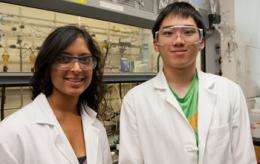
SURF participant Wilson Ho (right) with postdoctoral scholar Paresma Patel (left).

At the beginning of July, Caltech senior Wilson Ho found himself hiking, stargazing, and camping in Yosemite National Park with a Nobel laureate. He even joined a group of scientists for a spontaneous jump into a freezing cold stream. 

Ho was spending the summer working on a SURF project in the lab of Robert Grubbs, one of the winners of the 2005 Nobel Prize in Chemistry. Therefore, he had earned himself a spot on the Grubbs team's annual camping trip.

"It feels pretty surreal sometimes," Ho says, not just of spending five days camping with Grubbs, the Victor and Elizabeth Atkins Professor of Chemistry, but also of getting the opportunity to work for the esteemed researcher. "The experience has been exactly what I was hoping for."

Ho, a chemistry major, originally contacted Grubbs in January, searching for a summer research project that dealt with catalysis or organometallic chemistry, the study of chemical compounds that contain carbon atoms bound to metals. Grubbs told him that postdoctoral scholar Paresma Patel was looking for an intern to help with a chemical-synthesis project related to macular degeneration—a disease that is associated with aging and causes cells in a part of the to die. Macular degeneration is estimated to affect 1.8 million Americans, with another 7.3 million at substantial risk of developing the disease. Patel's project, funded by the California Institute for Regenerative Medicine, sounded so interesting that Ho signed up.

Ho, 21, tells his nonscientist friends and family that the goal of his project is to develop "stem-cell Band-Aids." The idea is that retinal cells, derived from human embryonic stem cells (or hESC-RPE cells), would be attached to the "Band-Aids." Eventually, the strips could be surgically applied to damaged retinas, holding new cells in place long enough to be incorporated into the eye and to restore vision. 

"You might think that you could just stick stem cells in the eye and have them work," Ho says. "But it doesn't work that way because the new cells need to be held on top of the damaged tissue for some time."

What Ho is really doing is trying to coat a thin film of a bio-inert polymer called parylene with something that will encourage retinal cells to latch on. That something is a matrix containing peptides with a repeating arginine-glycine-aspartic acid amino-acid sequence, called RGD peptides.

Previous research has shown that RGD peptides bind to certain receptors expressed in hESC-RPE cells. Patel and Ho felt that the might bind better to a multilayered matrix containing RGD peptides, rather than just a single layer. So Ho spent much of the summer designing and carrying out a series of chemical reactions to create such a matrix.

Now that Ho has worked out how to synthesize the matrix, he's trying to figure out a way to get it to coat the parylene film. "Making one thing stick onto another that is prized for its inertness is obviously going to be a little bit difficult," Ho says with a chuckle. But he has plenty of ideas about how to try to make that happen, and he has already started testing them.

Those problem-solving skills, combined with Ho's attention to detail and his enthusiasm for the project, have impressed Patel. "Wilson surpassed the goals set out for him over the summer and will continue doing research in the Grubbs lab throughout the academic year," she says.

For his part, Ho says that he's looking forward to starting his senior year but that he truly enjoyed his SURF experience. "I love learning and being in the lab around such incredibly brilliant people—Grubbs himself, and really everyone in the lab," he says. "I've learned so much from all of them."

Provided by California Institute of Technology search and more info website

4.5 /5 (2 votes)  

Rank 4.5 /5 (2 votes)
Tags

Relevant PhysicsForums posts

More news stories

Study reveals new mechanism for estrogen suppression of liver lipid synthesis

By discovering the new mechanism by which estrogen suppresses lipid synthesis in the liver, UC Irvine endocrinologists have revealed a potential new approach toward treating certain liver diseases.

Medical research created 1 hour ago | popularity not rated yet | comments 0 | with audio podcast

MRI-based measurement helps predict vascular disease in the brain

Aortic arch pulse wave velocity, a measure of arterial stiffness, is a strong independent predictor of disease of the vessels that supply blood to the brain, according to a new study published in the June issue the journal ...

Medical research created 1 hour ago | popularity not rated yet | comments 0

Antibiotics: A new understanding of sulfonamide nervous system side effects

Since the discovery of Prontosil in 1932, sulfonamide antibiotics have been used to combat a wide spectrum of bacterial infections, from acne to chlamydia and pneumonia. However, their side effects can include serious neurological ...

Medical research created 3 hours ago | popularity not rated yet | comments 0 | with audio podcast

Scientists discover molecule triggers sensation of itch

Scientists at the National Institutes of Health report they have discovered in mouse studies that a small molecule released in the spinal cord triggers a process that is later experienced in the brain as the sensation of ...

Medical research created 3 hours ago | popularity 5 / 5 (1) | comments 0 | with audio podcast

Discarded immune cells induce the relocation of stem cells

Spanish researchers have discovered that the daily clearance of neutrophils from the body stimulates the release of hematopoietic stem cells from the bone marrow into the bloodstream, according to a report published today ...

Medical research created 5 hours ago | popularity 5 / 5 (1) | comments 0


When oxygen is short, EGFR prevents maturation of cancer-fighting miRNAs

Even while being dragged to its destruction inside a cell, a cancer-promoting growth factor receptor fires away, sending signals that thwart the development of tumor-suppressing microRNAs (miRNAs) before it's dissolved, researchers ...

Research identifies a way to make cancer cells more responsive to chemotherapy

Breast cancer characterized as "triple negative" carries a poor prognosis, with limited treatment options. In some cases, chemotherapy doesn't kill the cancer cells the way it's supposed to. New research from Western University ...

Mayo Clinic genomic analysis lends insight to prostate cancer

Mayo Clinic researchers have used next generation genomic analysis to determine that some of the more aggressive prostate cancer tumors have similar genetic origins, which may help in predicting cancer progression. The findings ...

Shortage of key drug hampering U.S. efforts to control TB, report says

(HealthDay)—A shortage of a critical tuberculosis drug has hampered the efforts of health departments across the United States to contain the spread of the highly infectious lung disease, federal officials ...

Flu vaccine also linked to narcolepsy in adults, study reports

Finnish researchers unveiled new data Thursday to link the Pandemrix flu vaccine to a higher risk of the sleeping disorder narcolepsy in adults.

Heart healthy lifestyle may cut kidney disease patients' risk of kidney failure

Maintaining a heart healthy lifestyle may also help protect chronic kidney disease patients from developing kidney failure and dying prematurely, according to a study appearing in an upcoming issue of the Journal of the Am ...