Modified vaccine shows promise in preventing malaria
September 26, 2011 in Medical research

Modified vaccine shows promise in preventing malaria

Enlarge

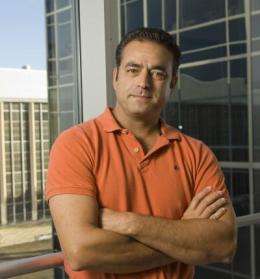
Andrea Amalfitano of the College of Osteopathic Medicine is working on modifying malaria vaccines to boost immune response. Credit: MSU University Relations

Continuing a global effort to prevent malaria infections, Michigan State University researchers have created a new malaria vaccine – one that combines the use of a disabled cold virus with an immune system-stimulating gene – that appears to increase the immune response against the parasite that causes the deadly disease.

At the same time, the group led by Andrea Amalfitano of the College of Osteopathic Medicine also discovered another immune-system stimulating agent – created at MSU and which has been successful in improving responses in vaccines for diseases such as HIV – paradoxically made for a less effective .

Both of the findings will help researchers develop more effective vaccine platforms in general, and malaria vaccines specifically, hopefully leading to human clinical trials soon, Amalfitano said. The research is published in the current edition of PLoS ONE.

"Researchers across the globe are working on ways to prevent people from becoming infected with malaria," said Amalfitano of the disease that kills up to a million people each year, mainly in sub-Saharan Africa. "Some vaccines are showing promise, but they are not as effective as they need to be for any mass distribution."

Amalfitano and his research team are focusing on one such vaccine platform, spearheaded by the U.S. Army, that targets a certain gene on the malaria parasite, a protein called Circumsporozoite Protein, or CSP.

That protein is thought to play a key role in creating an immune response to the malaria parasite; past research shows people infected by malaria multiple times will begin creating an immune response to this protein, suggesting at some level it could be protective.

"What we are looking to do is improve the ability of the vaccine to induce immune responses to that protein," Amalfitano said. "We are adding genes to the vaccine to try and stimulate the immune system."

Those genetic agents, similar to chemical adjuvants, are stimulants that improve the ability of vaccines to induce beneficial immune responses in general.

In mouse models, the researchers used two such "gene-adjuvants": rEA and EAT-2, both of which aimed to illicit improved immune responses to the malaria CSP gene. Surprisingly, the rEA agent – which was developed at MSU in part by the late Barnett Rosenberg – did not produce the desired result and in fact seemed to worsen the animal's ability to generate an to CSP.

However, the EAT-2 gene-adjuvant stimulated the immune system in a different way, and Amalfitano and his team were able to increase the ability of the immune system to respond to CSP to a level that surpassed currently available systems.

"The results were surprising, but we were able to hit our goal eventually," he said. "This research will help us as we create a viable vaccine. While the way that rEA is trying to stimulate the may not be the best way for malaria, we did come up with an alternative adjuvant to effectively target the parasite."

Amalfitano said the next step is to see if researchers can prevent malaria in animal models using the EAT-2 gene-adjuvant: "Then we can take the lessons learned and really go forward and do what's necessary to feel confident to begin human trials."

Provided by Michigan State University search and more info website

not rated yet  

Rank not rated yet
Related Stories
Relevant PhysicsForums posts

More news stories

Now we know why old scizophrenia medicine works on antibiotics-resistant bacteria

In 2008 researchers from the University of Southern Denmark showed that the drug thioridazine, which has previously been used to treat schizophrenia, is also a powerful weapon against antibiotic-resistant bacteria such as ...

Medical research created May 17, 2013 | popularity 3.7 / 5 (3) | comments 0 | with audio podcast

SUMO wrestling cells reveal new protective mechanism target for stroke

Scientists investigating the interaction of a group of proteins in the brain responsible for protecting nerve cells from damage have identified a new target that could increase cell survival.

Medical research created May 17, 2013 | popularity 5 / 5 (1) | comments 0

How serotonin receptors can shape drug effects, from LSD to migraine medication

New findings by researchers carrying out experiments at the U.S. Department of Energy Office of Science's Advanced Photon Source (APS) help explain why some drugs that interact with two kinds of human serotonin ...

Medical research created May 17, 2013 | popularity not rated yet | comments 0 | with audio podcast

Preventing blood poisoning

Peptide molecules derived from the body's natural immune system can help boost the body's defence against life-threatening blood poisoning, joint University research has uncovered.

Medical research created May 17, 2013 | popularity 4 / 5 (1) | comments 0 | with audio podcast

New mechanism to prevent type 2 diabetes in obese individuals

A new Montréal study conducted by Dr. May Faraj, associate research professor at the Université de Montréal and invited scientist at the IRCM, along with her research team and medical collaborators, shows ...

Medical research created May 17, 2013 | popularity not rated yet | comments 0 | with audio podcast


New research identifies risks, interventions for children's GI health

An increasing number of U.S. children are experiencing gastrointestinal issues that require interventions to resolve, according to research presented at Digestive Disease Week (DDW).

AIDS science at 30: 'Cure' now part of lexicon

Big names in medicine are set to give an upbeat assessment of the war on AIDS on Tuesday, 30 years after French researchers identified the virus that causes the disease.

For combat veterans suffering from post-traumatic stress disorder, 'fear circuitry' in the brain never rests

Chronic trauma can inflict lasting damage to brain regions associated with fear and anxiety. Previous imaging studies of people with post-traumatic stress disorder, or PTSD, have shown that these brain regions can over-or ...

US psychiatry gets makeover in new manual

The latest makeover to a massive psychiatric tome honored by some, reviled by others and even called the "Bible" of mental disorders is being released Saturday with a host of new changes.

New case of SARS-like virus in Saudi: ministry

A new case of the deadly coronavirus has been detected in Saudi Arabia where 15 people have already died after contracting it, the health ministry announced on Saturday on its Internet website.

New colonoscope provides ground-breaking view of colon

A ground-breaking advance in colonoscopy technology signals the future of colorectal care, according to research presented today at Digestive Disease Week(DDW). Additional research focuses on optimizing the minimal withdrawal ...