Connecting neurons to fix the brain
October 26, 2011 by Anne Trafton in Neuroscience
Connecting neurons to fix the brain

Enlarge

Graphic: Christine Daniloff

Each of the brain's 100 billion neurons forms thousands of connections with other neurons. These connections, known as synapses, allow cells to rapidly share information, coordinate their activities, and achieve learning and memory. Breakdowns in those connections have been linked to neurological disorders including autism and Alzheimer’s disease, as well as decline of memory during normal aging.

Many scientists believe that strengthening synaptic connections could offer a way to treat those diseases, as well as age-related decline in function. To that end, a team of MIT researchers has developed a new way to grow between cells in a laboratory dish, under very controlled conditions that enable rapid, large-scale screens for potential new drugs.

Using their new technology, the researchers have already identified several compounds that can strengthen synapses. Such drugs could help compensate for the cognitive decline seen in Alzheimer’s, says Mehmet Fatih Yanik, the Robert J. Shillman (1974) Career Development Associate Professor of Electrical Engineering at MIT and leader of the research team. Yanik and his colleagues described the technology in the Oct. 25 online edition of the journal Nature Communications.

Lead author of the study is MIT postdoc Peng Shi. Other authors are MIT graduate students Mark Scott and Zachary Wissner-Gross; Stephen Haggarty, Balaram Ghosh and Dongpeng Wan of Harvard University; and Ralph Mazitschek of Massachusetts General Hospital, who developed and analyzed the potential drug compounds screened in the study.

At a synapse, a neuron sends signals to one or more cells by releasing chemicals called neurotransmitters, which influence the activity of the recipient cell. Scientists can induce neurons grown in a lab dish to form synapses, but this usually produces a jumble of connections that is difficult to study.

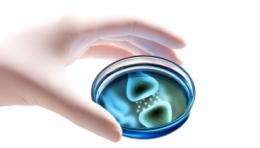
In the new setup devised by Yanik and his colleagues, presynaptic neurons (those that send messages across a synapse) are grown in individual compartments on a lab dish. The compartments have only one opening, into a tiny channel that leads to another compartment. The presynaptic neuron sends its long axon through the channel into the other compartment, where it can form synaptic connections with arranged in a grid. “That way we can induce synapses in very well-defined positions,” Yanik says.

Using this technique, the researchers can create hundreds of thousands of synapses on a single lab dish, then use them to test the effects of potential drug compounds. This technique can detect changes in synaptic strength with 10 times more sensitivity than existing methods.

In this study, the researchers created and tested variants of a type of molecule known as an HDAC inhibitor. HDACs are enzymes that control how tightly DNA is wound inside the cell nucleus, which determines which genes can be copied and expressed. HDAC inhibitors, which loosen DNA coils and reveal genes that had been turned off, are now being pursued as potential treatments for Alzheimer’s and other neurodegenerative diseases.

The researchers’ goal was to find HDAC inhibitors that specifically turn on genes that enhance . To determine which had the strongest effects, they measured the amount of a protein called synapsin found in the presynaptic neurons. Those tests yielded several HDAC inhibitors that strengthened synapses, with the best one improving synapse strength by 300 percent.

Several HDAC inhibitors had little effect on synaptic strength, demonstrating the importance of finding HDAC inhibitors specific to synaptic genes.

The new technology offers a significant improvement over existing methods for growing synapses and studying their formation, says Matthew Dalva, associate professor of neuroscience at Thomas Jefferson University, who was not part of the research team. “Right now we know so little about synapse formation, so this could open new doors,” he says.

In future studies, this system could also be used to examine the connections between specific types of neurons obtained from different regions in the brain, such as those thought to be impaired in people with . Yanik plans to make the technology available to other research groups interested in doing such studies.

Provided by Massachusetts Institute of Technology search and more info website

5 /5 (5 votes)  

Filter


Move the slider to adjust rank threshold, so that you can hide some of the comments.


Display comments: newest first

hush1
Oct 26, 2011

Rank: not rated yet
"...this usually produces a jumble of connections that is difficult to study." Wrong stimulus.

Cell's specificity send signals strengthening the specific types of neurons the cell's specificity represents.
The first step. The origin association.

Eventually the cell's specificity will host signals from external stimulus to target the types of neurons the cell's specificity represents.
The second step. Secondary associations.

That is the way synapses form and strengthen.

Third step is to think for yourselves from now on.
Rank 5 /5 (5 votes)
Related Stories
Relevant PhysicsForums posts
  • Potential Breakthrough in Seizure Control
    created8 hours ago
  • Popping/Cracked sternum.
    created12 hours ago
  • Which Mental Illness Encompasses This Problem?
    created13 hours ago
  • A question about drug tolerance
    createdMay 23, 2012
  • Poor nutrition leading to overeating?
    createdMay 23, 2012
  • Math and dyslexia?
    createdMay 21, 2012
  • More from Physics Forums - Medical Sciences

More news stories

Of mice and mental models: Neuroscientific implications of risk-optimized behavior in the mouse

(Medical Xpress) -- Regardless of an organism’s biological complexity, every encephalized animal continuously makes under-informed behavioral choices that can have serious consequences. Despite its ubiquity, ...

Neuroscience created May 25, 2012 | popularity not rated yet | comments 0 | with audio podcast feature

Persistent sensory experience is good for aging brain

Despite a long-held scientific belief that much of the wiring of the brain is fixed by the time of adolescence, a new study shows that changes in sensory experience can cause massive rewiring of the brain, even as one ages. ...

Neuroscience created May 24, 2012 | popularity not rated yet | comments 0

Boundary stops molecule right where it needs to be

A molecule responsible for the proper formation of a key portion of the nervous system finds its way to the proper place not because it is actively recruited, but instead because it can't go anywhere else.

Neuroscience created May 24, 2012 | popularity not rated yet | comments 0 | with audio podcast

Locating ground zero: How the brain's emergency workers find the disaster area

Like emergency workers rushing to a disaster scene, cells called microglia speed to places where the brain has been injured, to contain the damage by 'eating up' any cellular debris and dead or dying neurons. ...

Neuroscience created May 24, 2012 | popularity 5 / 5 (2) | comments 0 | with audio podcast

Genetic 'reset switch' enables signaling pathway to induce multiple developmental outcomes for olfactory neurons

Within the nervous system, a handful of signaling pathways modulate development of a cornucopia of different neuronal subtypes. “Even small alterations in neuron differentiation pathways can disrupt subsequent ...

Neuroscience created May 24, 2012 | popularity not rated yet | comments 0


Travel to high altitudes tied to Crohn's, colitis flare-ups

(HealthDay) -- People with inflammatory bowel disease, which includes Crohn's disease and colitis, may be at increased risk for flare-ups when they fly or travel to high altitudes for skiing or mountain climbing, ...

Family history of Alzheimer's affects functional connectivity

(HealthDay) -- Cognitively normal individuals with a family history of late-onset Alzheimer's disease (AD) may display lower resting state functional connectivity in the default mode network (DMN) of the brain, ...

Transvaginal mesh op restores pelvic organ prolapse at price

(HealthDay) -- Transvaginal mesh (TVM) procedures are effective for anatomical restoration of pelvic organ prolapse (POP), but patients report a worsening of sexual function following surgery, according to ...

Skp2 activates cancer-promoting, glucose-processing Akt

HER2 and its epidermal growth factor receptor cousins mobilize a specialized protein to activate a major player in cancer development and sugar metabolism, scientists report in the May 25 issue of Cell.

Tongue analysis software uses ancient Chinese medicine to warn of disease

For 5,000 years, the Chinese have used a system of medicine based on the flow and balance of positive and negative energies in the body. In this system, the appearance of the tongue is one of the measures used to classify ...

Early physical therapist treatment associated with reduced risk of healthcare utilization and reduced overall healthcare

A new study published in Spine shows that early treatment by a physical therapist for low back pain (LBP), as compared to delayed treatment, was associated with reduced risk of subsequent healthcare utilization and lower ...