Swiss university creates cardiac issues detector
October 18, 2011 in Cardiology
Swiss technological university EPFL said Tuesday it created an electronic system that detects cardiac problems instantly and passes on the data through a mobile phone to medical personnel.
The system includes small detectors that would be worn by the patient, and which are to follow the cardiac rhythm in real time.
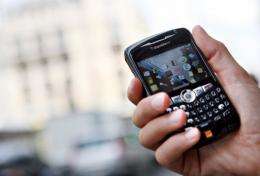
In case of any anomalies, "different information would be sent to the patient's smartphone and then transmitted by SMS or email to the medical team, which can take adequate measures".
"The system allows one to obtain very precise and reliable data, it is equipped with a very efficient sound filter and contains batteries that can last three to four weeks," said David Atienza, an EPFL assistant professor.
The system also "ensures automatic analysis of the data" and their "transmission under a compressed format to the doctor".
Cardiovascular diseases are the biggest killer in the world. According to the WHO, about a third of the world's deaths are due to such illnesses, including 70,000 to 100,000 sudden deaths.
(c) 2011 AFP
-
Patients receiving dialysis are at a heightened risk for sudden cardiac death
Nov 14, 2010 |
not rated yet |
0
-
Heart checks urged for athletes
Oct 04, 2006 |
not rated yet |
0
-
Seeing the forest and the trees reveals heart problems
Jul 26, 2010 |
not rated yet |
0
-
ICDs extend the lives of heart attack survivors by an entire year: Study
May 14, 2009 |
not rated yet |
0
-
Evidence for protective effect of fish oil not conclusive
Dec 24, 2008 |
not rated yet |
0
-
Of mice and mental models: Neuroscientific implications of risk-optimized behavior in the mouse
May 25, 2012 |
not rated yet |
0
-
Limits to growth: Scientists identify key metastasis-enabling enzyme
May 22, 2012 |
5 / 5 (4) |
0
-
Seeing is as seeing does: Spatially-structured retinal input in early development of cortical maps
Apr 26, 2012 |
5 / 5 (4) |
1
-
Dreamless nights: Brain activity during nonrapid eye movement sleep
Apr 09, 2012 |
4.4 / 5 (12) |
0
-
Take your time: Neurobiology sheds light on the superiority of spaced vs. massed learning
Mar 28, 2012 |
4.5 / 5 (21) |
3
-
Force in a magnetic coupling
8 hours ago
-
Sign of scalar product in electric potential integral?
15 hours ago
-
Heat engines: how can we yield work?
16 hours ago
-
Work done by us on the spring
May 25, 2012
-
Surface current density
May 25, 2012
-
Work done on body moving in a circle
May 25, 2012
- More from Physics Forums - Classical Physics
More news stories
One-fifth of healthy middle-aged men have low-grade murmur
(HealthDay) -- More than one-fifth of healthy middle-aged men have a low-grade systolic heart murmur that confers a nearly five-fold higher risk of future aortic valve replacement (AVR), according to a study ...
Cardiology
May 25, 2012 |
not rated yet |
0
New device allows pacemaker patients to safely undergo MRIs
For many, it's a medical conundrum: The very pacemaker keeping their heart in rhythm prevents them from undergoing an MRI to diagnose other ailments, because interaction between the two devices could prove deadly.
Cardiology
May 25, 2012 |
not rated yet |
0
|
New study should end debate over magnesium treatment for preventing poor outcome after haemorrhagic stroke
An international randomised trial and meta-analysis published Online First in The Lancet should put an end to the debate about the use of intravenous magnesium sulphate to prevent poor outcomes after haemorrhagic stroke. The in ...
Cardiology
May 25, 2012 |
not rated yet |
0
Low vitamin D in diet increases stroke risk in Japanese-Americans
Japanese-American men who did not eat foods rich in vitamin D had a higher risk of stroke later in life, according to results of a 34-year study reported in Stroke, an American Heart Association journal.
Cardiology
May 24, 2012 |
not rated yet |
0
Clot buster seems to help up to 6 hours after stroke
(HealthDay) -- The largest study of its kind finds that stroke patients benefit from a clot-busting drug even six hours after a stroke, suggesting that the current recommended 4.5-hour limit could be expanded.
Cardiology
May 24, 2012 |
not rated yet |
0
Travel to high altitudes tied to Crohn's, colitis flare-ups
(HealthDay) -- People with inflammatory bowel disease, which includes Crohn's disease and colitis, may be at increased risk for flare-ups when they fly or travel to high altitudes for skiing or mountain climbing, ...
Family history of Alzheimer's affects functional connectivity
(HealthDay) -- Cognitively normal individuals with a family history of late-onset Alzheimer's disease (AD) may display lower resting state functional connectivity in the default mode network (DMN) of the brain, ...
Transvaginal mesh op restores pelvic organ prolapse at price
(HealthDay) -- Transvaginal mesh (TVM) procedures are effective for anatomical restoration of pelvic organ prolapse (POP), but patients report a worsening of sexual function following surgery, according to ...
Tongue analysis software uses ancient Chinese medicine to warn of disease
For 5,000 years, the Chinese have used a system of medicine based on the flow and balance of positive and negative energies in the body. In this system, the appearance of the tongue is one of the measures used to classify ...
Of mice and mental models: Neuroscientific implications of risk-optimized behavior in the mouse
(Medical Xpress) -- Regardless of an organism’s biological complexity, every encephalized animal continuously makes under-informed behavioral choices that can have serious consequences. Despite its ubiquity, ...
Weight struggles? Blame new neurons in your hypothalamus
New nerve cells formed in a select part of the brain could hold considerable sway over how much you eat and consequently weigh, new animal research by Johns Hopkins scientists suggests in a study published in the May issue ...