New effort to reduce drug shortages a small step
(AP) -- Unprecedented drug shortages are threatening the lives of cancer patients and other seriously ill people, and the Obama administration's plan to tackle them is but a small step toward solving a complex problem.
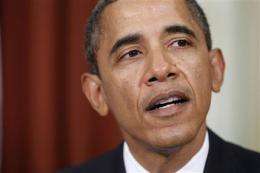
President Barack Obama ordered the Food and Drug Administration on Monday to take new steps to send out early warnings about looming shortages and try to avert them.
"Even though the FDA has successfully prevented an actual crisis, this is one of those slow-rolling problems that could end up resulting in disaster for patients and health care facilities all over the country," Obama said.
There's already a crisis in the eyes of many frustrated doctors and hospitals who are scrambling for supplies of medicines ranging from common chemotherapies, to anesthetics used in surgery, to the electrolytes that are crucial to IV feeding in intensive care. Fifteen deaths have been blamed on shortages. Patients have had treatments delayed, surgeries canceled, or had to use second-choice medications. Hospitals are reporting price-gouging - such as a drug that usually costs $26 being offered for $1,200.
Sometimes, "you have to look the patient in the eye and say, `I can't treat you. I certainly can't treat you the way I meant to treat you,'" said Dr. James Speyer, medical director of the clinical cancer center at New York University Langone Medical Center.
"That's a terrible thing to have to do, and it's happening across the country," added Speyer, who said Obama's action is important but doesn't address one key part of the problem - drug profits. "Unfortunately, we're going to be living with the problems of these shortages for some time."
It's unthinkable to patients who find themselves caught in the mess.
"How in the United States of America could critical lifesaving or life-prolonging drugs be in short supply?" asked Jay Cuetara, 49, of San Francisco, who said chemotherapy to hold back his advanced cancer recently was delayed by a week when his hospital ran out and couldn't get more. He joined Obama in the Oval Office Monday as the president signed an executive order directing the FDA's next steps.
Just how big the shortage is depends on how you count, but this is a record-setting year. The FDA reported 178 drug shortages last year and says it sees more this year. The University of Utah's Drug Information Service reports higher numbers: 232 shortages this year, up from 211 last year. The Utah service tracks shortages for the American Society of Health-System Pharmacists, and has documented a tripling of the problem over the past five years.
Recent shortages could have been even worse: The FDA said Monday it had prevented 137 more drug shortages in the past two years, when companies told regulators they were having trouble. Options include getting other manufacturers to ramp up their own production, helping to find alternative suppliers of key ingredients, sometimes even allowing temporary importation of competing drugs sold only abroad.
Obama's executive order instructs the FDA to take more such steps - to push more companies to come forward about potential shortages, to speed applications to change production of those drugs, and to alert the Justice Department about possible collusion or price-gouging.
The administration also supports legislation pending in Congress that would go a step further and require more industry reporting of shortages,
Overwhelmingly, the drugs in short supply are injectable medications used mostly by medical centers. They're usually generic drugs, not pricier brand-name versions. Just half a dozen companies are the main suppliers, said University of Utah pharmacist Erin Fox. A number of those factories have had to close for safety or quality upgrades in recent years, and there have been some shortages of ingredients bought abroad.
An Obama administration analysis concluded a big part of the problem is rising demand, especially for cancer drugs, that those companies haven't been able to boost production to meet.
But, "the main cause of drug shortages is economic," argued Dr. Thomas J. Smith of Johns Hopkins' Sidney Kimmel Comprehensive Cancer Center and Virginia Commonwealth University pharmacist Mandy Gatesman in this week's New England Journal of Medicine.
Reimbursement for administering IV drugs is a percentage of the average sales price, what they call an incentive to prescribe a pricier version. Also, manufacturers want to produce versions with a higher profit-margin. Consider that shortages of a common cancer drug named leucovorin didn't start until the FDA approved a similar competitor that worked as well but, because it was new, was 58 times more expensive, the pair wrote.
The Generic Pharmaceutical Association said it would work with FDA.
But FDA Commissioner Margaret Hamburg acknowledged her agency can address only part of the problem.
"There's no single or simple solution," she said. Still, "we can make a very real and meaningful difference by expanding our network of early warnings."
The executive action is part of a larger push by the White House to portray Obama, who is facing re-election, as an effective counterpoint to congressional Republicans blocking his jobs legislation. Last week, he issued an executive order to help homeowners refinance at lower mortgage rates and to allow college graduates to simplify and lower their student loan payments. On Friday he directed government agencies to shorten the time it takes for federal research to turn into commercial products in the marketplace.
The Republican National Committee called Monday's order "political expediency," noting that shortages have made headlines for much of Obama's presidency.
©2011 The Associated Press. All rights reserved. This material may not be published, broadcast, rewritten or redistributed.


