Internal skin cancer prevention: Repairing UV damage in the skin
November 24, 2011 in Cancer
Internal skin cancer prevention: repairing UV damage in the skin

(Medical Xpress) -- Scientists at the Friedrich Miescher Institute for Biomedical Research (FMI) of the Novartis Research Foundation have elucidated the mechanisms underlying the repair of UV-induced damage in DNA, which frequently causes skin cancer. The protein structures additionally determined by these researchers will improve our understanding of how the body protects itself against skin cancer. These studies lay the foundations for the development of a new class of anti cancer agents. The findings were published today in Cell.

Without capturing public attention, the number of new cases of skin cancer is continuously increasing. This type of cancer is now more common than breast, colon and combined. No less discouraging is the fact that the number of deaths from skin cancer is also steadily rising - in contrast to the trends observed for many other cancers, where are improving thanks to effective treatments. But reliable treatments can only be developed if the underlying skin cancer are better understood. Here, scientists at the FMI have made an important breakthrough, as they report in the latest issue of Cell.

It is well known that skin cancer arises from damage caused by the sun's ultraviolet (UV) radiation. This radiation produces mutations in DNA which influence , possibly leading to cancer. Although the body has various strategies for repairing such damage, the most frequent type of UV lesion turns out to be particularly problematic. In this case, two components of DNA combine to form structures known as cyclobutane pyrimidine dimers (CPDs). These are difficult for the cell's repair system to detect - partly because they are inconspicuous, given the size of the entire genome, but also because they remain hidden within tightly coiled DNA.

Group Leader Nicolas Thomä and his team at the FMI, working together with colleagues from Kobe and Osaka, have now identified the molecular machinery which allows the cell to recognize not detected by the normal repair system.

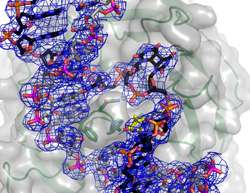
In these processes, a key role is played by a protein complex known as DDB1-DDB2-Cul4 ubiquitin ligase. A subunit of this complex, DDB2, specifically recognizes CPDs even if they are located in parts of the DNA which are tightly coiled. The researchers also showed how another protein in this complex, ubiquitin ligase, is activated by the binding of DDB2 to damaged DNA and thus directly triggers degradation processes in cells. Thomä comments: "With this work, for the first time, we've traced the steps whereby these common but treacherous genomic UV lesions are recognized and the cells are ultimately eliminated. The mechanism works like molecular sun cream, protecting cells from damage and thus preventing ."

But the findings are also relevant to diseases caused by defects in this repair mechanism, such as Cockayne syndrome or xeroderma pigmentosum. In both of these conditions, patients are extremely sensitive to . However, they also exhibit other symptoms attributable to the accumulation of DNA errors. As Thomä explains, "The protein structures we've determined are a foundation on which specific inhibitors can be developed. Of particular interest here are the ubiquitin ligases, which not only play a role in rare diseases, but have been implicated in the development of many types of cancer."

More information: Fischer ES, Scrima A, Böhm K, Matsumoto S, Lingaraju GM, Faty M, Yasuda T, Cavadini S, Wakasugi M, Hanaoka F, Iwai S, Gut H, Sugasawa K, Thomä NH. (2011). "The molecular basis of CRL4(DDB2/CSA) ubiquitin ligase architecture, targeting and release of signalosome inhibition". Cell, 147, 5.

Journal reference: Cell search and more info website

Provided by Friedrich Miescher Institute for Biomedical Research

not rated yet  

Rank not rated yet
Relevant PhysicsForums posts
  • Potential Breakthrough in Seizure Control
    created9 hours ago
  • Popping/Cracked sternum.
    created14 hours ago
  • Which Mental Illness Encompasses This Problem?
    created14 hours ago
  • A question about drug tolerance
    createdMay 23, 2012
  • Poor nutrition leading to overeating?
    createdMay 23, 2012
  • Math and dyslexia?
    createdMay 21, 2012
  • More from Physics Forums - Medical Sciences

More news stories

Skp2 activates cancer-promoting, glucose-processing Akt

HER2 and its epidermal growth factor receptor cousins mobilize a specialized protein to activate a major player in cancer development and sugar metabolism, scientists report in the May 25 issue of Cell.

Cancer created 22 hours ago | popularity not rated yet | comments 0 | with audio podcast

Pancreatectomy OK without downstaging from therapy

(HealthDay) -- Pancreatectomy improves median survival in pancreatic cancer patients even when presurgical neoadjuvant therapy does not lead to radiographic downstaging of tumors, according to a study published ...

Cancer created May 25, 2012 | popularity not rated yet | comments 0

Common therapies for basal cell carcinoma offer similar survival

(HealthDay) -- For patients with superficial basal cell carcinoma (sBCC), treatment with imiquimod or photodynamic therapy (PDT) results in similar long-term tumor-free survival, according to a review published ...

Cancer created May 25, 2012 | popularity not rated yet | comments 0

Cancer may require simpler genetic mutations than previously thought

Chromosomal deletions in DNA often involve just one of two gene copies inherited from either parent. But scientists haven't known how a deletion in one gene from one parent, called a "hemizygous" deletion, can contribute ...

Cancer created May 25, 2012 | popularity not rated yet | comments 0 | with audio podcast

New prostate cancer screening guidelines face a tough sell, study suggests

(Medical Xpress) -- Recent recommendations from the U.S. Preventive Services Task Force (USPSTF) advising elimination of routine prostate-specific antigen (PSA) screening for prostate cancer in healthy men are likely to encounter ...

Cancer created May 25, 2012 | popularity not rated yet | comments 1


Travel to high altitudes tied to Crohn's, colitis flare-ups

(HealthDay) -- People with inflammatory bowel disease, which includes Crohn's disease and colitis, may be at increased risk for flare-ups when they fly or travel to high altitudes for skiing or mountain climbing, ...

Family history of Alzheimer's affects functional connectivity

(HealthDay) -- Cognitively normal individuals with a family history of late-onset Alzheimer's disease (AD) may display lower resting state functional connectivity in the default mode network (DMN) of the brain, ...

Transvaginal mesh op restores pelvic organ prolapse at price

(HealthDay) -- Transvaginal mesh (TVM) procedures are effective for anatomical restoration of pelvic organ prolapse (POP), but patients report a worsening of sexual function following surgery, according to ...

Tongue analysis software uses ancient Chinese medicine to warn of disease

For 5,000 years, the Chinese have used a system of medicine based on the flow and balance of positive and negative energies in the body. In this system, the appearance of the tongue is one of the measures used to classify ...

Early physical therapist treatment associated with reduced risk of healthcare utilization and reduced overall healthcare

A new study published in Spine shows that early treatment by a physical therapist for low back pain (LBP), as compared to delayed treatment, was associated with reduced risk of subsequent healthcare utilization and lower ...

Flesh-Eating bacteria no cause for panic, experts say

(HealthDay) -- Despite scary headlines by the score, most people don't have to fear that they'll be the next victim of the so-called flesh-eating bacteria disease, experts say.