Where's the salt? Hidden in your Thanksgiving menu
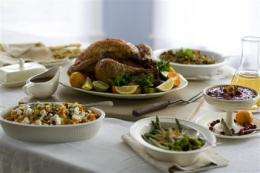
(AP) -- No need for a salt shaker on the Thanksgiving table: Unless you really cooked from scratch, there's lots of sodium already hidden in the menu.
Stealth sodium can do a number on your blood pressure. Americans eat way too much salt, and most of it comes inside common processed foods and restaurant meals.
The traditional Thanksgiving fixings show how easy sodium can sneak into the foods you'd least expect. Yes, raw turkey is naturally low in sodium. But sometimes a turkey or turkey breast is injected with salt water to plump it, adding a hefty dose of sodium before it even reaches the store - something you'd have to read the fine print to discover.
From the stuffing mix to the green bean casserole to even pumpkin pie, a lot of people can reach their daily sodium allotment or more in that one big meal unless the cook employs some tricks.
"For Thanksgiving or any meal, the more you can cook from scratch and have some control over the sodium that's going in, the better," says the American Dietetic Association's Bethany Thayer, a registered dietitian at the Henry Ford Health Health System in Detroit.
The Food and Drug Administration this month opened deliberations on how to cut enough salt in processed foods for average shoppers to have a good shot at meeting new dietary guidelines. The idea: If sodium levels gradually drop in the overall food supply, it will ease the nation's epidemic of high blood pressure - and our salt-riddled taste buds will have time to adjust to the new flavor.
"Reducing sodium is important for nearly everyone," Dr. Robin Ikeda of the Centers for Disease Control and Prevention told the FDA hearing.
The question is how to make that happen. The prestigious Institute of Medicine and several public health advocates are urging the FDA to order gradual rollbacks, setting different sodium levels for different kinds of foods, a step the government has been reluctant to take.
Food makers want a voluntary approach and say they're reworking their recipes, some as part of a campaign launched by New York City to cut salt consumption by at least 20 percent over five years.
It will take different strategies to remove salt from different foods - and some may need to be a sneak operation, Kraft Foods Vice President Richard Black told the FDA meeting. Ritz crackers labeled low-sodium were a bust until the box was changed to say "Hint of Salt" and those exact same crackers started selling, he said.
In other foods, salt acts as a preservative with a variety of functions. Kraft sells cheese with somewhat less sodium in Britain than in the U.S. Americans melt a lot of cheese and lower-sodium cheese doesn't melt as well, Black said.
In the U.S., the average person consumes about 3,400 milligrams of sodium a day. The nation's new dietary guidelines say no one should eat more than 2,300 milligrams of sodium - about what's in a teaspoon of salt - and half the population should eat even less, just 1,500 milligrams. The smaller limit is for anyone who's in their 50s or older, African-Americans of any age, and anyone suffering from high blood pressure, diabetes or chronic kidney disease.
Why? One in three U.S. adults has high blood pressure, a leading cause of heart attacks, strokes and kidney failure. Being overweight and inactive raises blood pressure, too, but the weight of scientific evidence shows sodium is a big culprit.
People want to eat heart-healthy, but Wal-mart shoppers spend about 19 minutes buying groceries, added Tres Bailey of Wal-mart Stores Inc., which told its vendors to start cutting sodium.
That's not a lot of time for label-reading to find hidden sodium, especially in foods where it's unexpected - like salad dressings that can harbor more than 130 milligrams per tablespoon.
Depending on your choices, Thanksgiving dinner alone can pass 2,000 milligrams: About 600 per serving from stuffing mix, another 270 from gravy. The salt water-added turkey can bring another 320, double that if you saved time and bought it fully-cooked. Use canned beans in the green bean casserole and add another 350. A small dinner roll adds 130. A piece of pumpkin pie could bring as much as 350.
How to cut back? Thayer, the dietitian, has some tips for Thanksgiving and beyond:
-All bread contains sodium, but starting with a homemade cornbread for stuffing could help cut a few hundred milligrams.
-Use low-sodium broth for the gravy, and choose low-sodium soups whenever possible.
-Try onion, garlic and a variety of other herbs in place of salt. Lemon and other citrus also can stand in for salt in some foods.
-Check your spice bottles. Combination products, such as those labeled poultry seasoning, can contain salt.
-Fresh or frozen vegetables have little if any sodium, unless you choose the frozen kind with an added sauce.
-People tend to heavily salt mashed potatoes while sweet potatoes, even dressed up as a souffle, contain very little sodium.
Going suddenly low-salt can startle your palate, "but it adjusts much quicker than I think most people realize," Thayer says.
©2011 The Associated Press. All rights reserved. This material may not be published, broadcast, rewritten or redistributed.


