Spinal cord treatment offers hope
November 18, 2011 in Neuroscience

Spinal cord treatment offers hope

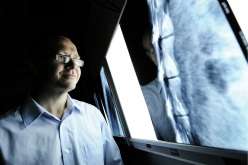
Dr Ben Goss is part of a research team developing a new way to treat spinal cord injuries.

Queensland University of Technology (QUT) researchers have developed a promising new treatment for spinal cord injury in animals, which could eventually prevent paralysis in thousands of people worldwide every year.

Dr Ben Goss, from the Institute for Health and Biomedical Innovation (IHBI) at QUT, is part of a research team investigating how to prevent the spinal cord from degenerating after an injury.

"The initial injury to the spinal cord is much like a bruise," he said.

"However, unlike ordinary bruises the spinal cord has a persistent that leads to further damage.

"Our research is looking at the effects of adding proteins, also known as growth factors, to the spinal cord to reduce or switch off the inflammation and prevent secondary ."

The treatment, which combined vascular endothelial and platelet-derived proteins, was applied to animals immediately after a spinal cord injury and evaluated after one and three month periods.

Dr Goss said researchers, including from Griffith University, found the size of the lesion caused by the spinal cord injury was significantly smaller in the treated group compared to animals that did not receive treatment.

He said there was also significantly less damage to tissue around the spinal cord injury after the new treatment.

"This study has demonstrated for the first time a treatment can reduce or eliminate secondary degeneration after to the spinal cord," Dr Goss said.

"At present spinal cord injury is permanent and irreversible, but I believe our research has the potential to improve outcomes and this might be the first step to achieving a cure."

The research, published in the Journal of Neurotrauma, could help 30,000 people worldwide, including about 400 Australians, who sustain every year.

About 9000 Australians live with disabilities caused by , with causing nearly half of such injuries in Australia.

Dr Goss said The Walk Again Society, which funds spinal cord injury research, is raising money to support the project, which is eventually hoped to include clinical trials.

Provided by Queensland University of Technology search and more info website

4 /5 (1 vote)  

Rank 4 /5 (1 vote)
Relevant PhysicsForums posts

More news stories

For combat veterans suffering from post-traumatic stress disorder, 'fear circuitry' in the brain never rests

Chronic trauma can inflict lasting damage to brain regions associated with fear and anxiety. Previous imaging studies of people with post-traumatic stress disorder, or PTSD, have shown that these brain regions can over-or ...

Neuroscience created May 18, 2013 | popularity 5 / 5 (1) | comments 0 | with audio podcast

Temporal processing in the olfactory system

The neural machinery underlying our olfactory sense continues to be an enigma for neuroscience. A recent review in Neuron seeks to expand traditional ideas about how neurons in the olfactory bulb might encode information about ...

Neuroscience created May 17, 2013 | popularity not rated yet | comments 0 | with audio podcast report

Melon focus headband turns to Kickstarter for rollout plans

(Medical Xpress)—What if the quality of your work depends more on your focus on the piano keys or canvas or laptop than your musical or painting or computing skills? If target users can be convinced, they ...

Neuroscience created May 17, 2013 | popularity 3.7 / 5 (3) | comments 0 | with audio podcast weblog

Deep brain stimulation: A fix when the drugs don't work

Neurological disorders can have a devastating impact on the lives of sufferers and their families.

Neuroscience created May 17, 2013 | popularity 5 / 5 (1) | comments 0 | with audio podcast

Brain makes call on which ear is used for cell phone

If you're a left-brain thinker, chances are you use your right hand to hold your cell phone up to your right ear, according to a newly published study from Henry Ford Hospital in Detroit.

Neuroscience created May 16, 2013 | popularity 2 / 5 (2) | comments 0 | with audio podcast


Ketamine shows significant therapeutic benefit in people with treatment-resistant depression

Patients with treatment-resistant major depression saw dramatic improvement in their illness after treatment with ketamine, an anesthetic, according to the largest ketamine clinical trial to-date led by researchers from the ...

Consuming coffee linked to lower risk of detrimental liver disease, study finds

Regular consumption of coffee is associated with a reduced risk of primary sclerosing cholangitis (PSC), an autoimmune liver disease, Mayo Clinic research shows. The findings were being presented at the Digestive Disease ...

Research examines new methods for managing digestive health

Research presented at Digestive Disease Week (DDW) explores new methods for managing digestive health through diet and lifestyle.

New smartphone application improves colonoscopy preparation

The use of a smartphone application significantly improves patients' preparation for a colonoscopy, according to new research presented today at Digestive Disease Week (DDW). The preparation process, which begins days in ...

New research identifies practice changes to improve value and quality of GI procedures

There are significant cost and risk factors associated with two procedures commonly used to diagnose or treat gastrointestinal problems, according to research presented at Digestive Disease Week (DDW).

New research identifies risks, interventions for children's GI health

An increasing number of U.S. children are experiencing gastrointestinal issues that require interventions to resolve, according to research presented at Digestive Disease Week (DDW).