Twin study offers insight into antisocial behavior
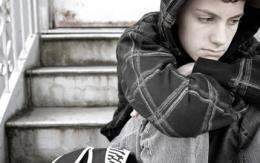
(Medical Xpress) -- There is good reason students and faculty walking the halls of the Seeley G. Mudd building think they are seeing double — they are.
For the past 11 years, hundreds of sets of twins have visited the lab of Laura Baker, professor of psychology in USC Dornsife, to participate in a study focused on the roles heredity and environment play in producing delinquent behaviors in paternal and identical twins.
The findings so far have been remarkable. According to Baker, for the first time data shows psychopathy — a syndrome involving callous and unemotional traits combined with antisocial, manipulative and deceitful behavior — has been found consistently across childhood and adolescence and genetics may play a large role in this condition.
“We see a strong genetic component to antisocial traits in kids as early as 9 to 10 years of age,” Baker said. “There is a fairly stable set of traits both phenotypically and genetically across development. It does look like there may be some of the same biological signatures associated with these traits that we’ve seen in adulthood that appear as early as childhood and adolescence.”
Baker’s research looks at environmental versus genetic disposition in delinquent behavior. Researchers in Baker’s laboratory are examining biological and social factors that cause antisocial outcomes.
“If we understand the nature of these traits more clearly and understand their roots in childhood then we are in a better position to come up with, early identification, interventions and prevention of delinquent behavior,” said Baker, director of the Southern California Twin Project based in USC Dornsife.
To gain a deeper understanding of how genes and environment influence relationships, Baker and her team are comparing and contrasting behaviors of monozygotic (identical) and dizygotic (fraternal) twins.
For instance, they are observing the types of friends selected by twins. If identical twins choose the same kinds of friends more often than paternal twins, then a genetic influence toward selecting preferred peer characteristics may be at work. The relationship between deviant peers and a child’s antisocial behavior may not reflect a simple directional cause from peers to the child. Instead, there are likely to be complex, multidirectional influences whereby kids choose certain kinds of peers, who in turn enhance their antisocial tendencies.
The Southern California Twin Project, funded through 2014 by the National Institute of Mental Health (NIMH), has been tracking 750 sets of twins from socioeconomically and ethnically diverse backgrounds since they were 9. The participants will be either 19 or 20 when they return to participate in the fifth phase of the study which begins this month. Wave five assessments will take 2-3 years to complete.
Then, the twins will participate in a test similar to one they underwent at the study’s onset. During the six to eight hour tests conducted in the Seeley G. Mudd building, their parents were interviewed by a USC Dornsife undergraduate, graduate student or postdoctoral researcher about their children’s behavior. Each twin was interviewed separately by a member of Baker’s team about his or her sibling before beginning their psychophysiology tests.
Seated in a chair opposite a computer monitor, a research assistant placed a 32-electrode cap on the twin participant’s head – a stretchy mesh headpiece akin to a swim cap only with electrodes attached to each end of the wires.
Each twin was given eight to 10 tasks ranging from resting to activities meant to elicit some stress such as making quick decisions, or evoke emotional responses while viewing scary or sad movie clips or pictures of angry faces. All the while heartbeat, breathing, sweating, eye blinks and electroencephalogram (EEG) readings were collected to determine how each twin physically responded to specific conditions.
Observations of heart rate, breathing and eye blinks provide researchers insight into how each child responds toward stimuli. Using this data, researchers have discovered more aggressive antisocial children display low resting heart rates and low arousal, and dampened responses to incoming information from the environment.
Karina Gómez, the twin project manager, has been involved in the study since its launch in 2001. After graduating with a bachelor’s in communications and a minor in psychology from USC Dornsife in 2001, she returned to Baker’s lab as a staff member.
“This study is tapping into something that can be taken out of the research realm and put into practical use,” Gómez said. “It has a lot of implications for education and for understanding learning disabilities and problem behaviors in children and adolescents.”
Baker’s lab has also found that the lower heart rate in aggressive antisocial children is almost entirely caused by genetics. Baker emphasized, however, that the findings so far do not signify that biology is destiny.
“It is more a biological risk that seems to be inherited,” said Baker, who joined USC Dornsife in 1984. “There is always opportunity for the environment to modify things.”
The study’s findings will serve as a foundation for developing interventions and preventions.
With the wealth of information emerging from the study, Baker can foresee following the twins throughout adulthood. The data has drawn great interest from undergraduate and graduate students. Baker carefully selects those to join her team of interviewers, assessors and psychophysiology testers.
So far, over 150 undergraduate students have volunteered in her lab.
“Many of them have become wonderful key members of my lab,” said Baker, adding that 25 to 30 researchers are working in the lab during peak times of data collection.
The opportunity to learn how the body responds to various events and stressors led Tiffany Pouldar, a senior psychology major in USC Dornsife, to Baker’s lab.
“In Dr. Baker’s lab, I get experience in both psychology and health field applications,” said Pouldar, an aspiring physician. “I’m not just reading something out of a book but seeing it with my own eyes and applying everything I have learned in the lab.”
In April 2011, Pouldar and Hyeran Shin, now a USC Dornsife alumna, used data from the twin study to investigate gender differences in stressful situations. They entered their project, “What Makes You Sweat: Genetic and Environmental Influences on Skin Conductance Reponses to Stress” in the 13th annual Undergraduate Symposium for Scholarly and Creative Work.
Also in Baker’s lab, Sharon Niv, a fourth-year Ph.D. student in psychology, is examining the EEG patterns in twins in an effort to predict symptoms of depression, anxiety, aggression or delinquency.
“Professor Baker has really let me in on the process of forming a big research study,” said Niv, who has worked in the lab since 2008. “The wide breadth of data that I’ve worked with here has been a great benefit to me and it’s preparing me for future research.”


