Woodsmoke from cooking fires linked to pneumonia, cognitive impacts
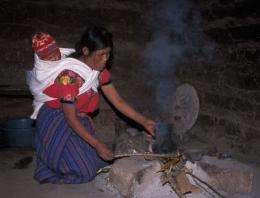
Two new studies led by University of California, Berkeley, researchers spotlight the human health effects of exposure to smoke from open fires and dirty cookstoves, the primary source of cooking and heating for 43 percent, or some 3 billion members, of the world's population. Women and young children in poverty are particularly vulnerable.
In the first study, the researchers found a dramatic one-third reduction in severe pneumonia diagnoses among children in homes with smoke-reducing chimneys on their cookstoves. The second study uncovered a surprising link between prenatal maternal exposure to woodsmoke and poorer performance in markers for IQ among school-aged children.
The findings on pneumonia, the chief cause of death for children five and under, will be published in the journal Lancet on Thursday, Nov. 10, two days before World Pneumonia Day. While previous research has linked exposure to household cooking smoke to respiratory infections, the latest results come from the first-ever randomized controlled trial – the gold standard of scientific experiments – on air pollution.
"This study is critically important because it provides compelling evidence that reducing household woodsmoke exposure is likely a public health intervention that is on a par with vaccinations and nutrition supplements for reducing severe pneumonia, and is worth investing in," said Kirk Smith, professor of global environmental health at UC Berkeley's School of Public Health and principal investigator of the RESPIRE (Randomized Exposure Study of Pollution Indoors and Respiratory Effects) study.
"There is a huge burden of disease and death due to child pneumonia, and there aren't a lot of good interventions out there," added Dr. Arthur Reingold, a UC Berkeley professor of epidemiology and an internationally recognized expert on infectious diseases, who was not part of the RESPIRE trial. "Randomized controlled trials are frequently demanded by funding agencies and decision makers before they are willing to make substantial investments in new technologies or strategies, and this study provides the needed evidence of an intervention that works."
In the RESPIRE study – which includes partners from Guatemala's Universidad Del Valle, the U.S. Centers for Disease Control and Prevention, University of Liverpool, Norway's University of Bergen and the World Health Organization – researchers worked with rural communities in the Western Highlands of Guatemala. Households with a pregnant woman or young infant were randomly assigned to either receive a woodstove with a chimney or to continue cooking with traditional open woodfires.
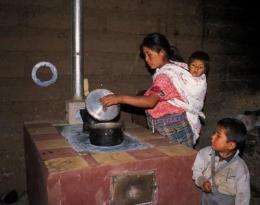
The researchers found that using chimneys to vent cooking smoke outside homes led to a more striking decrease in cases of severe pneumonia compared with total pneumonia cases, possibly because the reduction in smoke with the chimney stoves was insufficient to significantly reduce all risk.
"The amount of smoke exposure babies were getting from the open woodfire stoves is comparable to having them smoke three to five cigarettes a day," said Smith, whose research in this field began 30 years ago. "The chimney stoves reduced that smoke exposure by half, on average."
In all there were 265 children in the chimney-stove homes and 253 children in the control homes. During the study, the researchers reported 149 children in the chimney-stove homes and 180 in the open-fire homes with physician-diagnosed pneumonia. For severe pneumonia, characterized by low blood oxygenation, there were 72 cases in the chimney-stove group and 101 in the control group.
In the second study, published online Sept. 24 in the journal NeuroToxicology, Smith led the research team that followed up with some of the families in the RESPIRE trial, which officially ended in 2005 when the infants were 18 months old. In 2010, when the children were 6-7 years old, the researchers recruited 39 mother-child pairs for the study.
The results found, for the first time, a link between exposure to woodsmoke – as determined by carbon monoxide levels measured individually – during the third trimester of pregnancy and lower performance on neurodevelopmental tests when the children were ages 6 and 7. Specifically, the researchers found impairments in visuo-spatial perception and integration, visual-motor memory, and fine motor skills.
"I was surprised because woodsmoke was always considered a risk for respiratory health, but not IQ," said study lead author Linda Dix-Cooper, who conducted the study for her master's thesis in UC Berkeley's Global Health and Environment graduate program. "The implications of our findings are highly worrisome. Neurodevelopmental impacts have societal costs, such as impacts on an individual's future lifetime earnings and educational attainment."
Dix-Cooper added that similar cognitive impacts among children have been noted in previous case reports of childhood acute carbon monoxide poisonings and in epidemiological investigations of other prenatal air pollutant exposures in developed countries' urban centers. However, larger studies are needed to confirm the link with pollution from woodsmoke, she said.
The new studies come amid growing worldwide attention to the need for cleaner, more fuel-efficient cookstoves. Just last year, the United Nations Foundation launched the Global Alliance for Clean Cookstoves, an international public-private initiative championed by Secretary of State Hillary Clinton.
In addition to the health consequences of burning wood, charcoal, dung or crop residue for cooking and heating, the alliance noted that use of traditional cookstoves increases pressures on local natural resources, contributes to climate change and puts women in danger when they forage for fuel in conflict zones.
Finding cleaner alternatives to traditional cookstoves has been an area of active research at UC Berkeley and the Lawrence Berkeley National Laboratory (LBNL) for decades. Some current projects are part of the UC Berkeley-based Blum Center for Developing Economies. They include one led by Smith to replace unhealthy coal stoves in rural China through carbon offsets, and another led by Daniel Kammen, Class of 1935 Distinguished Professor of Energy at UC Berkeley, to develop cost-effective methods to disseminate improved cook stoves throughout Tanzania.
"The biggest collection of people working in the area of cookstoves in the world is at UC Berkeley and LBNL," said Kammen, who co-authored a 2001 study linking smoke from cookstoves and health in Kenya that also appeared in The Lancet. "We are the center of this field in the academic community." Kammen just returned to campus from a one-year stint as the first clean-energy czar at the World Bank, one of the biggest sources of funding for cookstove projects and technology


