Health Squeeze: UK's free health care under threat
(AP) -- When David Evans needed a hernia operation, the 69-year-old farmer became so alarmed by the long wait that he used an ultrasound machine for pregnant sheep on himself, to make sure he wasn't getting worse.
It was only after repeated calls from himself, his doctor and his local member of parliament that the hospital performed the surgery, nearly a year after it was first requested. Under government guidelines, he should have started getting treatment within 18 weeks.
"I was in quite a lot of pain," Evans said of his ordeal in Cornwall, southwest England. "It really restricted what I could do around the farm since I couldn't lift anything heavy."
Across Britain, an increasing number of patients like Evans are facing more pain and longer waits. That's because the National Health Service is being forced to trim 20 billion pounds ($31 billion) from its budget by 2015, as part of the most radical changes made since the system was founded more than 60 years ago.
For many hospitals, that means saving money by raising the threshold for who qualifies for treatment and extending waiting times for non-lifesaving surgeries.
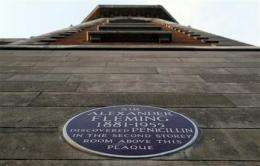
In January, the government introduced a new health bill that many fear will bring even more draconian cuts and competition from private providers. The bill, now in the process of being adopted, will ax more than 20,000 health jobs in the next two years and shut an undisclosed number of hospitals, possibly including the iconic St. Mary's in London, where Alexander Fleming discovered penicillin.
The medical profession is outraged.
"The government is wrong to ask us to cut 20 billion pounds because the pressure on the entire service is rising and with the expense of new drugs and treatments, it's impossible," said Sir Richard Thompson, president of the Royal College of Physicians.
"We've seen waiting lists go up, signs (hospitals and doctors) are trying to prevent patients from going to (the) hospital," he said. "I think it's immoral."
Doctors and nurses have revolted. All of the top medical organizations are opposed to the health bill and many argue that scrapping the proposed changes would actually save 1.4 billion pounds (US$2.2 billion), by getting rid of the bureaucratic effort to overhaul the system. The British Medical Association warned more competition means providers could choose only to offer profitable services rather than what patients need.
Prime Minister Cameron even had to halt the bill's progress in April to conduct a six-week "listening exercise" to get input from hostile health professionals. But while the bill still has several hurdles to clear, the government plans to put the first major changes into effect next April.
"The (health service) must be more efficient to meet the pressures of an aging population and the rising costs of drugs and treatments," said Health Secretary Andrew Lansley in a statement. "We are absolutely clear this does not mean cutting services - this means getting better value for every pound spent."
Britain's NHS is one of the country's most cherished institutions and, while grumbling about perceived slow service is widespread, its egalitarian ethos is also frequently cited as a source of national pride.
When the NHS was criticized by U.S. Republicans in 2009, a Twitter campaign in its defense became so popular it crashed the health service's site. Many leading figures like actress Helen Mirren, former Beatle Paul McCartney and Cameron himself proudly use government hospitals.
Only about 11 percent of Britons pay for private health care and experts suspect that figure will remain largely static given the U.K.'s continuing economic crisis.
In Britain, everyone is entitled to free emergency treatment, including foreigners. Registering with a local doctor requires only proof of identification and residency; no insurance cards, paperwork or bills are needed.
In England, patients are charged a 7.40 pound ($12) prescription fee which covers whatever medicines doctors prescribe, including those for blood pressure, cholesterol, and birth control. Such fees are waived for more than 50 percent of people who need prescriptions, as exemptions cover children, students, pregnant women, the elderly and patients with disabilities or chronic conditions like diabetes or epilepsy.
People on low incomes or who are unemployed are also exempt from the charges, so no one goes bankrupt paying medical bills.
Across Europe, health budgets are coming under pressure from the new age of austerity.
In Spain, the Catalan government introduced a 10 percent budget cut earlier this year, which meant closing or reducing the opening times of 100 outpatient centers. Increased health charges in Italy are now being passed along to patients, who must pay an extra 10 euros ($13) for a medical consultation and another 25 euros ($33) for non-emergency hospital treatment. French officials are cutting some reimbursements for health services and raising taxes on cigarettes and soda to bring in more revenue.
According to the OECD, Britain spends about $3,487 per person on health. That's far less than the U.S., which spends $7,960, and Norway, which spends $5,352, making it the country that spends the most in Europe.
In crisis-hit Europe, Britain's healthcare system is suffering some of the most dramatic cuts, raising questions about the sustainability of socialized medicine.
Many doctors warn Britain's new cost-cutting measures will force stretched hospitals too far.
A report in October from Britain's health regulator found 20 percent of hospitals are breaking the law by failing to provide minimum standards of care to elderly patients.
Officials on unannounced visits found patients shouting or banging on bedrails to get a nurse's attention. Some struggled to eat without assistance. At one hospital, inspectors found some patients hadn't been given water in more than 10 hours.
Another health watchdog accused hospitals of imposing minimum waiting times on patients for elective surgeries, suggesting officials hoped to cut costs as people either decided to pay for private treatment or died on the waiting list.
Still, for basic services like a doctor's appointment, most family doctors offer same-day services for patients requesting urgent care or non-urgent visits within 10 days. Britain has also made an effort to improve its cancer care and largely upheld its target of getting patients fast treatment, such as breast cancer surgery, within two to four weeks of being diagnosed.
Other goals are proving tougher. People needing non-emergency procedures like cataracts, hip replacements and hernias are supposed to begin treatment within 18 weeks of being referred to specialists by their family doctor. Patient advocates say that while most people are being referred for treatment within that period, an increasing number are facing longer delays.
Sheep farmer Evans said he never considered going for private care since he couldn't afford it.
"The problem is there will be many more people like me who are suffering and are now being forced to wait quite a long time," he said.
Some experts say ballooning health costs will ultimately force a reconsideration of Britain's socialized medicine.
"At some point, we'll have to look at what the boundaries are of what governments provide and what people will be paying for themselves," said Mark Pearson, head of health at the Organization for Economic Co-operation and Development in Paris.
"At the moment, countries aren't ready to have that discussion yet, but that breaking point will come one day."
©2011 The Associated Press. All rights reserved. This material may not be published, broadcast, rewritten or redistributed.


