Study finds chlorophyll can help prevent cancer - but questions traditional research methods
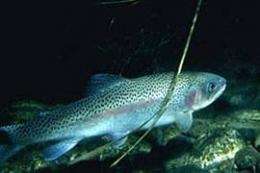
A recent study at Oregon State University found that the chlorophyll in green vegetables offers protection against cancer when tested against the modest carcinogen exposure levels most likely to be found in the environment.
However, chlorophyll actually increases the number of tumors at very high carcinogen exposure levels.
Beyond confirming the value of chlorophyll, the research raises serious questions about whether traditional lab studies done with mice and high levels of toxic exposure are providing accurate answers to what is a real health risk, what isn't, and what dietary or pharmaceutical approaches are useful.
The findings, published in the journal Food and Chemical Toxicology, were done using 12,360 rainbow trout as laboratory models, instead of more common laboratory mice. Rodent studies are much more expensive, forcing the use of fewer specimens and higher carcinogen exposures.
"There's considerable evidence in epidemiologic and other clinical studies with humans that chlorophyll and its derivative, chlorophyllin, can protect against cancer," said Tammie McQuistan, a research assistant working with George Bailey, a professor emeritus in the Linus Pauling Institute at OSU.
"This study, like others before it, found that chlorophyll can reduce tumors, up to a point," McQuistan said. "But at very high doses of the same carcinogen, chlorophyll actually made the problem worse. This questions the value of an approach often used in studying cancer-causing compounds."
OSU experts in recent years have become pioneers in the use of rainbow trout as a model for biomedical research, in part because the fish react in similar ways to those of rodents, but also because scientists can use thousands of them instead of dozens or hundreds of mice and do experiments that would not otherwise be possible.
In that context, this study raises questions about a fundamental premise of much medical research expose a laboratory animal to a compound at high levels, observe the result, and predict that a proportional amount of that same result would be present at low levels of exposure.
In one part of the study, trout were exposed to fairly moderate levels of a known carcinogen, but also given chlorophyll. This reduced their number of liver tumors by 29-64 percent, and stomach tumors by 24-45 percent. But in another part of the study, using much higher and unrealistic doses of the same carcinogen, the use of chlorophyll caused a significant increase in the number of tumors.
In other words, traditional research with small numbers of animals fed very high doses of a carcinogen might conclude that chlorophyll has the potential to increase human cancer risk. This study, and other evidence and trials, concludes just the opposite.
It also found that the protective mechanism of chlorophyll is fairly simple it just binds with and sequesters carcinogens within the gastrointestinal tract until they are eliminated from the body. At the lower carcinogen doses and cancer rates relevant to humans, chlorophyll was strongly protective.
"The central assumption of such experiments is that intervention effects at high carcinogen dose will apply equally at lower carcinogen doses," the researchers wrote in their report. "Contrary to the usual assumption, the outcomes in the major target organ were strikingly dependent on carcinogen dose."
OSU experts have argued that in some studies rainbow trout can produce better, more accurate, real-world results compared to traditional rodent animal models and relevant to humans, because many more specimens can be used and lower doses of toxins studied. Experiments done with fish may be about 20 times cheaper and, in the end, more scientifically valid, they say.
"Results derived at high carcinogen doses and high tumor responses may be irrelevant for human intervention," the scientists said in their conclusion.
Provided by
Oregon State University
-
Improved method developed to test carcinogen risk
Jun 18, 2009 |
not rated yet |
0
-
Cancer from fetal exposure to carcinogens depends on dose, timing
Dec 15, 2011 |
not rated yet |
0
-
Chlorophylls effective against aflatoxin
Dec 29, 2009 |
not rated yet |
0
-
Estrogen-targeting drug combo may help prevent lung cancer
Jan 09, 2012 |
not rated yet |
0
-
Protection against cancer may begin during pregnancy
Dec 22, 2006 |
not rated yet |
0
-
Motion perception revisited: High Phi effect challenges established motion perception assumptions
Apr 23, 2013 |
3 / 5 (2) |
2
-
Anything you can do I can do better: Neuromolecular foundations of the superiority illusion (Update)
Apr 02, 2013 |
4.5 / 5 (11) |
5
-
The visual system as economist: Neural resource allocation in visual adaptation
Mar 30, 2013 |
5 / 5 (2) |
9
-
Separate lives: Neuronal and organismal lifespans decoupled
Mar 27, 2013 |
4.9 / 5 (8) |
0
-
Sizing things up: The evolutionary neurobiology of scale invariance
Feb 28, 2013 |
4.8 / 5 (10) |
14
-
Why is zone 1 in liver more prone to ischemic injury?
May 23, 2013
-
How can there be villous adenoma in colon, if there are no villi there
May 22, 2013
-
How can there be a term called "intestinal metaplasia" of stomach
May 21, 2013
-
Pressure-volume curve: Elastic Recoil Pressure don't make sense
May 18, 2013
-
If you became brain-dead, would you want them to pull the plug?
May 17, 2013
-
MRI bill question
May 15, 2013
- More from Physics Forums - Medical Sciences
More news stories
New fluorescent tools for cancer diagnosis
In recent years, microRNAs (miRNAs) and other non-coding RNAs are small molecules that help control the expression of specific proteins. In recent years they have emerged as disease biomarkers. miRNA profiles have been used ...
Cancer
11 hours ago |
not rated yet |
0
Modulating the immune system to combat metastatic cancer
Cancer cells spread and grow by avoiding detection and destruction by the immune system. Stimulation of the immune system can help to eliminate cancer cells; however, there are many factors that cause the immune system to ...
Cancer
11 hours ago |
not rated yet |
0
Scientists put bowel cancer under the microscope
Researchers from London's Kingston University have begun a two-year study which could help prolong the lives of people with colorectal tumours.
Cancer
15 hours ago |
5 / 5 (1) |
0
Researcher identifies breast cancer fighting hormone
Transformative research from Western University has identified new hormones in the body which may suppress breast cancer and stimulate the regression of breast tumors.
Cancer
15 hours ago |
5 / 5 (1) |
0
Ground breaking cancer research finds immune system link
(Medical Xpress)—Curtin University researchers have found evidence that targeting specific cells in the body can reverse the effects of cancer on the immune system.
Cancer
16 hours ago |
5 / 5 (3) |
0
Engineered cytomegalovirus protects monkeys from HIV equivalent
(Medical Xpress)—A new study by researchers in the US has shown that an ancient virus can be modified to help in the fight against the simian immunodeficiency virus SIV, which is the equivalent in monkeys ...
Researchers identify first drug targets in childhood genetic tumor disorder
Two mutations central to the development of infantile myofibromatosis (IM)—a disorder characterized by multiple tumors involving the skin, bone, and soft tissue—may provide new therapeutic targets, according to researchers ...
Hormone levels may provide key to understanding psychological disorders in women
Women at a particular stage in their monthly menstrual cycle may be more vulnerable to some of the psychological side-effects associated with stressful experiences, according to a study from UCL.
Going live: Immune cell activation in multiple sclerosis
Biological processes are generally based on events at the molecular and cellular level. To understand what happens in the course of infections, diseases or normal bodily functions, scientists would need to ...
Driving and hands-free talking lead to spike in errors, study shows
Talking on a hands-free device while behind the wheel can lead to a sharp increase in errors that could imperil other drivers on the road, according to new research from the University of Alberta.
Help at hand for people with schizophrenia
How can healthy people who hear voices help schizophrenics? Finding the answer for this is at the centre of research conducted at the University of Bergen.