A combined method for detecting consciousness
January 9, 2012 in Neuroscience
A combined method for detecting consciousness

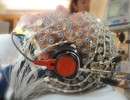
The combination of transcranial magnetic stimulation and electroencephalography constitutes a new method allowing the traces of conscious activity to be revealed in brain injured patients.

Thanks to joint work carried out between the group led by Marcello Massimini at the University of Milan (Italy) and the group directed by Steven Laureys qt the University of Liège (Belgium), a study published this week in the journal Brain shows that measuring the level of cerebral communication enables a patient in a to be distinguished from a patient in a minimally . Crucially, this measurement can be carried out at the patient’s bedside and does not depend on the integrity of the sensory or motor pathways, nor on the subject's ability to understand or carry out instructions. This discovery is important as the distinction between patients in a vegetative state and those in a minimally conscious state can be extremely difficult to establish, leading to diagnosis errors in 40% of cases.

The combination of TMS/EEG allows a direct and non-invasive measurement of internal brain communication, a theoretical condition required for the emergence of consciousness. As shown by previous studies, this approach allows a distinction to be easily made between the conditions in which consciousness is present (when we are awake and conscious or when we are dreaming) and those in which consciousness is reduced or absent (whilst sleeping or under anesthesia).

In patients in a vegetative state, who are awake (open-eyed) but unconscious, the TMS/EEG has shown a breakdown in internal cerebral communication, similar to that previously observed during sleep or when patients are anesthetized. On the other hand, in patients in a minimally conscious state the TMS/EEG has invariably revealed an effective communication between the different regions of the brain, irrespective of the patients’ ability to communicate.

These results suggest that directly stimulating the brain (through TMS) allows an evaluation of the internal communication between the different sections of the brain (thanks to EEG) and represents an excellent means of evaluating the neuronal correlates of the recovery of consciousness in non communicating and severely injured patients.

More information: Recovery of cortical effective connectivity and recovery of consciousness in vegetative patients, BRAIN, 2012, doi :10.1093/brain/awr340

Journal reference: Brain search and more info website

Provided by University de Liege

not rated yet  

Rank not rated yet
Relevant PhysicsForums posts
  • Potential Breakthrough in Seizure Control
    created16 hours ago
  • Popping/Cracked sternum.
    created20 hours ago
  • Which Mental Illness Encompasses This Problem?
    created21 hours ago
  • A question about drug tolerance
    createdMay 23, 2012
  • Poor nutrition leading to overeating?
    createdMay 23, 2012
  • Math and dyslexia?
    createdMay 21, 2012
  • More from Physics Forums - Medical Sciences

More news stories

Of mice and mental models: Neuroscientific implications of risk-optimized behavior in the mouse

(Medical Xpress) -- Regardless of an organism’s biological complexity, every encephalized animal continuously makes under-informed behavioral choices that can have serious consequences. Despite its ubiquity, ...

Neuroscience created May 25, 2012 | popularity not rated yet | comments 0 | with audio podcast feature

Persistent sensory experience is good for aging brain

Despite a long-held scientific belief that much of the wiring of the brain is fixed by the time of adolescence, a new study shows that changes in sensory experience can cause massive rewiring of the brain, even as one ages. ...

Neuroscience created May 24, 2012 | popularity not rated yet | comments 0

Boundary stops molecule right where it needs to be

A molecule responsible for the proper formation of a key portion of the nervous system finds its way to the proper place not because it is actively recruited, but instead because it can't go anywhere else.

Neuroscience created May 24, 2012 | popularity not rated yet | comments 0 | with audio podcast

Locating ground zero: How the brain's emergency workers find the disaster area

Like emergency workers rushing to a disaster scene, cells called microglia speed to places where the brain has been injured, to contain the damage by 'eating up' any cellular debris and dead or dying neurons. ...

Neuroscience created May 24, 2012 | popularity 5 / 5 (2) | comments 0 | with audio podcast

Genetic 'reset switch' enables signaling pathway to induce multiple developmental outcomes for olfactory neurons

Within the nervous system, a handful of signaling pathways modulate development of a cornucopia of different neuronal subtypes. “Even small alterations in neuron differentiation pathways can disrupt subsequent ...

Neuroscience created May 24, 2012 | popularity not rated yet | comments 0


Keep food safety in mind this memorial day weekend

(HealthDay) -- Picnics, parades and cookouts are as much a part of Memorial Day weekend as tributes to the United States' war veterans.

Travel to high altitudes tied to Crohn's, colitis flare-ups

(HealthDay) -- People with inflammatory bowel disease, which includes Crohn's disease and colitis, may be at increased risk for flare-ups when they fly or travel to high altitudes for skiing or mountain climbing, ...

Family history of Alzheimer's affects functional connectivity

(HealthDay) -- Cognitively normal individuals with a family history of late-onset Alzheimer's disease (AD) may display lower resting state functional connectivity in the default mode network (DMN) of the brain, ...

Transvaginal mesh op restores pelvic organ prolapse at price

(HealthDay) -- Transvaginal mesh (TVM) procedures are effective for anatomical restoration of pelvic organ prolapse (POP), but patients report a worsening of sexual function following surgery, according to ...

Weight struggles? Blame new neurons in your hypothalamus

New nerve cells formed in a select part of the brain could hold considerable sway over how much you eat and consequently weigh, new animal research by Johns Hopkins scientists suggests in a study published in the May issue ...

Thioridazine kills cancer stem cells in human while avoiding toxic side-effects of conventional cancer treatments

A team of scientists at McMaster University has discovered a drug, thioridazine, successfully kills cancer stem cells in the human while avoiding the toxic side-effects of conventional cancer treatments.