Immune cell can trigger skin cancer caused by toxins
January 9, 2012 in Immunology
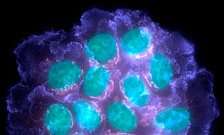
(Medical Xpress) -- Researchers based jointly at Kings College London and the Cancer Research UK London Research Institute, together with collaborators at Yale University have found that a type of immune cell, called a Langerhans cell, can facilitate development of skin cancer caused by exposure to harmful synthetic toxins in the environment.
Such immune cells compose a large population in human skin, with intriguing implications for human carcinogenesis related to our environment.
Ironically, Langerhans cells and analogous dendritic cells found in other tissues are commonly thought to play a part in the bodys natural defences against cancer, and there are active clinical protocols to upregulate them in certain cancer treatments. So the researchers say the findings are surprising and could have implications for how some cancers are treated in the future.
Epithelial cells, which line the bodys surfaces, are exposed to potentially cancer causing damage every day, such as the effects of UV light, tobacco smoke, food products, and industrial pollution.
To better understand the role of the bodys immune cells in the development of cancer in epithelial cells, the researchers looked at how Langerhans cells deal with damage that can cause skin cancer, and their findings are published in the journal, Science.
The team carried out initial studies in mice, employing a widely-used animal model of chemically-induced skin cancer, or Squamous Cell Carcinoma. They found that mice deficient in Langerhans cells were completely resistant to DNA damage caused by synthetic toxins in epithelial cells and did not develop skin cancer.
The researchers then carried out similar tests in human Langerhans cells, donated by several patients via the National Institute for Health Research (NIHR) comprehensive Biomedical Research Centre (BRC) at Kings College London and Guys and St Thomas NHS Foundation Trust. The team saw the same effects in the human tissue as that seen in the mice.
Professor Adrian Hayday, based both at Kings College London and Cancer Research UKs London Research Institute, said: Langerhans cells may activate immunoprotective components of the immune system and so are often regarded as useful in preventing cancer. Here we have actually shown that the opposite is also true they can play a role in facilitating development of the disease.
It is seldom recognised that Langerhans cells are primarily scavenging garbage collectors, that identify and try to break down harmful compounds. They successfully deal with natural toxins that we come into contact with all the time, such as many in food, but they cannot deal well with some common synthetic toxins from sources such as industrial air pollution.
"This study showed that when these cells attempt to process synthetic toxins, their role changes and their attempt to break down these toxins instead creates even more harmful carcinogenic products that spread to neighbouring cells.
"This study provides vital insight into the role Langerhans cells play in cancer what is normally your bodys natural way of dealing with harmful compounds becomes harmful when dealing with synthetic toxins. We need to take these findings into account when exploring the manipulation of these specific immune cells for future cancer therapies."
Dr. Safia Danovi, senior science information officer at Cancer Research UK, said: Were used to thinking that cancer arises from one rebel cell working alone, but this research challenges that view and shows that the immune system can sometimes trigger skin cancer when the skin is exposed to certain toxins. So although immune cells usually help protect us against diseases, the system isnt foolproof and things can go wrong. We need to study this glitch and perhaps, in the future, well be able to harness this knowledge to help cancer patients.
Provided by
King's College London
-
Cells use allergic response to protect against cancer-causing damage
Dec 02, 2011 |
not rated yet |
0
-
Scientists discover important cancer defence switch
Dec 14, 2011 |
not rated yet |
0
-
Protein prompting cells to sprout legs could cause skin cancer to spread
Sep 15, 2011 |
not rated yet |
0
-
'Detox protein' is collaborator in pancreatic and lung cancer development
Jul 06, 2011 |
not rated yet |
0
-
Scientists expose important new weak spot in cancer cells
Dec 05, 2011 |
not rated yet |
0
-
Of mice and mental models: Neuroscientific implications of risk-optimized behavior in the mouse
May 25, 2012 |
not rated yet |
0
-
Limits to growth: Scientists identify key metastasis-enabling enzyme
May 22, 2012 |
5 / 5 (4) |
0
-
Seeing is as seeing does: Spatially-structured retinal input in early development of cortical maps
Apr 26, 2012 |
5 / 5 (4) |
1
-
Dreamless nights: Brain activity during nonrapid eye movement sleep
Apr 09, 2012 |
4.4 / 5 (12) |
0
-
Take your time: Neurobiology sheds light on the superiority of spaced vs. massed learning
Mar 28, 2012 |
4.5 / 5 (21) |
3
-
magnetic field from stream of protons
3 hours ago
-
Force on a particle constrained to move on the surface of a sphere
4 hours ago
-
Force in a magnetic coupling
14 hours ago
-
Sign of scalar product in electric potential integral?
21 hours ago
-
Heat engines: how can we yield work?
21 hours ago
-
Work done by us on the spring
May 25, 2012
- More from Physics Forums - Classical Physics
More news stories
Gene therapy can correct forms of severe combined immunodeficiency
Severe combined immunodeficiency is defect in the immune system that results in a loss of the adaptive immune cells known as B cells and T cells. Mutations in several different genes can lead to the development of severe ...
Immunology
May 24, 2012 |
not rated yet |
0
Research team uncovers mechanism behind drugs that cause altered immunity
(Medical Xpress) -- An Australian research team has opened the door to understanding why certain drugs cause a so called altered immunity response when offered as treatment for certain specific ailments. In their paper published ...
Immunology
May 24, 2012 |
not rated yet |
0
|
Long-distance training teaches proper technique for asthma test
(Medical Xpress) -- Virtual, long-distance training can teach primary-care professionals the proper technique for performing a lung-function test, a University of Washington-led study has shown. The breathing ...
Immunology
May 23, 2012 |
not rated yet |
0
Asthma medication linked with arrhythmias in children, young adults
Use of inhaled anticholinergics (IACs) has been associated with an increased risk of potentially dangerous heart arrhythmias among young asthma patients, according to a study conducted by researchers at the University of ...
Immunology
May 22, 2012 |
not rated yet |
0
Bee pollen supplements can cause anaphylactic reactions
Although many people take bee pollen as a health supplement, it can cause severe anaphylactic reactions. However, most people are unaware of the risks, states an article published in CMAJ (Canadian Medical Association Journal). ...
Immunology
May 22, 2012 |
not rated yet |
1
Keep food safety in mind this memorial day weekend
(HealthDay) -- Picnics, parades and cookouts are as much a part of Memorial Day weekend as tributes to the United States' war veterans.
Travel to high altitudes tied to Crohn's, colitis flare-ups
(HealthDay) -- People with inflammatory bowel disease, which includes Crohn's disease and colitis, may be at increased risk for flare-ups when they fly or travel to high altitudes for skiing or mountain climbing, ...
Family history of Alzheimer's affects functional connectivity
(HealthDay) -- Cognitively normal individuals with a family history of late-onset Alzheimer's disease (AD) may display lower resting state functional connectivity in the default mode network (DMN) of the brain, ...
Transvaginal mesh op restores pelvic organ prolapse at price
(HealthDay) -- Transvaginal mesh (TVM) procedures are effective for anatomical restoration of pelvic organ prolapse (POP), but patients report a worsening of sexual function following surgery, according to ...
Of mice and mental models: Neuroscientific implications of risk-optimized behavior in the mouse
(Medical Xpress) -- Regardless of an organism’s biological complexity, every encephalized animal continuously makes under-informed behavioral choices that can have serious consequences. Despite its ubiquity, ...
Weight struggles? Blame new neurons in your hypothalamus
New nerve cells formed in a select part of the brain could hold considerable sway over how much you eat and consequently weigh, new animal research by Johns Hopkins scientists suggests in a study published in the May issue ...