High VEGF signaling score tied to lung cancer prognosis
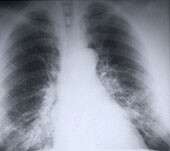
High VEGF signaling score tied to lung cancer prognosis
A high vascular endothelial growth factor signaling score correlates with good prognosis in patients with early squamous cell carcinoma of the lung, according to a study published online Feb. 21 in the Journal of Clinical Oncology.

(HealthDay) -- A high vascular endothelial growth factor (VEGF) signaling score correlates with good prognosis in patients with early squamous cell carcinoma (SCC) of the lung, according to a study published online Feb. 21 in the Journal of Clinical Oncology.

María J. Pajares, from the University of Navarra in Pamplona, Spain, and colleagues used automatic immunostaining to assess tumor cell expression of VEGF, VEGF receptor (VEGFR) 1, and VEGFR2 in 298 patients with early-stage nonsmall-cell lung cancer (NSCLC), recruited as part of the multicenter European Early Lung Cancer Detection Group project. By adding the tumor cell expression value of VEGF and its two receptors, they calculated a score measuring the VEGF signaling pathway. The results were validated in two independent NSCLC cohorts.

The researchers found that, in early SCC, the combination of high VEGF, VEGFR1, and VEGFR2 protein expression correlated with significantly reduced risk of disease progression (multivariate analysis hazard ratio, 0.62; P = 0.02). These results were validated, confirming the favorable prognostic value of high VEGF signaling score in early lung SCC.

"Our results clearly indicate that the combination of high expression of the three key elements in the VEGF pathway is associated with a good prognosis in patients with early SCC but not in patients with adenocarcinoma," the authors write.

More information: Abstract
Full Text (subscription or payment may be required)

add to favorites email to friend print save as pdf

Related Stories

Recommended for you

Renewed hope in a once-abandoned cancer drug class

2 hours ago

Could drugs that block the body's system for repairing damage to the genetic material DNA become a boon to health? As unlikely as it may seem, those compounds are sparking optimism as potential treatments ...

Finding the way to lung tumours by 'GPS'

3 hours ago

The innumerable divisions of the bronchi often turn the hunt for tumours in the lungs into a game of chance. But soon, lung specialists will be able to navigate accurately inside the airways by "GPS".

Study suggests new approach to fight lung cancer

18 hours ago

Recent research has shown that cancer cells have a much different – and more complex – metabolism than normal cells. Now, scientists at The University of Texas at Dallas have found that exploiting these differences might ...

User comments

More news stories

Antioxidant shows promise in Parkinson's disease

Diapocynin, a synthetic molecule derived from a naturally occurring compound (apocynin), has been found to protect neurobehavioral function in mice with Parkinson's Disease symptoms by preventing deficits in motor coordination.

Paralysed with fear: The story of polio

Thanks to vaccination, polio has been pushed to the brink of extinction – but can we finish the job? This is one of the big questions which a Bristol academic addresses in his new book, published next week.

Laughing gas does not increase heart attacks

(Medical Xpress)—Nitrous oxide—best known as laughing gas—is one of the world's oldest and most widely used anesthetics. Despite its popularity, however, experts have questioned its impact on the risk ...

Model recreates wear and tear of osteoarthritis

(Medical Xpress)—There's a reason osteoarthritis is often called wear-and-tear arthritis: Repeated stress on joints over time results in degeneration of the soft cartilage that normally distributes loads ...