System to catch fake drugs has idled for years
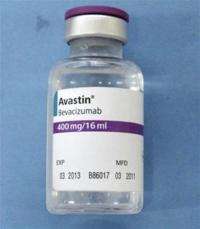
(AP) -- The news this week that a fake version of the cancer medicine Avastin has made its way into the United States highlights a longtime concern: There are few safeguards to make sure fake drugs can be spotted before they make it to your doctor's office.
For more than a decade, public safety advocates have called for a tracking system that would enable everyone from manufacturers to wholesalers to doctors to verify the authenticity of prescription drugs through electronic tags or barcodes. But bickering between those parties over the cost and scope has stalled the effort.
The Food and Drug Administration is expected to issue a proposal for the technology behind a tracing system later this year - five years after a law passed ordering the agency to develop a plan. But in the meantime the U.S. system continues to be vulnerable to counterfeits, as highlighted by the Avastin case.
"This counterfeit Avastin isn't something that was ordered over the Internet, or sold on a street corner," said Allan Coukell, director of the Pew Charitable Trusts' medical group. "It illustrates that it's possible to sell a fake drug into a legitimate distribution system."
The FDA on Tuesday announced it is investigating fake vials of Avastin sold to U.S. physicians by Quality Specialty Products., a foreign supplier that also does business as Montana Health Care Solutions.
U.K. regulators first discovered the counterfeits in December and seized 167 packs, though more than three dozen others had already been sold to the U.S., according to the country's Medicines and Healthcare Products Agency. The FDA confirmed that the drugs were counterfeit last week.
The fake Avastin vials, some of which were labeled in French, were distributed by a Tennessee-based supplier. FDA officials say the supplier was licensed by the state health department.
Industry stakeholders say fake versions of drugs like Avastin can enter the U.S. drug supply through many points because the system is so fragmented.
Medicines typically go from manufacturers to distributors to hospitals and other health care providers. Distributors must be licensed by the state to sell prescription drugs. But the oversight varies by state, with only minimal requirements to get a license.
"Even when the state system is regulating effectively, they've usually got one guy looking at 600 licenses," said Tom Kubic, president of Pharmaceutical Security Institute, a trade association set up by two dozen pharmaceutical companies. "It's a really easy system for the crooks to beat."
Supporters of a tracking system say that requiring unique identifying codes on all prescription drugs would help stop counterfeit drugs from entering the system. They say electronic barcodes or tags, which already are used in other countries like Belgium, Sweden and Turkey to screen drugs, would allow health care professionals to verify that the drugs they've purchased from suppliers are the same ones shipped from drugmakers.
Over the years, pharmaceutical companies have raised concerns about the potential cost of a track and trace system, which would mean purchasing new equipment and other infrastructure.
They also question the effectiveness of a tracking system. They point out that barcodes can be counterfeited just like pharmaceutical packaging. Additionally, the entire system can fail if health care professionals forget to scan their products to ensure authenticity.
Pharmaceutical industry groups are calling for a national framework, in part to avoid the costs of complying with individual state tracking laws, including one in California set to take effect in 2015. The law would require drugmakers to assign serialized codes to all prescription drugs sold in the state by 2015. Distributors would have to begin tracing the codes by 2016
So far, efforts to get a universal tracking system have failed. Because a universal tracking system would involve multiple industries, federal agencies and professional groups, there is little agreement on which group is to blame for the slow progress.
The head of the association for state pharmacy licensing boards said Thursday his group has been urging the pharmaceutical industry to develop tracking standards for a decade, with little progress.
"If they're supporting this, I have to believe they could have done something by now to have some sort of system in place - the history speaks for itself," said Carmen Catizone, executive director of the National Association of Boards of Pharmacy.
Meanwhile, a spokesman for the Pharmaceutical Research and Manufacturers Association, which represents nearly all large drugmakers, said the group has been reaching out to suppliers and pharmacies "to try to tackle the complex technological and operational issues presented" by various track and trace proposals.
©2012 The Associated Press. All rights reserved. This material may not be published, broadcast, rewritten or redistributed.


