Exercise in pregnancy safe for baby, study finds
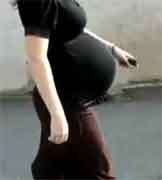
(HealthDay) -- Exercising at moderate or -- for very active women -- even high intensity during pregnancy won't hurt your baby's health, a new study finds.
Researchers monitored healthy women in their third trimester before and after 30 minutes on a treadmill and found no problems with measures of fetal well-being, including heart rate and blood flow. The results were similar whether or not the women exercised on a regular basis.
"Healthy pregnant women who exercise should be encouraged to continue, and if a woman is pregnant and is not an exerciser, she should be encouraged to start a moderate exercise program," said study co-author Dr. Linda Szymanski, an assistant professor in the division of maternal-fetal medicine at Johns Hopkins University in Baltimore.
The findings are in line with the recommendation of the U.S. Department of Health and Human Services that healthy pregnant women get at least two and a half hours of medium-intensity aerobic exercise a week even if they did not exercise before becoming pregnant. Exercise improves heart health and may reduce the risk of complications during pregnancy, such as developing high blood pressure and diabetes.
However, research indicates that women tend to exercise less when pregnant, and most fall short of the government guidelines.
"Many women say their doctor told them they should cut back on exercise, and if they weren't exercising before pregnancy, now is not the time to start," said Szymanski. "I think it's just because there's not enough data out there to assure [health care] providers that the fetus is okay."
The study is published in the March issue of the journal Obstetrics & Gynecology.
For the study, 45 women between 28 and 32 weeks of pregnancy walked or jogged on a treadmill for 30 minutes at moderate intensity, which the researchers defined as 40 percent to 59 percent of their maximum heart rate.
Fifteen of the women were not regular exercisers. The other 30 did either 20 minutes of moderate exercise, such as walking, three or more days a week, or 20 minutes of vigorous exercise, such as running, more than four days a week. The regular exercisers were assigned an additional 30-minute session of high intensity (60 percent to 84 percent of maximum heart rate) exercise on a treadmill.
Before and after each exercise session, Szymanski measured the fetus' heart rate and blood flow to the fetus using an exam called a Doppler ultrasound. The authors also did a biophysical profile, using ultrasound, after exercise to determine whether the baby was moving as it should.
Although the fetal heart rate rose after the medium- and high-intensity workouts, the heart rate, blood flow and biophysical profile stayed in the normal range. These data help reassure that the baby is fine and that exercise did not keep the baby from getting enough blood or oxygen, Szymanski said.
"I thought this was great, especially for women who don't exercise, because I think people were afraid it would be too much stress all of a sudden and the babies wouldn't like it," Szymanski said.
Still, Dr. Hye Heo, an obstetrician-gynecologist at Montefiore Medical Center in New York City, said mothers-to-be should consult with their doctor before exercising because every pregnancy is different.
Also, the study involved a small group of women who were healthy and not obese, so it does not necessarily apply to all women, Heo said. "If a woman is fit and has been exercising, continuing within moderation is appropriate after taking into consideration health complications," she added.
Besides talking with their doctor, Heo urges pregnant women to use common sense. Listen to your body and ease up or stop if you are out of breath or feel pain or cramping, she said.
Szymanski said good options for reaching a moderate level of exertion include walking, biking or using an elliptical machine. Activities that could cause falls or that involve contact, such as skiing or basketball, should be avoided.
Heo is concerned about the long-term effects of exercise on the child, and said research has not broached this topic.
It's possible that the tests used in this study can't pick up small but important changes that occur after exercise, Heo said.
All the women in the study gave birth to healthy babies, although the study was too small to make a conclusion about the effect of exercise on health after delivery.
The authors plan to study exercise in pregnant women who develop complications, such as high blood pressure, as well as competitive elite athletes. "There's a lot of questions about what happens at very high levels of exercise," Szymanski said.
More information: Full Text
Find out more about healthy pregnancy at womenshealth.gov.
Copyright © 2012 HealthDay. All rights reserved.


