'Active' video games may not boost kids' fitness: study
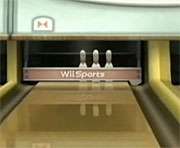
(HealthDay) -- Apparently there's no guarantee that your kids will mend their couch-potato ways if you give them a fitness video game.
A new study found no differences in physical activity over a three-month period between a group of children given "active" video games that simulated boxing and dancing, for example, and a group given "non-active" video games.
Fitness video games had been tested in laboratory settings, according to the study published online Feb. 27 in the journal Pediatrics, but it was unclear whether games ramped up physical activity at home, where kids can make their own choices about how much and how intensely they want to play.
"We were interested in seeing what the effect of getting a new video game had on the physical activity of children in the home setting, under naturalistic circumstances," said study author Dr. Tom Baranowski, a professor of pediatrics in the Children's Nutrition Research Center at Baylor College of Medicine in Houston.
The scientists followed 78 children between the ages of 9 and 12, and gave each a new Wii video game console. None had owned one before. Half were invited to choose from a selection of five active fitness-focused games such as Wii Fit Plus, while the other half chose from inactive games, including Mario Kart Wii. The youngsters received needed accessories including balance boards, remote controllers and resistance bands.
Baranowski said letting the children chose their own games was important, and they were given an opportunity to select one at the start and then another new one after six weeks. "We wanted to be sure they were getting something they wanted and we weren't foisting one on them," he said.
To measure physical activity, each participant wore an accelerometer, an electronic device attached to a belt at the waist that tracks movement. The belt could be taken off only when swimming or bathing, and the children kept a journal of when they removed it. The authors said compliance was high because the youngsters wanted to keep their Wii consoles.
Baranowski said they expected that starting at week one there would be a substantial increase in physical activity in the group that played the active games, but not in the inactive game group. They expected another surge after the children chose their second new game midway through the study. No increase in physical activity occurred, though.
"By week six, we thought physical activity would taper off, and that in the seventh week, when they got to chose a new, second video game, that there might be an increase in activity. We expected the active video games would have a modest gain across these periods. But we found there was no difference in the level of the activity between the treatment and control groups. What we detected at baseline, before playing active video games, was exactly the same in weeks one, six, seven and 12," Baranowski said.
The authors theorize that the children either didn't chose to play their active games at the same intensity level that occurred in the previous lab studies, or perhaps the children compensated by being less active at other times during the day.
An outside expert said the study was interesting.
"You'd think that the kids who are playing these games would be burning more calories, but I think the nature of the games is not the same as going out and interacting. It doesn't directly encourage kids to go out and exercise," said Dr. Gary Small, a professor of psychiatry and biobehavioral sciences at the David Geffen School of Medicine at the University of California, Los Angeles. He has studied and written about the impact of technology on children and adults.
"Wii Fit is not made to get kids to exercise, it's to sell games. Maybe they need to design the games differently, to really get kids to move more," Small said.
Children's Hospital Colorado pediatrician Dr. Christina Suh, who has conducted research on physical activity in overweight and obese children, said it's not encouraging news in terms of using the fitness video games as a tool for tackling the increasing problem of childhood obesity.
"The take-home message is that on a population basis, it looks like using active video games is not an effective way of getting kids to be more active. In other words, if someone thinks of passing out Wii fitness consoles to kids in a public school district, for example, it probably wouldn't be effective in terms of its impact on public health," Suh said.
The American Academy of Pediatrics recommends children get at least one hour of moderate to vigorous physical activity a day, like jump-roping, riding a bike and playing tag, she noted.
"As a pediatrician, when you're prescribing physical activity for a kid to prevent them from becoming overweight, or as a treatment program for obesity, you have to really make that prescription individualized. The key is figuring out what's really fun for that child," Suh said.
She said it's somewhat counterintuitive to recommend children get their daily physical activity from video games.
"It muddles the message pediatricians give to get outside. My feeling is if you're going to be physically active, it makes more sense to play tennis with a family member outdoors than on a video game inside. A tennis racquet and some balls would much cheaper than a video game console, too," Suh said.
More information: Visit the U.S. Centers for Disease Control and Prevention to see how much physical activity children need.
Copyright © 2012 HealthDay. All rights reserved.


