Vitamin C may enhance radiation therapy for aggressive brain tumors
February 17, 2012 in Cancer

Vitamin C may enhance radiation therapy for aggressive brain tumors

Enlarge

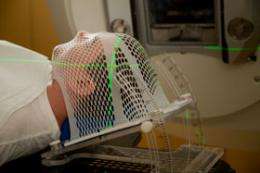
Person receiving radiation therapy

Recent research by the University of Otago, Wellington has shown that giving brain cancer cells high dose vitamin C makes them much more susceptible to radiation therapy.

The study, carried out in association with Wellington’s Malaghan Institute was recently published in Free Radical Biology and Medicine.

Lead author Dr. Patries Herst together with Dr. Melanie McConnell investigated how combining high dose with radiation affected survival of isolated from glioblastoma multiforme (GBM) brain tumors, and compared this with the survival of normal cells.

They found that high dose vitamin C by itself caused DNA damage and cell death which was much more pronounced when high dose vitamin C was given just prior to radiation.

Herst says GBM patients have a poor prognosis because the aggressive GBM tumors are very resistant to radiation therapy. “We found that high dose vitamin C makes it easier to kill these GBM cells by radiation therapy”.

She says there has long been debate about the use of high dose vitamin C in the treatment of cancer. High dose vitamin C specifically kills a range of cancer cells in the laboratory and in animal models. It produces aggressive free radicals in the tumor environment but not in the environment of healthy cells. The free radicals damage DNA, which kills the cells, but the high concentration necessary to kill cancer cells can only be achieved by intravenous injection.

However, these promising findings have so far not been validated in clinical studies. “If carefully designed clinical trials show that combining high dose vitamin C with improves patient survival, there may be merit in combining both treatments for radiation-resistant cancers, such as glioblastoma multiforme,” says Dr. Herst.

This study was funded by the Wallace Family Estate, Genesis Oncology Trust and a University of Otago Research Grant.

Journal reference: Free Radical Biology and Medicine search and more info website

Provided by University of Otago

5 /5 (3 votes)  

Rank 5 /5 (3 votes)
Relevant PhysicsForums posts

More news stories

New colonoscope provides ground-breaking view of colon

A ground-breaking advance in colonoscopy technology signals the future of colorectal care, according to research presented today at Digestive Disease Week(DDW). Additional research focuses on optimizing the minimal withdrawal ...

Cancer created 12 hours ago | popularity 5 / 5 (2) | comments 0

ASCO: combo antibody therapy effective for melanoma

(HealthDay)—Concurrent use of two immune checkpoint antibodies—ipilimumab and nivolumab—may be effective for the treatment of advanced melanoma, according to a proof-of-principal study presented in ...

Cancer created May 17, 2013 | popularity not rated yet | comments 0

Risk factors ID'd for poor cutaneous cell CA outcomes

(HealthDay)—The risks of metastasis and death associated with cutaneous squamous cell carcinoma (CSCC) are low, but significant, and risk factors for poor outcome include tumor diameter, invasion beyond ...

Cancer created May 17, 2013 | popularity not rated yet | comments 0 | with audio podcast

Physical & emotional impairments common, often untreated in people with cancer

A new review finds cancer survivors suffer a diverse and complex set of impairments, affecting virtually every organ system. Writing in CA: A Cancer Journal for Clinicians, Julie Silver, M.D., associate professor at Harvar ...

Cancer created May 17, 2013 | popularity not rated yet | comments 0

Calif. doc with 'cancer cure' gets 14 years prison (Update)

(AP)—A California doctor has been sentenced to 14 years in federal prison for bilking her patients out of more than $1 million by promising that an herbal supplement could cure late-stage cancer and other diseases.

Cancer created May 17, 2013 | popularity not rated yet | comments 0


New research identifies risks, interventions for children's GI health

An increasing number of U.S. children are experiencing gastrointestinal issues that require interventions to resolve, according to research presented at Digestive Disease Week (DDW).

US psychiatry gets makeover in new manual

The latest makeover to a massive psychiatric tome honored by some, reviled by others and even called the "Bible" of mental disorders is being released Saturday with a host of new changes.

New case of SARS-like virus in Saudi: ministry

A new case of the deadly coronavirus has been detected in Saudi Arabia where 15 people have already died after contracting it, the health ministry announced on Saturday on its Internet website.

AIDS science at 30: 'Cure' now part of lexicon

Big names in medicine are set to give an upbeat assessment of the war on AIDS on Tuesday, 30 years after French researchers identified the virus that causes the disease.

For combat veterans suffering from post-traumatic stress disorder, 'fear circuitry' in the brain never rests

Chronic trauma can inflict lasting damage to brain regions associated with fear and anxiety. Previous imaging studies of people with post-traumatic stress disorder, or PTSD, have shown that these brain regions can over-or ...

Body clocks of depressed people altered at cell level, researchers show

Every cell in our bodies runs on a 24-hour clock, tuned to the night-day, light-dark cycles that have ruled us since the dawn of humanity. The brain acts as timekeeper, keeping the cellular clock in sync ...