Creativity and human reasoning during decision-making
March 27, 2012 in Neuroscience

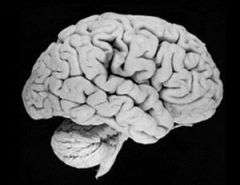
Modern human brain

Modern human brain. Credit: Univ. of Wisconsin-Madison Brain Collection.

A hallmark of human intelligence is the ability to efficiently adapt to uncertain, changing and open-ended environments. In such environments, efficient adaptive behavior often requires considering multiple alternative behavioral strategies, adjusting them, and possibly inventing new ones. These reasoning, learning and creative abilities involve the frontal lobes, which are especially well developed in humans compared to other primates. However, how the frontal function decides to create new strategies and how multiple strategies can be monitored concurrently remain largely unknown.

In a new study, published March 27 in the online, open-access journal , Anne Collins and Etienne Koechlin of Ecole Normale Supérieure and Institut National de la Santé et de la Recherche Médicale, France, examine function using behavioral experiments and computational models of human decision-making. They find that human frontal function concurrently monitors no more than three/four strategies but favors creativity, i.e. the exploration and creation of new strategies whenever no monitored strategies appear to be reliable enough.

The researchers asked one hundred participants to find "3-digit pin codes" by a method of trial and error, under a variety of conditions. They then developed a computational model that predicted the responses produced by participants, which also revealed that participants made their choices by mentally constructing and concurrently monitoring up to three distinct behavioral strategies; flexibly associating digits, motor responses and expected auditory feedbacks.

"This is a remarkable result, because the actual number of correct codes varied across sessions. This suggests that this capacity limit is a hard constraint of human higher cognition," said Dr. Koechlin. Consistently, the performance was significantly better in sessions including no more than three repeated codes.

Furthermore, the researchers found that the pattern of participants' responses derived from a decision system that strongly favors the exploration of new behavioral strategies: "The results provide evidence that the human executive system favors creativity for compensating its limited monitoring capacity" explained Dr. Koechlin. "It favors the exploration of new strategies but restrains the monitoring and storage of uncompetitive ones. Interestingly, this ability to regulate creativity varied across participants and critically explains individual variations in performances. We believe our study may also help to understand the biological foundations of individual differences in decision-making and ".

More information: Collins A, Koechlin E (2012) Reasoning, Learning, and Creativity: Frontal Lobe Function and Human Decision-Making. PLoS Biol 10(3): e1001293.doi:10.1371/journal.pbio.1001293

Provided by Public Library of Science search and more info website

4 /5 (6 votes)  

Rank 4 /5 (6 votes)
Related Stories
Relevant PhysicsForums posts

More news stories

Having both migraines, depression may mean smaller brain

(HealthDay)—Migraines and depression can each cause a great deal of suffering, but new research indicates the combination of the two may be linked to something else entirely—a smaller brain.

Neuroscience created 4 hours ago | popularity 5 / 5 (1) | comments 0 | with audio podcast

Researchers analyse hunting behaviour of fish larvae in virtual reality

Moving objects attract greater attention – a fact exploited by video screens in public spaces and animated advertising banners on the Internet. For most animal species, moving objects also play a major ...

Neuroscience created 7 hours ago | popularity not rated yet | comments 0 | with audio podcast

Signs of motor disorders can appear years before disease manifestation

It is known that signs of neurological disorders such as Alzheimer's and Huntington's disease can appear years before the disease becomes manifest; these signs take the form of subtle changes in the brain and behavior of ...

Neuroscience created 7 hours ago | popularity not rated yet | comments 0

Taming suspect gene reverses schizophrenia-like abnormalities in mice

Scientists have reversed behavioral and brain abnormalities in adult mice that resemble some features of schizophrenia by restoring normal expression to a suspect gene that is over-expressed in humans with ...

Neuroscience created 8 hours ago | popularity 5 / 5 (1) | comments 0 | with audio podcast

Scientists uncover molecular roots of cocaine addiction in the brain

Researchers at Johns Hopkins have unraveled the molecular foundations of cocaine's effects on the brain, and identified a compound that blocks cravings for the drug in cocaine-addicted mice. The compound, already proven safe ...

Neuroscience created 8 hours ago | popularity not rated yet | comments 0 | with audio podcast


Slowing the aging process—only with antibiotics

Swiss scientists reveal the mechanism responsible for aging hidden deep within mitochondria—and dramatically slow it down in worms by administering antibiotics to the young.

Brain can be trained in compassion, study shows

Until now, little was scientifically known about the human potential to cultivate compassion—the emotional state of caring for people who are suffering in a way that motivates altruistic behavior.

Researchers complete largest genetic sequencing study of human disease

Researchers from Queen Mary, University of London have led the largest sequencing study of human disease to date, investigating the genetic basis of six autoimmune diseases.

Novel approach for influenza vaccination shows promise in early animal testing

A new approach for immunizing against influenza elicited a more potent immune response and broader protection than the currently licensed seasonal influenza vaccines when tested in mice and ferrets. The vaccine ...

Calorie information in fast food restaurants used by 40 percent of 9-18 year olds when making food choices

A new study published online today (Thursday) in the Journal of Public Health has found that of young people who visited fast food or chain restaurants in the U.S. in 2010, girls and youth who were obese were more likely ...

Systematic screening of med adherence will ID barriers

(HealthDay)—Implementation of systematic monitoring for medication adherence will allow for identification of barriers to adherence and tailoring of interventions, according to a viewpoint piece published ...