Diet or DNA: are we fated to be fat?
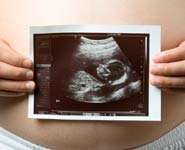
(Medical Xpress) -- Marks on the genetic code that babies have at birth are different for children who go on to be obese or overweight compared to those who do not, new research from the universities of Newcastle and Bristol has found.
Using blood from 178 babies umbilical cord, researchers analysed genes that are known to be linked to body weight and found that nine of the 24 relevant genes looked at in this study were linked to the childs weight at age nine. The findings are published in PLoS ONE today.
Professor Caroline Relton, Senior Lecturer in Epigenetic Epidemiology at Newcastle University, who led the work said: "We were looking at what are known as epigenetic patterns, the chemical signals that turn on or off certain genes. In this research we found a link between those found at birth and a childs weight when they were nine.
"This suggests that our DNA could be marked before birth and these marks could predict our later body weight."
Epigenetics is a rapidly emerging and exciting area of scientific research which may help to explain how the environment and genome work together to influence our risk of many diseases. Evidence is growing that factors like diet, exercise, smoking and hormones can alter the regulation of our genome when genes are switched on and when they are switched off even before birth.
There is growing scientific evidence to show that certain negative factors during the babys development in the womb, such as a poor diet, whether or not the mother smoked or was stressed, predispose children to obesity and other health problems. Epigenetics is a mechanism that might explain how this comes about because epigenetic markings can be influenced by our environment and behaviours. The findings from this study support this idea.
This research identified genes that showed different epigenetic patterns in children who were overweight or obese compared to children of normal weight. The patterns known as DNA methylation (a methyl is a small molecule that attaches itself to DNA and which can switch a gene on or off) were analysed in these genes in DNA samples from children collected at birth to assess whether there was any evidence that these genes are somehow different well before childhood body weight is developed.
The researchers used data from the Bristol-based Children of the 90s study and a Newcastle-based study of premature children whose health has been followed into childhood.
Professor Relton added: "While we have discovered an association between these genes and body size in childhood we need to carry out further studies to establish whether influencing the expression of these genes by altering epigenetic patterns is indeed a trigger to obesity."
More information: DNA methylation patterns in cord blood DNA and body size in childhood, Caroline L Relton, Alexandra Groom, Beate St Pourcain, Adrian E Sayers, Daniel C Swan, Nicholas D Embleton, Mark S Pearce, Susan M Ring, Kate Northstone, Jon H Tobias, Joseph Trakalo, Andy R Ness, Seif O Shaheen, George Davey Smith, published in PLoS ONE, Wednesday 14 March 2012. DOI:10.1371/journal.pone.0031821 www.plosone.org/home.action
Journal reference:
PLoS ONE
Provided by
University of Bristol
-
A brighter future for infertility treatment: study
Dec 05, 2011 |
not rated yet |
0
-
Childhood obesity peaks between ages 7 and 11
Apr 06, 2011 |
not rated yet |
0
-
Maternal smoking causes changes in fetal DNA
May 18, 2011 |
not rated yet |
0
-
Your DNA may carry a 'memory' of your living conditions in childhood
Oct 21, 2011 |
not rated yet |
0
-
New link between mother's pregnancy diet and offspring's chances of obesity found
Apr 18, 2011 |
not rated yet |
0
-
Motion perception revisited: High Phi effect challenges established motion perception assumptions
Apr 23, 2013 |
3 / 5 (2) |
2
-
Anything you can do I can do better: Neuromolecular foundations of the superiority illusion (Update)
Apr 02, 2013 |
4.5 / 5 (11) |
5
-
The visual system as economist: Neural resource allocation in visual adaptation
Mar 30, 2013 |
5 / 5 (2) |
9
-
Separate lives: Neuronal and organismal lifespans decoupled
Mar 27, 2013 |
4.9 / 5 (8) |
0
-
Sizing things up: The evolutionary neurobiology of scale invariance
Feb 28, 2013 |
4.8 / 5 (10) |
14
-
Classical and Quantum Mechanics via Lie algebras
Apr 15, 2011
- More from Physics Forums - Independent Research
More news stories
Researchers identify new circadian clock component
Northwestern University scientists have shown a gene involved in neurodegenerative disease also plays a critical role in the proper function of the circadian clock.
Genetics
May 16, 2013 |
3 / 5 (1) |
0
|
Returning genetic incidental findings without patient consent violates basic rights, experts say
Informed consent is the backbone of patient care. Genetic testing has long required patient consent and patients have had a "right not to know" the results. However, as 21st century medicine now begins to use the tools of ...
Genetics
May 16, 2013 |
5 / 5 (1) |
3
|
Ethicists provide framework supporting new recommendations on reporting incidental findings in gene sequencing
In a paper published in Science Express, a group of experts led by bioethicists in the Center for Medical Ethics and Health Policy at Baylor College of Medicine provide a framework for the new American College of Medical Geneti ...
Genetics
May 16, 2013 |
not rated yet |
0
Experts urge caution over use of new genetic sequencing techniques
The use of genome-wide analysis (GWA), where the entirety of an individual's DNA is examined to look for the genomic mutations or variants which can cause health problems is a massively useful technology for diagnosing disease. ...
Genetics
May 16, 2013 |
not rated yet |
0
Collecting DNA for human rights: How to help while safeguarding privacy
DNA databases might help identify victims of crime and human trafficking, but how do we safeguard the personal privacy of innocent victims and family members? A new report online May 15 in the Cell Press journal Trends in ...
Genetics
May 15, 2013 |
not rated yet |
0
Researchers identify a potential new risk for sleep apnea: Asthma
Researchers at the University of Wisconsin have identified a potential new risk factor for obstructive sleep apnea: asthma. Using data from the National Institutes of Health (Heart, Lung, and Blood Institute)-funded Wisconsin ...
Study finds that sleep apnea and Alzheimer's are linked
A new study looking at sleep-disordered breathing (SDB) and markers for Alzheimer's disease (AD) risk in cerebrospinal fluid (CSF) and neuroimaging adds to the growing body of research linking the two.
'Gap' for HIV vaccine efforts after latest setback
The hunt for an HIV vaccine has gobbled up $8 billion in the past decade, and the failure of the most recent efficacy trial has delivered yet another setback to 26 years of efforts.
Computational tool translates complex data into simplified 2-dimensional images
In their quest to learn more about the variability of cells between and within tissues, biomedical scientists have devised tools capable of simultaneously measuring dozens of characteristics of individual ...
New theory on genesis of osteoarthritis comes with successful therapy in mice
Scientists at Johns Hopkins have turned their view of osteoarthritis (OA) inside out. Literally. Instead of seeing the painful degenerative disease as a problem primarily of the cartilage that cushions joints, ...
Ginger compounds may be effective in treating asthma symptoms
Gourmands and foodies everywhere have long recognized ginger as a great way to add a little peppery zing to both sweet and savory dishes; now, a study from researchers at Columbia University shows purified components of the ...
Mar 15, 2012
Rank: not rated yet
Mar 15, 2012
Rank: not rated yet
because the claim by Marxists that evolution has stopped in man...
(an impossibility as there is no way to perfect copy and so no way to halt evolution)
you accept that kind of thing, and then many of the political policies suddenly pop into bad and become easy to see are not good.
so if you accept A then you go blind to evidence against it to be acceptable.. but if not, then you see the evidence and tolerate being less than acceptable to the others.
not much to do with science other than the science of manipulation