Study finds excess insulin levels an unlikely cause of atherosclerosis
March 27, 2012 in Cardiology

Joslin study finds excess insulin levels an unlikely cause of atherosclerosis

Enlarge

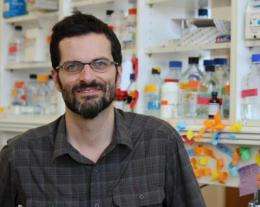
Christian Rask-Madsen, M.D, Ph.D. is a research associate at Joslin's Dianne Nunnally Hoppes Laboratory for Diabetes Complications at the Joslin Diabetes Center Credit: Joslin Communications Office

A number of studies have shown that excess insulin circulating in the bloodstream is a major independent risk factor for cardiovascular disease. However, a new study from Joslin Diabetes Center finds that this condition, called hyperinsulinemia, is itself not a cause of atherosclerosis.

In humans, , a condition in which insulin becomes less effective at lowering , coexists with hyperinsulinemia. Both are associated with atherosclerosis, the buildup of cholesterol in blood vessels that causes , heart attack, and stroke. In this condition, could become dysfunctional because of hyperinsulinemia or because vascular cells themselves are insulin resistant, which is caused by increased from as a compensatory mechanism to overcome insulin resistance.

Scientists have known for some time that insulin resistance and hyperinsulinemia cause increased lipids in the circulation, which indirectly leads to atherosclerosis. However, the Joslin study, published in the May issue of the journal Arteriosclerosis, Thrombosis, and Vascular Biology, shows that, without other factors such as high blood pressure and high cholesterol, hyperinsulinemia alone does not cause atherosclerosis.

"For years, scientists have suspected that high levels of insulin could affect vascular cells negatively," says lead author Christian Rask-Madsen, MD, PhD, a research associate at Joslin's Dianne Nunnally Hoppes Laboratory for Diabetes Complications. "We know that people with type 2 diabetes and insulin resistance are susceptible to atherosclerosis, but our study shows that excess insulin alone does not promote this complication."

To study the effects of hyperinsulinemia on atherosclerosis, Rask-Madsen and his colleagues created mice with fewer in every tissue of the body and compared them to mice with intact insulin receptors. Insulin receptors make cells responsive to insulin, a hormone that circulates in the bloodstream. Both sets of mice were genetically modified to have high cholesterol, but were similar in terms of body weight, glucose metabolism, and lipid and blood pressure levels.

Reducing the insulin receptors from one set of mice did not significantly impair their glucose metabolism, says Rask-Madsen—certainly not enough to make the animals overtly insulin resistant—but it did increase the amount of circulating insulin by reducing its removal from the blood. This model allowed the researchers to study the effects of hyperinsulinemia without the confounding effects of insulin resistance.

The new findings build on a 2010 study conducted by Rask-Madsen, which found that insulin resistance only in endothelial cells is sufficient to increase susceptibility to atherosclerosis. George King, MD, Joslin's chief scientific officer, is the senior author of both studies.

Taken together, Rask-Madsen says, the findings of the two studies suggest that "when we look at new ways to prevent atherosclerosis, we should focus on improving insulin signaling in vascular cells rather than blocking the action of insulin in these cells."

Provided by Joslin Diabetes Center

not rated yet  

Rank not rated yet
Related Stories
Relevant PhysicsForums posts

More news stories

Hospitals' cardiac arrest incidence and survival rates go hand in hand

Hospitals with the highest rates of cardiac arrests tend to have the poorest survival rates for those cases, new University of Michigan Health System research shows.

Cardiology created 6 hours ago | popularity not rated yet | comments 0

Effect of fluid and sodium restrictions on weight loss among patients with heart failure

A clinical trial of 75 patients hospitalized with acute decompensated heart failure (ADHF) suggests that aggressive fluid and sodium restriction has no effect on weight loss or clinical stability at three days but was associated ...

Cardiology created 6 hours ago | popularity not rated yet | comments 0

Which women should be screened for high cholesterol?

National guidelines recommend that at-risk women be screened for elevated cholesterol levels to reduce their chances of developing cardiovascular disease. But who is 'at risk?' The results of a study by investigators ...

Cardiology created 9 hours ago | popularity not rated yet | comments 0

Atherosclerotic disease heredity mapped in nationwide study

Researchers at Lund University in Sweden have mapped the significance of heredity for common forms of atherosclerotic disease. No studies have previously examined whether different forms of the disease share heredity.

Cardiology created 10 hours ago | popularity not rated yet | comments 0

Study finds improved CPR quality saves lives

(Medical Xpress)—Life-saving CPR has been a foundation of emergency medicine for more than a half century. But researchers at the University of Arizona College of Medicine-Phoenix are continuing to refine the procedure, ...

Cardiology created 12 hours ago | popularity not rated yet | comments 0


The compound in the Mediterranean diet that makes cancer cells 'mortal'

New research suggests that a compound abundant in the Mediterranean diet takes away cancer cells' "superpower" to escape death. By altering a very specific step in gene regulation, this compound essentially re-educates cancer ...

Scientists identify molecular trigger for Alzheimer's disease

Researchers have pinpointed a catalytic trigger for the onset of Alzheimer's disease – when the fundamental structure of a protein molecule changes to cause a chain reaction that leads to the death of neurons ...

Do salamanders hold the solution to regeneration?

Salamanders' immune systems are key to their remarkable ability to regrow limbs, and could also underpin their ability to regenerate spinal cords, brain tissue and even parts of their hearts, scientists have ...

Practice makes perfect? Not so much

Turns out, that old "practice makes perfect" adage may be overblown. New research led by Michigan State University's Zach Hambrick finds that a copious amount of practice is not enough to explain why people ...

Older prostate cancer patients should think twice before undergoing treatment

Older prostate cancer patients with other underlying health conditions should think twice before committing to surgery or radiation therapy for their cancer, according to a multicenter study led by researchers in the UCLA ...

New test better detects elephantiasis worm infection

A new diagnostic test for a worm infection that can lead to severe enlargement and deformities of the legs and genitals is far more sensitive than the currently used test, according to results of a field ...