New research about facial recognition turns common wisdom on its head
March 19, 2012 in Psychology & Psychiatry
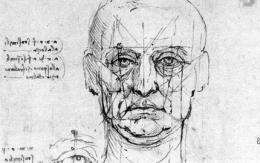
A new study by researchers including Bosco Tjan of psychology suggests that facial recognition hinges on recognizing the face’s features more than the “holistic” picture they add up to create.
(Medical Xpress) -- A team of researchers that includes a USC scientist has methodically demonstrated that a face's features or constituents more than the face per se are the key to recognizing a person.
Their study, which goes against the common belief that brains process faces "holistically," appears this month in Psychological Science.
In addition to shedding light on the way the brain functions, these results may help scientists understand rare facial recognition disorders.
Humans are great at recognizing faces. There are even regions in the brain that are specifically associated with face perception the most well-known one is the fusiform gyrus in the temporal lobe.
Common wisdom has it that humans recognize the face "holistically," meaning that there is something about the picture created by the entire face the particular arrangement of a face's eyes, nose, and mouth and not just these features themselves that makes it easier for the human brain to make a positive ID.
That common wisdom appears to be wrong.
"There is this belief that faces are special," said the study's coauthor Bosco Tjan, associate professor of psychology at the USC Dornsife College of Letters, Arts and Sciences. "But why? How is the face special?"
To use an automotive metaphor, would it be easier for a car aficionado to identify a '58 Corvette by its distinctive quad headlights, chunky chrome grille and swoop on the side or if shown the car that all these pieces make when added together?
Tjan and collaborators Jason M. Gold, associate professor of psychology at Indiana University, Bloomington and IU undergraduate student Patrick J. Mundy tested participants on how accurately they were able to identify a set of faces by the parts of those faces the nose, left eye, right eye or mouth.
Then, using a well-established formula that Tjan developed in an earlier study, the researchers extrapolated how accurately each participant should be able to identify an entire face.
If humans were better at face recognition than nose or eye recognition, one would expect each participant to do a better job of identification when the features are all arranged together into a face. But in fact, the participants did a little worse than predicted by Tjan's formula.
Facial recognition, it appears, hinges on recognizing the face's features more than the "holistic" picture they add up to create.
Provided by
University of Southern California
-
In recognizing faces, the whole is not greater than the sum of its parts
Mar 09, 2012 |
not rated yet |
0
-
The nose knows: 2 fixation points needed for face recognition
Oct 20, 2008 |
not rated yet |
0
-
Why do some people never forget a face?
Dec 01, 2011 |
not rated yet |
0
-
Can't place that face? The trouble may be in your neurons
Jul 28, 2010 |
not rated yet |
0
-
Facial recognition at first glance
Jul 01, 2010 |
not rated yet |
0
-
Motion perception revisited: High Phi effect challenges established motion perception assumptions
Apr 23, 2013 |
3 / 5 (2) |
2
-
Anything you can do I can do better: Neuromolecular foundations of the superiority illusion (Update)
Apr 02, 2013 |
4.5 / 5 (11) |
5
-
The visual system as economist: Neural resource allocation in visual adaptation
Mar 30, 2013 |
5 / 5 (2) |
9
-
Separate lives: Neuronal and organismal lifespans decoupled
Mar 27, 2013 |
4.9 / 5 (8) |
0
-
Sizing things up: The evolutionary neurobiology of scale invariance
Feb 28, 2013 |
4.8 / 5 (10) |
14
-
Why is zone 1 in liver more prone to ischemic injury?
11 hours ago
-
How can there be villous adenoma in colon, if there are no villi there
May 22, 2013
-
How can there be a term called "intestinal metaplasia" of stomach
May 21, 2013
-
Pressure-volume curve: Elastic Recoil Pressure don't make sense
May 18, 2013
-
If you became brain-dead, would you want them to pull the plug?
May 17, 2013
-
MRI bill question
May 15, 2013
- More from Physics Forums - Medical Sciences
More news stories
Motion quotient: IQ predicted by ability to filter motion (w/ video)
A brief visual task can predict IQ, according to a new study. This surprisingly simple exercise measures the brain's unconscious ability to filter out visual movement. The study shows that individuals whose ...
Psychology & Psychiatry
3 hours ago |
4.8 / 5 (5) |
0
|
Anxious men fare worse during job interviews, study finds
Nervous about that upcoming job interview? You might want to take steps to reduce your jitters, especially if you are a man.
Psychology & Psychiatry
4 hours ago |
5 / 5 (1) |
0
Are kids who take music lessons different from other kids?
(Medical Xpress)—Research by U of T Mississauga psychology professor Glenn Schellenberg reveals that two key personality traits – openness-to-experience and conscientiousness—predict better than IQ ...
Psychology & Psychiatry
6 hours ago |
3 / 5 (2) |
0
|
Parents can help preteens with abduction concerns
Parents naturally are concerned for their children's safety, particularly when there is news of a child abduction that happens close to home. Finding the balance between emotions and the "teachable moment" as parents talk ...
Psychology & Psychiatry
6 hours ago |
not rated yet |
0
Ireland needs real-time database for teen and young adult suicides
A new report on suicide in Ireland shows that suicide cases experienced a significant number (and intensity) of life events in the 6 months prior to their death.
Psychology & Psychiatry
6 hours ago |
not rated yet |
0
Ferrets, pigs susceptible to H7N9 avian influenza virus
Chinese and U.S. scientists have used virus isolated from a person who died from H7N9 avian influenza infection to determine whether the virus could infect and be transmitted between ferrets. Ferrets are often used as a mammalian ...
Scientists discover molecule triggers sensation of itch
Scientists at the National Institutes of Health report they have discovered in mouse studies that a small molecule released in the spinal cord triggers a process that is later experienced in the brain as the sensation of ...
Multiple research teams unable to confirm high-profile Alzheimer's study
Teams of highly respected Alzheimer's researchers failed to replicate what appeared to be breakthrough results for the treatment of this brain disease when they were published last year in the journal Science.
Researchers find common childhood asthma unconnected to allergens or inflammation
Little is known about why asthma develops, how it constricts the airway or why response to treatments varies between patients. Now, a team of researchers at Weill Cornell Medical College, Columbia University Medical Center ...
Drug reverses Alzheimer's disease deficits in mice, research confirms
An anti-cancer drug reverses memory deficits in an Alzheimer's disease mouse model, University of Pittsburgh Graduate School of Public Health researchers confirm in the journal Science.
Economic incentives increase blood donation without negative consequences
Can economic incentives such as gift cards, T-shirts, and time off from work motivate members of the public to increase their donations of blood?
Mar 20, 2012
Rank: not rated yet
Are you surprise that holism gives meaning to anything when anything you label is not isolated?
Facial recognition, it appears, hinges on the developing resolution of the developing senses. As long as your blurred vision at birth is consistent you 'recognized' your mother.
Your opponents will insist that blurred objects are featureless.
Pondered further, colleagues.