Immune cells with a killer instinct: Tried-and-tested anti-tumour drug displays new effect
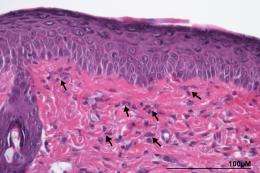
Established drug shows new effect - Imi recruites immune cells against tumors.
Imiquimod, a drug used to treat skin cancer, has been shown to have a previously unknown effect on immune cells. The drug transforms cells known as dendritic cells into "tumour killers" that attack the tumour directly and destroy its cells. The dendritic cells adopt an ingenious approach here they not only produce special substances with a cell-damaging effect, they also manage to fight the tumour without the help of T and B cells and natural killer (NK) cells. This complex interaction was discovered by scientists participating in a doctoral programme of the Austrian Science Fund FWF. It was also recently published and commented on in the Journal of Clinical Investigation.
For 15 years now the drug Imiquimod has been authorised for the treatment of certain skin diseases, including some types of skin cancer. And during that period, the drug, which is administered as a skin cream, has proven to be an effective treatment. Despite this therapeutic success, the drugs exact mechanism of action was not known to date. However, a research group working with Prof. Maria Sibilia, Head of the Institute for Cancer Research at the Medical University of Vienna, has now succeeded in determining some unknown and surprising effects of Imiquimod (Imi) on special immune cells.
In a mouse model for malignant melanoma, Prof. Sibilia and her team succeeded in demonstrating that Imiquimod not only triggers the "recruitment" of special immune cells, but also "arms" them for the battle against tumour cells. "We were able to show that Imi has an immediate and direct effect on mast cells in the skin. Mast cells are immune system cells that can release messenger substances for the control of an immune response. In reaction to Imi, which activates special receptors known as toll-like receptors, mast cells release CCL2 messenger substances a starting signal that triggers a response with fatal consequences for tumour cells," explains Dr Barbara Drobits, key scientist in the FWF-funded doctoral programme responsible for the discovery.
The group actually succeeded in demonstrating that CCL2 then causes the migration of additional immune system cells. The analysis of the subsequent activity of these immune cells generated a real surprise for the scientists: the immune cells, called plasmacytoid dendritic cells (pDCs), were considered to be modulators up to now. However, in their reaction to Imi, they proved to be bona fide aggressors.
Prof. Sibilia reports: "My team succeeded in decoding an important aspect of the mechanism of action triggered by Imiquimod and the role of the pDCs in this process. This is part of a complex strategy adopted by the body in the fight against tumours. pDCs were not only attracted by CCL2, but were also prompted to produce interferon alpha (IFNα) in response Imi." IFNα actually triggers the production of different substances (TRAIL, granzyme B) that can have a fatal effect on tumour cells. As another special characteristic, it was possible to show, for the first time, that pDCs themselves initiate the destruction of the tumour cells independent of the immune cells of the adaptive immune system (B and T cells) and without the help of NK cells, both of which are considered important components of the anti-tumoural immune response.
Overall, the team from the doctoral programme "Inflammation and Immunity succeeded in discovering a new mechanism of action of dendritic cells in fighting tumours; it had never been possible before to observe such a direct attack on tumours by pDCs. Further studies will reveal the extent to which this discovery will benefit the development of innovative cancer therapies. Some important questions remain open, however, as Dr Drobits explains: It is known that some tumour cells produce CCL2 themselves. In other words, they should have triggered the same cascade as Imi. But this did not always result in a positive disease progression. We do not yet know why this is the case and it needs to be explained." In meeting challenges like this, the FWFs doctoral programme once again proves that it is fulfilling an important goal: to give young scientists the opportunity to work at the vanguard of cutting-edge science.
More information: Imiquimod clears tumors in mice independent of adaptive immunity by converting pDCs into tumor-killing effector cells. B. Drobits, M. Holcmann, N. Amberg, M. Swiecki, R. Grundtner, M. Hammer, M. Colonna, and M. Sibilia. J Clin Invest. 2012;122(2):575585. doi:10.1172/JCI61034
Journal reference:
Journal of Clinical Investigation
Provided by Austrian Science Fund
-
Mechanism for more efficient cancer treatment decoded
Jan 19, 2012 |
not rated yet |
0
-
Stem cell approach primes immune system to fight cancer
Nov 10, 2011 |
not rated yet |
0
-
Immune system important in fight against stomach cancer
Jun 28, 2010 |
not rated yet |
0
-
A new way to stimulate the immune system and fight infection
Jan 20, 2012 |
not rated yet |
0
-
The immune system's guard against cancer
Apr 06, 2010 |
not rated yet |
0
-
Motion perception revisited: High Phi effect challenges established motion perception assumptions
Apr 23, 2013 |
3 / 5 (2) |
2
-
Anything you can do I can do better: Neuromolecular foundations of the superiority illusion (Update)
Apr 02, 2013 |
4.5 / 5 (11) |
5
-
The visual system as economist: Neural resource allocation in visual adaptation
Mar 30, 2013 |
5 / 5 (2) |
9
-
Separate lives: Neuronal and organismal lifespans decoupled
Mar 27, 2013 |
4.9 / 5 (8) |
0
-
Sizing things up: The evolutionary neurobiology of scale invariance
Feb 28, 2013 |
4.8 / 5 (10) |
14
-
Image of a Convex Lens Cut in Half Horizontally
2 hours ago
-
Ray tracing throught optical system of thick lenses
2 hours ago
-
Faraday's law on circular wire
3 hours ago
-
Specific Exergy vs Specific Flow Exergy
4 hours ago
-
The Durability of Bone: Long Falls
13 hours ago
-
Is energy convertible to matter?
14 hours ago
- More from Physics Forums - Classical Physics
More news stories
New immune system discovered
(Medical Xpress)—A research team, led by Jeremy Barr, a biology post-doctoral fellow, unveils a new immune system that protects humans and animals from infection.
Immunology
May 20, 2013 |
4.8 / 5 (22) |
8
|
Vitamin D could provide new and effective treatments for asthma
(Medical Xpress)—Scientists at King's College London have discovered that Vitamin D has the potential to significantly reduce the symptoms of asthma. The study, led by Professor Catherine Hawrylowicz from ...
Immunology
May 20, 2013 |
5 / 5 (1) |
0
|
Immune protein could stop diabetes in its tracks
Melbourne researchers have identified an immune protein that has the potential to stop or reverse the development of type 1 diabetes in its early stages, before insulin-producing cells have been destroyed.
Immunology
May 20, 2013 |
5 / 5 (5) |
0
|
Stem-cell-based strategy boosts immune system in mice
Raising hopes for cell-based therapies, UC San Francisco researchers have created the first functioning human thymus tissue from embryonic stem cells in the laboratory. The researchers showed that, in mice, ...
Immunology
May 16, 2013 |
4.8 / 5 (5) |
0
|
Resistance to visceral leishmaniasis: New mechanisms involved
Researchers from CNRS, Université Toulouse III - Paul Sabatier and IRD have elucidated new molecular mechanisms involved in resistance to visceral leishmaniasis, a serious parasitic infection. They have shown that dectin-1 ...
Immunology
May 16, 2013 |
not rated yet |
0
Study finds new pneumococcal vaccine appears to be as safe as previously used vaccine
The new 13-valent pneumococcal conjugate vaccine (PCV13) appears to be as safe as the previous version used prior to 2010, the 7-valent pneumococcal conjugate vaccine (PCV7), according to a Kaiser Permanente study published ...
Addiction to unhealthy foods could help explain the global obesity epidemic
Research presented today shows that high-fructose corn syrup can cause behavioural reactions in rats similar to those produced by drugs of abuse such as cocaine. These results, presented by addiction expert Francesco Leri, ...
Study says empathy plays a key role in moral judgments
Is it permissible to harm one to save many? Those who tend to say "yes" when faced with this classic dilemma are likely to be deficient in a specific kind of empathy, according to a report published in the scientific journal ...
A molecular explanation for age-related fertility decline in women
(Medical Xpress)—Scientists supported by the National Institutes of Health have a new theory as to why a woman's fertility declines after her mid-30s. They also suggest an approach that might help slow ...
Phthalates: Study links chemicals widely found in plastics, processed food to elevated blood pressure in children, teens
Plastic additives known as phthalates (pronounced THAL-ates) are odorless, colorless and just about everywhere: They turn up in flooring, plastic cups, beach balls, plastic wrap, intravenous tubing and—according to the ...
Medical researchers discover new ways to target, develop and design drugs to prevent and treat viral infection
Researchers at the University of Alberta have discovered a new drug target, developed a new drug and identified a new way to design drugs—all of which could be a winning combination in the battle against viruses.