IoP Neuroscientists develop new 'Brain' App
March 30, 2012 in Neuroscience

IoP Neuroscientists develop new 'Brain' App

Enlarge

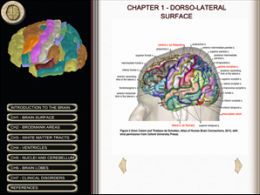
Image taken from the 'Brain' Study Room

A team of neuroscientists from the Institute of Psychiatry (IoP) at King’s College London have developed a digital atlas of the human brain for iPad. The ‘Brain’ App is the first of its kind, and is based on cutting edge neuro-imaging research from the NatBrainLab at the IoP. 

Dr. Marco Catani, Head of the NatBrainLab who led the development of the with Dr. Flavio Dell’Acqua and Dr. Michel Thiebaut de Schotten, said: “For 10 years our lab has pioneered the use of highly advanced neuro-imaging techniques. This is the first time that imaging methods usually only applied to research have been used in an educational App. It’s very exciting to see our work transformed into such an accessible, fun and beautiful tool.”
IoP Neuroscientists develop new 'Brain' App
Enlarge

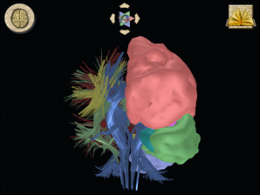
Image taken from the 'Brain' Dissection Room

Two types of scans were used to develop the content of ‘Brain’ – results from an MRI scan reveal the structural properties of the brain, and images from a Diffusion Tractography scan allow the user to identify connections in the brain. 

The App is split into two virtual rooms. The Dissection Room allows the user to play with a 3D , select individual structures and ‘pull’ them apart to visualize their anatomical features. The Study Room then offers a more thorough explanation of functional aspects and their relationship to neurological and psychiatric disorders. 

Dr. Catani adds: “The interactive nature of our App really allows you to explore the depths of the neural network and appreciate the complexity of the human brain. Because the content is based directly on research, the finished product is an accurate reflection of the real thing.”

Dr. Catani and his team are now working towards developing the next version of the App. By integrating scans from several different brains into the programme, they hope to be able to offer the user the chance to see directly how the brain develops from childhood to old age and the direct effect of different age-related disorders on the brain.

The App is currently being used by Dr. Catani and his colleagues to teach MSc students neuroscience.

More information: Marco Catani and Michel Thiebaut de Schotten are also due to publish the ‘Atlas of Human Brain Connections’ in May 2012, for more information, please visit the Oxford University Press website

Provided by King's College London search and more info website

not rated yet  

Rank not rated yet
Related Stories
Relevant PhysicsForums posts

More news stories

New neuron formation could increase capacity for new learning, at the expense of old memories

New research presented today shows that formation of new neurons in the hippocampus - a brain region known for its importance in learning and remembering - could cause forgetting of old memories by causing a reorganization ...

Neuroscience created May 24, 2013 | popularity 4 / 5 (4) | comments 0

Help at hand for people with schizophrenia

How can healthy people who hear voices help schizophrenics? Finding the answer for this is at the centre of research conducted at the University of Bergen.

Neuroscience created May 24, 2013 | popularity 4 / 5 (2) | comments 2

Japanese research organizations contribute to Human Brain Project

One of the major frontiers of modern science is a comprehensive understanding of the human brain and its functions to guide the development of new technologies in information and communication. In a major announcement for ...

Neuroscience created May 24, 2013 | popularity 3.7 / 5 (3) | comments 0

Controlling mood through the motions of mitochondria

(Medical Xpress)—Regulating the distribution of power in neurons is done by a system that makes the national electric grid look simple by comparison. Each neuron has several thousand mitochondria confined ...

Neuroscience created May 23, 2013 | popularity 4.9 / 5 (10) | comments 0 | with audio podcast report

Brain uses internal 'average voice' prototype to identify who is talking

(Medical Xpress)—The human brain is able to identify individuals' voices by comparing them against an internal 'average voice' prototype, according to neuroscientists.

Neuroscience created May 23, 2013 | popularity 3.7 / 5 (3) | comments 3 | with audio podcast


First drug to improve heart failure mortality in over a decade

Coenzyme Q10 decreases all cause mortality by half, according to the results of a multicentre randomised double blind trial presented today at Heart Failure 2013 congress. It is the first drug to improve heart failure mortality ...

Seniors more likely to crash when driving with pet, study finds

(HealthDay)—Animals make great companions for senior citizens, but elderly people who always drive with a pet in the car are far more likely to crash than those who never drive with a pet, researchers have ...

Heart failure accelerates male 'menopause'

Heart failure accelerates the aging process and brings on early andropausal syndrome (AS), according to research presented today at the Heart Failure Congress 2013. AS, also referred to as male 'menopause', was four times ...

Death highest in heart failure patients admitted in January, on Friday, and overnight

Mortality and length of stay are highest in heart failure patients admitted in January, on Friday, and overnight, according to research presented today at the Heart Failure Congress 2013. The analysis of nearly 1 million ...

Feds fight morning-after pill age ruling in NY

(AP)—Department of Justice lawyers have again asked a federal appeals court in New York to delay lifting age restrictions and prescription requirements on an emergency contraceptive popularly known as the morning-after ...

New immune system discovered

(Medical Xpress)—A research team, led by Jeremy Barr, a biology post-doctoral fellow, unveils a new immune system that protects humans and animals from infection.