March 5, 2012 report
Neuroscientist group finds daydreaming uses same parts of the brain as social skills
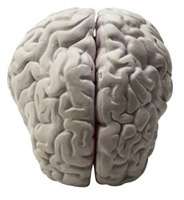
(Medical Xpress) -- A group of Australian neuroscientists have been reviewing the results of many studies done over the years regarding the parts of the brain that are thought to be used in different real world scenarios and have found that many of them appear to be involved when people go into what is called a default network - more commonly known as daydreaming, or running on auto-pilot. Their findings suggest, as they write in their paper published in Nature Reviews Neurology, that the default network is tied very closely with the same areas of the brain generally thought of as those used for social skills.
To find connections, the team looked at studies of elderly people that had fallen victim to two distinct forms of early onset dementia. One involved damage to the frontal lobe, the other to the temporal lobe. Damage to the frontal lobe, they point out, generally results in patients displaying an inability to understand why they should curb their language. They’re impulsive and aren’t able to understand the repercussions of their words or actions as they pertain to other people. Those with damage to the temporal lobe on the other hand, have trouble understanding the subtle cues that go on between people when interacting. They generally run into trouble in trying to read emotion in others and also tend to have difficulty remembering faces or other everyday objects. Both conditions obviously have a very direct and troublesome impact on social interaction.
They also found that when people without dementia are placed in an fMRI machine and who are allowed to daydream, various parts of their brain light up, indicating that the default network is quite complicated and involved. But of specific interest to this group of researchers was the fact that many of those areas that light up when transitioning to the default network, are the same ones that are used for social interaction, memory and imagination.
This means, they say, that the default network is more than just daydreaming because for it to occur, there needs to be memory of events that have transpired, imagination to guess about things that might happen in the future and the consequences of different happenings. Not coincidentally, they add, all these things are necessary for social interaction as well. This, they say, is why it’s time to stop looking at individual brain functions as separate events and instead to start looking at events as multi-brain activities that all together add up to the richness of thought we all experience as thinking human beings.
More information: Self-projection and the default network in frontotemporal dementia, Nature Reviews Neurology, doi:10.1038/nrneurol.2012.11
Abstract
Converging evidence suggests that when individuals are left to think to themselves, a so-called default network of the brain is engaged, allowing the individual to daydream, reflect on their past, imagine possible future scenarios, and consider the viewpoints of others. These flexible self-relevant mental explorations enable the anticipation and evaluation of events before they occur, and are essential for successful social interactions. Such self-projective efforts are particularly vulnerable to disruption in frontotemporal dementia (FTD), a neurodegenerative disorder involving damage to the frontal and temporal lobes of the brain. In this Review, we explore how the progressive degeneration of the neural networks in two subtypes of FTD—the behavioral variant and semantic dementia—affects key structures of the default network and putative self-projective functions. We examine the available evidence from studies of autobiographical memory, episodic future thinking, theory of mind, moral reasoning, and economic decision-making in these neurodegenerative diseases. Finally, we propose that the mapping of default-network functions onto discrete subsystems of the default network may need revision in light of neuropsychological and clinical evidence from studies in patients with FTD.
via ABC
© 2011 Medical Xpress


