Potentially deadly new infection found in Australia
March 19, 2012 in Diseases, Conditions, Syndromes
(Medical Xpress) -- Murdoch University researchers have helped to identify a new human infection in Australia after the disease contributed to the death of a Canberra man.
Associate Professor Peter Irwin and Dr Andrea Paparini from the School of Veterinary and Biomedical Sciences were able to confirm the presence of the disease in blood samples taken from the man.
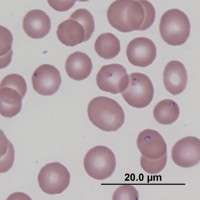
The disease, known as babesiosis, is caused by a tick-transmitted zoonotic protozoan parasite, Dr Irwin said.
This infection is well known in the northern hemisphere where it causes serious illness in people, but this is the first time it has been identified in Australia.
It is essentially an animal parasite that usually infects rats and mice.
People are infected accidentally when they are bitten by an infected tick, and it has also been reported to have been transmitted in blood transfusions overseas.
What is really interesting about this discovery is that we dont know how the man was infected and it raises interesting questions about the possibility that this form of babesiosis exists in our native animals or introduced rodents.
Dr Sanjaya Senanayake from Canberra Hospital and Australian National University suspected the presence of babesiosis in the patient. Dr Senanayake led the research team which also included the Centers for Disease Control and Prevention in Atlanta USA.
It was initially thought that the patient was suffering from malaria, but he did not respond to treatment, Dr Irwin said.
Because of our expertise in this area with animals, we were asked to take a look at the parasite and confirmed that it wasnt malaria, it was babesiosis.
People suffering from babesiosis suffer from anaemia and low platelet counts which can present in the form of fatigue and headaches.
The results of the research have been published in the Medical Journal of Australia. Dr Peter Irwin has been researching babesiosis since the 1980s.
More information: www.mja.com.au/
Provided by Murdoch University
-
Better blood screening process needed to prevent babesiosis transmission
Oct 20, 2009 |
not rated yet |
0
-
Breakthrough in malaria research looks to body's immune cells
Nov 25, 2011 |
not rated yet |
0
-
Bacterial disease outbreak threatens metro Detroit animals
Oct 28, 2011 |
not rated yet |
0
-
Lyme disease bacteria take cover in lymph nodes, study finds
Jun 09, 2011 |
not rated yet |
0
-
What makes ticks tick?
Mar 07, 2012 |
not rated yet |
0
-
Motion perception revisited: High Phi effect challenges established motion perception assumptions
Apr 23, 2013 |
3 / 5 (2) |
2
-
Anything you can do I can do better: Neuromolecular foundations of the superiority illusion (Update)
Apr 02, 2013 |
4.5 / 5 (11) |
5
-
The visual system as economist: Neural resource allocation in visual adaptation
Mar 30, 2013 |
5 / 5 (2) |
9
-
Separate lives: Neuronal and organismal lifespans decoupled
Mar 27, 2013 |
4.9 / 5 (8) |
0
-
Sizing things up: The evolutionary neurobiology of scale invariance
Feb 28, 2013 |
4.8 / 5 (10) |
14
-
Classical and Quantum Mechanics via Lie algebras
Apr 15, 2011
- More from Physics Forums - Independent Research
More news stories
New case of SARS-like virus in Saudi: ministry
A new case of the deadly coronavirus has been detected in Saudi Arabia where 15 people have already died after contracting it, the health ministry announced on Saturday on its Internet website.
Diseases, Conditions, Syndromes
12 hours ago |
not rated yet |
0
Little evidence for prediction rules for low back pain
(HealthDay)—Few randomized clinical trials have been done to assess clinical prediction rules for patients with lower back pain, and the trials that have been done are of low quality and do not provide ...
Diseases, Conditions, Syndromes
May 17, 2013 |
not rated yet |
0
|
New malaria test kit gives a boost to elimination efforts worldwide
A new, highly sensitive blood test that quickly detects even the lowest levels of malaria parasites in the body could make a dramatic difference in efforts to tackle the disease in the UK and across the world, according to ...
Diseases, Conditions, Syndromes
May 17, 2013 |
not rated yet |
0
WHO says single yellow fever shot is enough
(AP)—The World Health Organization says a yellow fever booster vaccination given 10 years after the initial shot isn't necessary.
Diseases, Conditions, Syndromes
May 17, 2013 |
not rated yet |
0
23 dead in initiation rites in South Africa
(AP)—Twenty-three youths have died in the past nine days at initiation ceremonies that include circumcisions and survival tests, South African police said Friday.
Diseases, Conditions, Syndromes
May 17, 2013 |
5 / 5 (1) |
3
New research identifies risks, interventions for children's GI health
An increasing number of U.S. children are experiencing gastrointestinal issues that require interventions to resolve, according to research presented at Digestive Disease Week (DDW).
US psychiatry gets makeover in new manual
The latest makeover to a massive psychiatric tome honored by some, reviled by others and even called the "Bible" of mental disorders is being released Saturday with a host of new changes.
AIDS science at 30: 'Cure' now part of lexicon
Big names in medicine are set to give an upbeat assessment of the war on AIDS on Tuesday, 30 years after French researchers identified the virus that causes the disease.
For combat veterans suffering from post-traumatic stress disorder, 'fear circuitry' in the brain never rests
Chronic trauma can inflict lasting damage to brain regions associated with fear and anxiety. Previous imaging studies of people with post-traumatic stress disorder, or PTSD, have shown that these brain regions can over-or ...
New colonoscope provides ground-breaking view of colon
A ground-breaking advance in colonoscopy technology signals the future of colorectal care, according to research presented today at Digestive Disease Week(DDW). Additional research focuses on optimizing the minimal withdrawal ...
Body clocks of depressed people altered at cell level, researchers show
Every cell in our bodies runs on a 24-hour clock, tuned to the night-day, light-dark cycles that have ruled us since the dawn of humanity. The brain acts as timekeeper, keeping the cellular clock in sync ...