Too much exercise delays pregnancy in normal-weight women: study
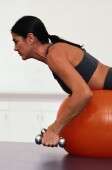
(HealthDay) -- Exercise is a plus for women trying to become pregnant, but overdoing workouts might make it harder to conceive -- unless you're overweight, researchers report.
Usually a risk factor for most health problems, being overweight or obese didn't hinder fertility in heavy women who logged vigorous workouts -- running, fast cycling and aerobics. However, healthy-weight women who performed more intense workouts were more likely to experience delays becoming pregnant.
The study was led by U.S. and Danish researchers who tracked physical activity and fertility in thousands of Danish women.
While moderate physical activity was associated with a small increase in fertility rates among all women, study author Lauren Wise, an associate professor of epidemiology at the Boston University School of Public Health, said, "Our study found that higher levels of vigorous exercise were associated with lower fertility rates in normal-weight women, but not overweight and obese women."
Wise said the findings indicate that physical activity of any type might improve fertility among heavier women, but their normal-weight counterparts who want to improve their pregnancy odds should sub in low-key workouts such as brisk walking and gardening. In other words, marathon runners who want to conceive might want to scale back on those pavement-pounding workouts, she said.
Other studies of competitive female athletes suggest that intense workouts disturb women's monthly menstrual cycles and lead to a lack of ovulation and even the absence of menstrual periods, among other problems, Wise said. But, she added, high-intensity exercise might also impair implantation when a fertilized egg attaches to the wall of the uterus.
The researchers of the observational study recruited and administered questionnaires over the Internet to 3,628 women who ranged in age from 18 to 40. They had to be in stable relationships with male partners and planning to become pregnant, but not involved in any fertility treatments.
The researchers collected information on height, weight, reproductive and medical history, plus lifestyle and behavioral details, and then sent out follow-up questionnaires by email every two months for 12 months, or until a woman became pregnant.
At the study's start, the women were asked about the average number of hours per week they exercised and about what types of moderate or vigorous physical activity they performed. Running, fast cycling, aerobics, gymnastics and swimming were considered vigorous. Brisk walking, leisurely cycling, golfing and gardening were defined as moderate.
The participants were categorized by their exercise levels and the results were evaluated according to body mass index (BMI, a ratio of weight to height). A BMI over 25 is considered overweight or obese.
While moderate physical activity was linked to becoming pregnant faster across all BMI ranges, the researchers found that there was an "inverse association" between vigorous physical activity and how long it took to become pregnant for normal-weight women (a BMI under 25). In overweight or obese women, there was no link between vigorous exercise and a longer time to pregnancy.
The study findings, which did not prove a cause-and-effect relationship, were published March 15 in the journal Fertility and Sterility.
Wise noted that in other research, being overweight or obese has been associated with lower fertility rates compared to normal-weight women. Obesity has also been associated with menstrual cycle disturbances. She said increased physical activity in this study might reverse the harmful effects of obesity and improve the overweight women's overall fertility rates.
The exact mechanisms for why physical activity might enhance fertility in overweight and obese women remain unclear, though, and the researchers didn't delve into them, Wise said.
Dr. Dimitrios Mastrogiannis, director of the division of maternal-fetal medicine and an associate professor of obstetrics, gynecology and reproductive sciences at Temple University School of Medicine in Philadelphia, said, "Obesity is a different ballgame. Different hormones are playing around in obesity -- fatty tissue produces more female hormones, more estrogens. Other hormones are transformed into female hormones in the adipose tissue."
The research does not suggest packing on pounds to get pregnant, or backing off physical activity completely, he said.
"Exercise is a good thing. It's linked to less cardiovascular disease, less cancers, less diabetes," said Mastrogiannis, noting that physical activity is also linked to better pregnancies, easier labors, less pain and fewer induced births.
The bottom line of the study is that normal, non-obese women who want to become pregnant should stick to moderate aerobic exercise, Mastrogiannis said.
"We recommend our patients get moderate aerobic exercise, akin to 30 minutes a day is usually what we say. Walking is very important," he said.
"If they engage in very vigorous exercise -- running, fast cycling, gymnastics or swimming -- more than five hours a week, it makes them less fertile," Mastrogiannis said.
More information: For more on pre-conception health, visit the American Pregnancy Association.
Copyright © 2012 HealthDay. All rights reserved.


