The stealth sodium revolution
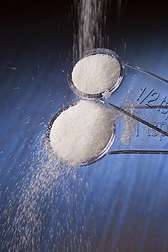
Researchers with the U.S. Departments of Agriculture (USDA) and Health and Human Services have teamed up for HHS's sodium surveillance efforts.
The National Institute of Medicine, part of the National Academies, is also involved and has called on the Food and Drug Administration to set mandatory national standards for the sodium content in foods.
Sodium has become one of a handful of sensitive nutrients in the public spotlight, according to major food company executives who attended the 2011 National Nutrient Databank Conference in Bethesda, Md. The conference is supported annually by the Agricultural Research Service (ARS) Nutrient Data Laboratory and the agency's Food Surveys Research Group, as well as other organizations. ARS is USDA's principal intramural scientific research agency.
At the conference, three major food companies described long-term "silent" sodium-reduction plans. One company reported already having removed 2 million pounds of salt from retail food brands in less than 10 years. Another announced plans to reduce sodium in prepared foods by 10 percent before 2015. All of the food companies talked about the need to give consumers time to "adapt their taste buds" to less salt in their retail foods.
Nutrient Data Laboratory researchers developed a plan to monitor the levels of sodium in foods, particularly the processed foods and ingredients that contribute up to 80 percent of our population's added-sodium intake, as assessed in the USDA-ARS national "What We Eat in America" survey. Foods that rank highest in sodium are being monitored by chemical analysis.
Having such accurate data on sodium in the foods processed by manufacturers, restaurants, and foodservice firms supports efforts to monitor and assess sodium intakes in the U.S. population, according to experts.
More information: Read more about the ARS national program for human nutrition monitoring in a three-part series featured in the March 2012 issue of Agricultural Research magazine.


