Losing the weight but not the stigma
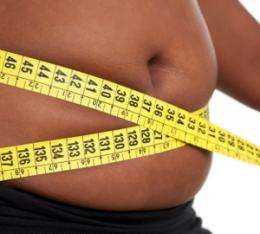
(Medical Xpress) -- Obese people who lose weight will encounter far less social stigma and may even be seen as fitter than if they had been lean all along, but they may still face prejudice relating to how they lost weight, a new study suggests.
People who achieve a healthy weight through exercise and diet are seen more favourably than those who have had surgery, such as a gastric bypass, the study found.
In a paper published in the International Journal of Obesity, researchers from the UNSW School of Psychology - led by PhD student Jasmine Fardouly and supervised by Dr. Lenny Vartanian set out to study what impact weight loss has on social bias against obese people.
Its well-known that, as well as suffering adverse health, overweight and obese people are often stereotyped as lazy, incompetent and lacking self-control, says Dr. Vartanian. Many obese people are motivated to lose weight to reduce that bias, but few studies have actually looked to see whether success in losing weight also succeeds in changing attitudes.
Ms. Fardouly says they found that those negative attitudes can indeed swing markedly the other way: People tend to see an obese person who sheds a lot of weight as someone who eats more healthily, exercises more and is more competent and less sloppy.
But that may be because people assume the weight loss was a result of better diet and more exercise. If they are told it was the result of surgery, our findings suggest they will view a previously obese person in some of the same ways as they did before as someone who is lazy, lacks willpower and does not exercise enough.
The study involved 73 psychology students being shown a photograph of an obese woman named Susan (not her real name), who had a body-mass index of almost 40 (much higher than a healthy BMI which is between 20 and 25). They were given Susans basic biographical information, asked to answer a series of questions about her lifestyle, and to rate her personality and behavioral traits.
Then they were then shown a more recent photograph - similar in clothes, facial expression and pose - after Susan had undergone a dramatic weight loss, down to a BMI of just 22. Some were told that she had used either surgery or diet and exercise, while others were given no explanation.
Regardless of the explanation given, the students generally rated Susan far more favourably for having lost weight. Even those given no explanation believed she was now eating more healthily and exercising more, and was more competent than before. But those who were told that the weight loss had been achieved through surgery judged her more negatively.
Weight-loss surgery patients may not be able to overcome the obesity stigma because surgery may be perceived as the lazy option, says Dr. Vartanian.
People mistakenly believe that losing weight through surgery does not require the effort and discipline that losing weight through exercise and dieting does, the researchers say in the paper: Thus, despite choosing to undergo weight-loss surgery to better their health and reduce weight stigma, obese individuals may continue to be viewed as conforming to the obesity stereotype, and hence be considered lazy and lacking willpower.
Provided by
University of New South Wales
-
Shame on you: tough-love approach to obesity may backfire
May 03, 2011 |
not rated yet |
0
-
Overweight people influenced by labels
Dec 13, 2010 |
not rated yet |
0
-
Weight-loss surgery safe for less obese patients
Mar 01, 2011 |
not rated yet |
0
-
Exercise plays key role in managing obesity: study
Feb 21, 2012 |
not rated yet |
0
-
Weight-loss surgery cost-effective for all obese
Jul 14, 2011 |
not rated yet |
0
-
Motion perception revisited: High Phi effect challenges established motion perception assumptions
Apr 23, 2013 |
3 / 5 (2) |
2
-
Anything you can do I can do better: Neuromolecular foundations of the superiority illusion (Update)
Apr 02, 2013 |
4.5 / 5 (11) |
5
-
The visual system as economist: Neural resource allocation in visual adaptation
Mar 30, 2013 |
5 / 5 (2) |
9
-
Separate lives: Neuronal and organismal lifespans decoupled
Mar 27, 2013 |
4.9 / 5 (8) |
0
-
Sizing things up: The evolutionary neurobiology of scale invariance
Feb 28, 2013 |
4.8 / 5 (10) |
14
-
Classical and Quantum Mechanics via Lie algebras
Apr 15, 2011
- More from Physics Forums - Independent Research
More news stories
Adult day services for dementia patients provide stress relief to family caregivers
Family caregivers of older adults with dementia are less stressed and their moods are improved on days when dementia patients receive adult day services (ADS), according to Penn State researchers.
Health
3 minutes ago |
not rated yet |
0
Schools should provide opportunities for 60 minutes of daily physical activity to all students
Given the implications for the overall health, development, and academic success of children, schools should play a primary role in ensuring that all students have opportunities to engage in at least 60 minutes per day of ...
Health
22 minutes ago |
not rated yet |
0
Survey reveals the success of personal budgets in social care
Over 70 per cent of people who hold a personal budget for social care said it led to greater independence and support according to the latest survey.
Health
3 hours ago |
not rated yet |
0
Scientists develop smartphone 'assistance agent' for older people
A new smartphone application, developed by scientists at the University of Ulster, which could help older people engage fully in an increasingly self-serve society, may be ready for use by the end of the ...
Health
3 hours ago |
not rated yet |
0
Can you put a price on health?
As health services strive to improve quality and reduce costs, researchers study the benefits – and the pitfalls – of 'pay for performance' in hospitals.
Health
3 hours ago |
not rated yet |
0
|
Motion quotient: IQ predicted by ability to filter motion (w/ video)
A brief visual task can predict IQ, according to a new study. This surprisingly simple exercise measures the brain's unconscious ability to filter out visual movement. The study shows that individuals whose ...
Researchers suggest boosting body's natural flu killers
A known difficulty in fighting influenza (flu) is the ability of the flu viruses to mutate and thus evade various medications that were previously found to be effective. Researchers at the Hebrew University of Jerusalem have ...
Regenerating spinal cord fibers may be treatment for stroke-related disabilities
A study by researchers at Henry Ford Hospital found "substantial evidence" that a regenerative process involving damaged nerve fibers in the spinal cord could hold the key to better functional recovery by most stroke victims.
The secret lives, and deaths, of neurons
As the human body fine-tunes its neurological wiring, nerve cells often must fix a faulty connection by amputating an axon—the "business end" of the neuron that sends electrical impulses to tissues or other ...
Protein preps cells to survive stress of cancer growth and chemotherapy
Scientists have uncovered a survival mechanism that occurs in breast cells that have just turned premalignant-cells on the cusp between normalcy and cancers-which may lead to new methods of stopping tumors.
Defective cellular waste removal explains why Gaucher patients often develop Parkinson's disease
Gaucher disease causes debilitating and sometimes fatal neurodegeneration in early childhood. Recent studies have uncovered a link between the mutations responsible for Gaucher disease and an increased risk ...
Mar 09, 2012
Rank: not rated yet
I would like to see where this information came from, since this article does not make any further mention of it at all. If people are mistaken in this belief, at least offer evidence of why they are mistaken.