Autism research may be about to bear fruit
(AP) -- More than $1 billion has been spent over the past decade researching autism. In some ways, the search for its causes looks like a long-running fishing expedition, with a focus on everything from genetics to the age of the father, the weight of the mother, and how close a child lives to a freeway.
That perception may soon change. Some in the field say they are seeing the beginning of a wave of scientific reports that should strengthen some theories, jettison others and perhaps even herald new drugs.
"I do think over the next three to five years we'll be able to paint a much clearer picture of how genes and environmental factors combine" to cause autism, said Geraldine Dawson, a psychologist who is chief science officer for the advocacy group Autism Speaks.
The effort has been infused with new urgency by a recent federal report that found autism disorders are far more common than was previously understood, affecting 1 in 88 U.S. children. Better diagnosis is largely responsible for the new estimate, but health officials said there may actually be more cases of autism, too.
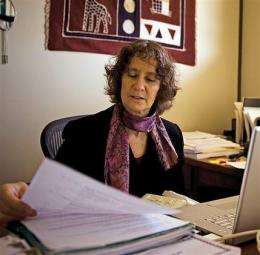
If autism's causes remain a mystery, "you're not going to be able to stop this increase," said Irva Hertz-Picciotto, a researcher at the University of California, Davis who is leading a closely watched study into what sparks autism disorders.
In the past week, a spate of studies released during National Autism Awareness Month has offered tantalizing new information about potential causes. Research published in the journal Nature widened the understanding of the genetic roots of some cases and confirmed the elevated risks for children with older fathers. Another study, released online Monday in Pediatrics, suggested maternal obesity may play a role.
To be sure, finding the causes of autism - an umbrella term for a variety of disorders that delay children socially or intellectually - remains daunting. The causes are believed to be complicated, and not necessarily the same for each child. Some liken autism to cancer - a small word for a wide range of illnesses. In many cases, autism can be blamed on both genetic problems that load the gun and other factors that pull the trigger.
It has been a growing public concern for two decades, as studies have found it to be more and more prevalent. The U.S. government dramatically increased funding for autism research in the last decade, and now budgets about $170 million a year through the National Institutes of Health. That's only about a quarter of what NIH will spend on breast cancer research and $50 million less than what it will spend on asthma.
But more than a half-dozen foundations and autism advocacy groups have been adding to the pot, putting annual research spending in recent years at more than $300 million. About a third of that has been devoted to finding autism's causes.
The lion's share of money for finding a cause has been spent on genetics, which so far experts believe can account for roughly 20 percent of cases. The earliest success was in the early 1990s and involved the discovery of the genetic underpinnings of Fragile X syndrome, a rare condition that accounts for just 2 to 4 percent of autism cases but is the most common form of inherited intellectual disability in boys.
The focus on genetics has been bolstered by dramatic improvements in gene mapping as well as the bioengineering of mice with autism symptoms. Dozens of risk genes have been identified, and a half-dozen drug companies are said to be working on developing new treatments.
"We've made some very significant progress on the genetics end of this search," said Dr. Thomas Insel, director of the National Institute of Mental Health.
Scientists have used autistic mice to test new drugs. Among the most promising is a small, white, strawberry-flavored pill that is so experimental it doesn't have a name. Developed by a Massachusetts company called Seaside Therapeutics Inc., the drug is aimed at a problem area in the brains of autistic children, where neurons connect and conduct signals through the nervous system.
It's a bit like the way tree-hopping ants might cross the twig ends of one tree branch to another. In Fragile X syndrome, scientists have noted the branches are thinner and the twigs too numerous. The experimental drug thins the twigs and strengthens the branches, allowing a more solid and centralized bridge.
The same problem hasn't been as visible in other types of autism, but many believe the phenomenon is somewhat similar.
The drug was deemed successful in mice and is now being tested in children and adults. In small, early studies, the drug made a striking difference in small groups of Fragile X children, causing hermit-like youngsters to start hanging out in the kitchen to chat with their mothers, said Dr. Paul Wang, Seaside's vice president of clinical development.
Now it is being tried in a preliminary study of about 150 children with a range of other autism disorders, including Asperger's. The results are expected to be presented at a scientific conference in the next year.
"It's going to be an exciting time, we hope," when those results come in, said Dawson, from Autism Speaks.
But even genetics enthusiasts acknowledge that genes are only part of the answer. Studies of identical twins have shown that autism can occur in one and not the other, meaning something outside a child's DNA is triggering the disorder in many cases. Some cases may be entirely due to other causes, Dawson said.
That broad "other" category means "environmental" influences - not necessarily chemicals, but a grab bag of outside factors that include things like the age of the father at conception and illnesses and medications the mother had while pregnant.
For years, the best-known environmental theory involved childhood vaccines, prompted by a flawed 1998 British study that has been thoroughly discredited. Dozens of later studies have found no link between vaccines and autism.
But there are other possible candidates. In all cases, these are "association" studies - they don't prove cause and effect. They merely find connections between certain factors and autism. And sometimes these conclusions can be skewed by other things researchers failed to account for. Some study results expected within a year:
- Hertz-Picciotto's study of 1,600 children in Northern California is comparing autistic children, youngsters with other developmental disabilities, and those who have no such diagnoses. Some results have been released already, including the recent finding that suggests a link between autism and a mother's obesity. An earlier part of the study found that children born to mothers living less than two blocks from a freeway were twice as likely to have autism - presumably because of auto exhaust and air pollution, the researchers speculated.
-A Centers for Disease Control and Prevention study involves 2,700 families nationwide. The researchers are interviewing parents and poring over medical records to look for common threads among autistic families, as well as doing genetics tests and checking hair samples for mercury. Much of the focus is on illnesses, medications, nutritional deficiencies or other problems during pregnancy.
-A study by Pennsylvania researchers involves 1,700 families in various regions of the country. Scientists are doing brain-imaging to look for changes over time in the brains of infants who have an older autistic sibling.
-A large Scandinavian study is examining patient registries in six countries for prenatal risk factors.
As study findings are reported, researchers are hoping to see repetition - confirmation, that is - that certain factors are playing significant roles.
Even so, scientists are still casting nets.
Said Coleen Boyle, a CDC official overseeing research into children's developmental disabilities: "We're at the infancy of just understanding how these factors relate to autism."
More information: CDC study under way: http://www.cdc.gov/ncbddd/autism/seed.html
Northern California study: http://beincharge.ucdavis.edu
Pennsylvania researchers' study: http://www.earlistudy.org
©2012 The Associated Press. All rights reserved. This material may not be published, broadcast, rewritten or redistributed.


