'Why Calories Count' weighs in on food and politics
April 24, 2012 By Susan Kelley in Health

'Why Calories Count' weighs in on food and politics

A calorie is simply a measurement of energy. But it's also the source of confusion and worry for many people trying to lose weight. At the same time, calories -- too few or too many -- are causing health problems resulting from malnutrition and obesity that affect billions of people around the world.

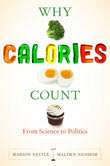
A new 304-page book, "Why Calories Count: From Science to Politics" (University of California Press), aims to clear up the confusion. It explains in accessible language what calories are and how they work, biologically and politically. Its authors are Marion Nestle, a visiting professor at Cornell and professor of nutrition, food studies and public health at New York University, and Malden Nesheim, professor emeritus of at Cornell.

Nesheim and Nestle take readers through issues that are fundamental to understanding diet and food, including , loss and obesity and put forth by and diet program promoters.

Calories, the authors write, also affect societies in political and personal ways.

The authors not only explain how scientists count calories in food and measure how bodies use them but also why we need calories for survival, warmth and work, covering metabolism and how the body uses calories. They also discuss calorie needs, the difficulties of estimating and the body's complex weight management system.

In exploring issues related to too few calories, they discuss starvation, global hunger and whether restricting calories could prolong human life. Their section on too many calories covers obesity, the complex relationship between calories and weight gain, whether all calories are created equal and whether some kinds of diets work better than others.

Having armed readers with the necessary information to interpret , evaluate diet claims and understand evidence as presented in popular media, Nesheim and Nestle elucidate the political stakes and show how federal and corporate policies have come together to create an "eat more" environment. Finally, the authors offer some candid advice: Get organized. Eat less. Eat better. Move more. Get political.

"Ultimately, the calorie is political: marketing affects instinct, and Nestle and Nesheim really shine in their analysis in this realm," wrote Mark Bittman in a New York Times' "Opinionator" blog March 20.

Nesheim is co-author of (with Nestle) "Feed Your Pet Right: The Authoritative Guide to Feeding Your Dog and Cat" and of (with Ann L. Yaktine) the Institute of Medicine's report "Seafood Choices: Balancing Benefits and Risks."

Provided by Cornell University search and more info website

not rated yet  

Rank not rated yet
Related Stories
Relevant PhysicsForums posts

More news stories

Consumers largely underestimating calorie content of fast food

People eating at fast food restaurants largely underestimate the calorie content of meals, especially large ones, according to a paper published today in BMJ.

Health created 3 hours ago | popularity not rated yet | comments 0

It's not your imagination: Memory gets muddled at menopause

Don't doubt it when a woman harried by hot flashes says she's having a hard time remembering things. A new study published online in Menopause, the journal of The North American Menopause Society (NAMS), helps confirm with o ...

Health created 4 hours ago | popularity not rated yet | comments 0

Farm bill: Senate rejects GMO labeling amendment

The Senate has overwhelmingly rejected an amendment allowing states to require labeling of genetically modified foods.

Health created 5 hours ago | popularity not rated yet | comments 1

McDonald's can't shake criticism about nutrition

(AP)—McDonald's once again faced criticism that it's a purveyor of junk food that markets to children at its annual shareholder meeting Thursday.

Health created 6 hours ago | popularity not rated yet | comments 0

Economic incentives increase blood donation without negative consequences

Can economic incentives such as gift cards, T-shirts, and time off from work motivate members of the public to increase their donations of blood?

Health created 8 hours ago | popularity not rated yet | comments 0 | with audio podcast


Controlling mood through the motions of mitochondria

(Medical Xpress)—Regulating the distribution of power in neurons is done by a system that makes the national electric grid look simple by comparison. Each neuron has several thousand mitochondria confined ...

Multiple research teams unable to confirm high-profile Alzheimer's study

Teams of highly respected Alzheimer's researchers failed to replicate what appeared to be breakthrough results for the treatment of this brain disease when they were published last year in the journal Science.

Scientists discover molecule triggers sensation of itch

Scientists at the National Institutes of Health report they have discovered in mouse studies that a small molecule released in the spinal cord triggers a process that is later experienced in the brain as ...

Motion quotient: IQ predicted by ability to filter motion (w/ video)

A brief visual task can predict IQ, according to a new study. This surprisingly simple exercise measures the brain's unconscious ability to filter out visual movement. The study shows that individuals whose ...

Researchers find common childhood asthma unconnected to allergens or inflammation

Little is known about why asthma develops, how it constricts the airway or why response to treatments varies between patients. Now, a team of researchers at Weill Cornell Medical College, Columbia University Medical Center ...

Diabetes' genetic underpinnings can vary based on ethnic background, studies say

Ethnic background plays a surprisingly large role in how diabetes develops on a cellular level, according to two new studies led by researchers at the Stanford University School of Medicine.