Taking multivitamins won't prevent canker sores, study says
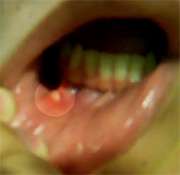
(HealthDay) -- Although vitamin deficiencies have been linked to canker sores, taking a daily multivitamin won't prevent this common mouth ailment, a new study finds.
The study found that people with recurrent aphthous stomatitis (RAS), the medical name for canker sores, received no benefit from taking a daily multivitamin as a preventive measure.
Previous research on canker sores had shown a benefit to patients with vitamin deficiencies when they took large doses of vitamins.
Participants in the new study did not have significant vitamin deficiencies, and the vitamin dose was much smaller -- although still equivalent to the recommended daily dose. Patients taking a placebo treatment had no more episodes of the oral lesions than those taking a vitamin regimen.
"Giving patients prone to RAS multivitamins did not reduce the duration or frequency of canker sores, so in clinical practice we should not be saying 'why don't you take a multivitamin?' " said Dr. Rajesh Lalla, lead author of the study, which was conducted at the University of Connecticut.
Lalla, a specialist in oral medicine at the university, said that because some patients' vitamin deficiencies may contribute to canker sores, those with severe cases should be screened, especially for low levels of vitamin B12 or folic acid.
The study, published in the April issue of the Journal of the American Dental Association, included only people with minor RAS, which makes up more than 80 percent of all cases, Lalla said.
About 40 percent of the U.S. population gets the sores -- which appear as pale-yellow ulcerations with a red ring and can range from minor to more serious manifestations -- at some point, mostly before age 50, according to other research.
The problem is most prevalent among teenagers and young adults, who often get them during exams or other stressful times, Lalla said.
The condition, the cause of which is not well understood, is not contagious. Genetics, allergies and the autoimmune system also have been connected to the disease, according to the researchers.
"Although not life-threatening, canker sores can be very painful," Lalla said, resulting in other problems such as difficulty eating, speaking or brushing teeth.
For typical canker sores, acetaminophen (Tylenol) can help reduce pain. Avoiding hot drinks, sucking on popsicles and gargling with salt water also can help, according to the U.S. National Institutes of Health.
Participants in the new study, conducted between 2005 and 2009, had suffered at least three episodes of RAS in the previous year. Researchers randomly assigned 83 adults to a study group and 77 adults to a control group. The two groups had slightly more women than men.
For a year, the study group took a daily multivitamin consisting of 100 percent of the recommended daily intake of essential vitamins; the control group took a placebo. The participants kept a diary noting each time they took a pill, their episodes of RAS and their pain level, and whether their dietary intake was affected by the sores.
Members of both groups had about four episodes of RAS during the study, each lasting about eight days. No difference in pain levels or the ability to eat certain foods existed between the two groups, nor was any difference found in compliance with the medication regimen, the study noted.
Of 14 participants who had low vitamin B12 levels, five were placed in the study group and nine in the control group. There was no difference in the number of new RAS episodes between the groups. Only two participants had low folic-acid levels, and no analysis was performed due to the small representation.
Dr. Leslie Seldin, a spokesman for the American Dental Association, said steroids can be prescribed when the sores are severe. But over-the-counter medications and "a little tender, loving care" usually are the recommended treatment, he said.
"Often patients come in and are quite concerned because they don't understand," said Seldin. "We try to give them assurance, after making sure it's nothing more serious."
Most patients have mild cases that heal in seven to 10 days with no treatment, Seldin said. People suffering from canker sores "shouldn't worry, because you are not alone," he said, noting the prevalence of the condition.
More information: To learn more about canker sores, visit the U.S. National Institutes of Health.
Copyright © 2012 HealthDay. All rights reserved.


