Researcher develops non-toxic dandruff shampoo
April 30, 2012 in Other

GHSU researcher develops non-toxic dandruff shampoo

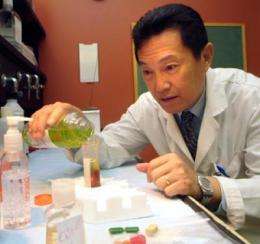
Dr. Stephen Hsu, professor of oral biology at Georgia Health Sciences University College of Dental Medicine, in his laboratory, where he develops products based on his green tea research. Credit: Phil Jones

Dandruff sufferers now have a non-toxic product to treat the condition, says a researcher at Georgia Health Sciences University.

"Most current effective anti-dandruff shampoos contain ingredients that are toxic to humans and the environment," according to Dr. Stephen Hsu, GHSU Professor of Oral Biology. "Our uses technology without coal tar, sulfate, sulfur or toxins. It's environmentally friendly, and it works."

Lipadan technology, Hsu's patented green tea formulation, can penetrate the skin's waterproof barrier, unlike water-soluble green tea. This enables the hair-friendly green tea components to combat major causes of dandruff: excessive cell growth, oxidative stress and .

Coal tar, a common ingredient in conventional dandruff shampoos, works by slowing the production of , but it is carcinogenic in high doses and banned for cosmetic use in many countries. Anti-dandruff shampoos also typically contain selenium , sulfur and salt. Side effects can include scalp and as well as hair loss, discoloration and dryness.

"The manufacturers put all that in shampoos for people to put on their head," Hsu said, noting that coal tar also stains and smells bad. "The goal of our research and development has been to replace those potentially hazardous agents with green components that have no risk for humans or the environment."

Green tea polyphenols promote the skin's metabolic equilibrium, shield against and provide antioxidant, anti-microbial, anti-cancer and anti-inflammation properties.

"We cannot put green tea in a bottle and expect it to work. It has to have the Lipadan technology," Hsu said. "We tried many times using a water-soluble molecule, but that will not work. It will not work, period."

Hsu began developing the product based on his "remarkable results" with tests on mice. His company, Camellix LLC, markets products based on his green tea technology. In addition to ReviTeaLize anti-dandruff shampoo, a hair-loss shampoo will soon be launched and upcoming products may include shaving cream, body wash, dish soap, facial soap, hair conditioner and gel. Patents are shared with Georgia Health Sciences University.

The business is supported by two grants from the Georgia Research Alliance, which helps entrepreneurs such as Hsu grow Georgia-based technology businesses while promoting innovation and local economic growth.

Provided by Georgia Health Sciences University search and more info website

5 /5 (1 vote)  

Rank 5 /5 (1 vote)
Related Stories
Relevant PhysicsForums posts

More news stories

ACP issues recommendations for management of high blood glucose in hospitalized patients

High blood glucose is associated with poor outcomes in hospitalized patients, and use of intensive insulin therapy (IIT) to control hyperglycemia is a common practice in hospitals. But the recent evidence does not show a ...

Other created 22 hours ago | popularity 4 / 5 (1) | comments 0

Future doctors unaware of their obesity bias

Two out of five medical students have an unconscious bias against obese people, according to a new study by researchers at Wake Forest Baptist Medical Center. The study is published online ahead of print in the Journal of ...

Other created May 23, 2013 | popularity not rated yet | comments 0

Plastic realistic: Medical students to use plastinated human bodies for anatomy learning

Nanyang Technological University's (NTU) new medical school will be pioneering the use of plastinated bodies for medical education in Singapore.

Other created May 23, 2013 | popularity not rated yet | comments 0

Survey points out deficiencies in addictions training for medical residents

A 2012 survey of internal medicine residents at Massachusetts General Hospital (MGH) – one of the nation's leading teaching hospitals – found that more than half rated the training they had received in addiction and other ...

Other created May 22, 2013 | popularity 5 / 5 (1) | comments 0

Early use of tracheostomy for mechanically ventilated patients not associated with improved survival

For critically ill patients receiving mechanical ventilation, early tracheostomy (within the first 4 days after admission) was not associated with an improvement in the risk of death within 30 days compared to patients who ...

Other created May 21, 2013 | popularity not rated yet | comments 0


Engineered cytomegalovirus protects monkeys from HIV equivalent

(Medical Xpress)—A new study by researchers in the US has shown that an ancient virus can be modified to help in the fight against the simian immunodeficiency virus SIV, which is the equivalent in monkeys ...

Researchers identify first drug targets in childhood genetic tumor disorder

Two mutations central to the development of infantile myofibromatosis (IM)—a disorder characterized by multiple tumors involving the skin, bone, and soft tissue—may provide new therapeutic targets, according to researchers ...

Hormone levels may provide key to understanding psychological disorders in women

Women at a particular stage in their monthly menstrual cycle may be more vulnerable to some of the psychological side-effects associated with stressful experiences, according to a study from UCL.

Going live: Immune cell activation in multiple sclerosis

Biological processes are generally based on events at the molecular and cellular level. To understand what happens in the course of infections, diseases or normal bodily functions, scientists would need to ...

Driving and hands-free talking lead to spike in errors, study shows

Talking on a hands-free device while behind the wheel can lead to a sharp increase in errors that could imperil other drivers on the road, according to new research from the University of Alberta.

Depression raises diabetics' risk of severe low blood sugar episodes

(Medical Xpress)—Patients with diabetes who are depressed are much more likely to develop episodes of dangerously low blood sugars, or hypoglycemia, than are those who are not depressed, a new study has ...