Scientists find gene that inhibits pancreas cancer spread
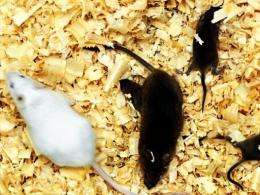
Scientists have identified a gene that slows the spread of pancreatic cancer tumours, paving the way for targeted treatment of one of the deadliest forms of the disease, said a paper published Sunday. After discovering the gene dubbed USP9X at work in a study of pancreatic cancer in mice, the international research team found it also played a role in humans.
Scientists have identified a gene that slows the spread of pancreatic cancer tumours, paving the way for targeted treatment of one of the deadliest forms of the disease, said a paper published Sunday.
After discovering the gene dubbed USP9X at work in a study of pancreatic cancer in mice, the international research team found it also played a role in humans.
"We looked in human tumour specimens and we found that it was missing in a fraction of patients -- the patients that did very poorly ... the people who died the fastest," researcher David Tuveson told AFP.
"Patients that had a low level of the gene expressed ... they died very quickly after their operation and the patients who at the end of their life had lots of metastasis (spreading of the cancer), they had also a very low level of this protein."
The existence of the gene, which is found in all of our cells but goes missing in some tumours, was known before but not its role as a cancer suppressor, said Tuveson.
Three other pancreatic tumour suppressor genes are known to exist, but this is the one whose absence "probably causes metastasis -- that is what kills people with pancreas cancer," said the scientist.
The discovery means that "we can wake up the gene by using drugs" known as epigenetic modulators, he added.
"Our observation allows us to potentially treat people that have lost this gene in the pancreas tumours. It allows us to offer a therapy for the patients that actually have the worst prognosis."
Tuveson said these kinds of drugs have already been developed, "but people haven't figured out where exactly they would be useful.
"We are proposing that these drugs would be useful in this subset of pancreas cancer patients."
Pancreatic cancer kills about 96 percent of its victims within five years of diagnosis, one of the lowest cancer survival rates.
Early diagnosis is difficult, so the disease is often discovered only after it has already spread.
(c) 2012 AFP
-
Gene identified in increasing pancreatic cancer risk
Dec 29, 2011 |
not rated yet |
0
-
Blood vessel 'inflator' could be 'game-changer' for pancreatic cancer treatment
Mar 21, 2012 |
not rated yet |
0
-
Gene linked to pancreatic cancer growth, study finds
Jan 31, 2012 |
not rated yet |
0
-
Combination therapy may enhance gemcitabine activity
Feb 28, 2012 |
not rated yet |
0
-
Scientists discover new gene responsible for spread of cancer
Mar 29, 2006 |
not rated yet |
0
-
Motion perception revisited: High Phi effect challenges established motion perception assumptions
Apr 23, 2013 |
3 / 5 (2) |
2
-
Anything you can do I can do better: Neuromolecular foundations of the superiority illusion (Update)
Apr 02, 2013 |
4.5 / 5 (11) |
5
-
The visual system as economist: Neural resource allocation in visual adaptation
Mar 30, 2013 |
5 / 5 (2) |
9
-
Separate lives: Neuronal and organismal lifespans decoupled
Mar 27, 2013 |
4.9 / 5 (8) |
0
-
Sizing things up: The evolutionary neurobiology of scale invariance
Feb 28, 2013 |
4.8 / 5 (10) |
14
-
Why is zone 1 in liver more prone to ischemic injury?
May 23, 2013
-
How can there be villous adenoma in colon, if there are no villi there
May 22, 2013
-
How can there be a term called "intestinal metaplasia" of stomach
May 21, 2013
-
Pressure-volume curve: Elastic Recoil Pressure don't make sense
May 18, 2013
-
If you became brain-dead, would you want them to pull the plug?
May 17, 2013
-
MRI bill question
May 15, 2013
- More from Physics Forums - Medical Sciences
More news stories
New fluorescent tools for cancer diagnosis
In recent years, microRNAs (miRNAs) and other non-coding RNAs are small molecules that help control the expression of specific proteins. In recent years they have emerged as disease biomarkers. miRNA profiles have been used ...
Cancer
12 hours ago |
not rated yet |
0
Modulating the immune system to combat metastatic cancer
Cancer cells spread and grow by avoiding detection and destruction by the immune system. Stimulation of the immune system can help to eliminate cancer cells; however, there are many factors that cause the immune system to ...
Cancer
12 hours ago |
not rated yet |
0
Scientists put bowel cancer under the microscope
Researchers from London's Kingston University have begun a two-year study which could help prolong the lives of people with colorectal tumours.
Cancer
16 hours ago |
5 / 5 (1) |
0
Researcher identifies breast cancer fighting hormone
Transformative research from Western University has identified new hormones in the body which may suppress breast cancer and stimulate the regression of breast tumors.
Cancer
16 hours ago |
5 / 5 (1) |
0
Ground breaking cancer research finds immune system link
(Medical Xpress)—Curtin University researchers have found evidence that targeting specific cells in the body can reverse the effects of cancer on the immune system.
Cancer
17 hours ago |
5 / 5 (3) |
0
Engineered cytomegalovirus protects monkeys from HIV equivalent
(Medical Xpress)—A new study by researchers in the US has shown that an ancient virus can be modified to help in the fight against the simian immunodeficiency virus SIV, which is the equivalent in monkeys ...
Researchers identify first drug targets in childhood genetic tumor disorder
Two mutations central to the development of infantile myofibromatosis (IM)—a disorder characterized by multiple tumors involving the skin, bone, and soft tissue—may provide new therapeutic targets, according to researchers ...
Hormone levels may provide key to understanding psychological disorders in women
Women at a particular stage in their monthly menstrual cycle may be more vulnerable to some of the psychological side-effects associated with stressful experiences, according to a study from UCL.
Going live: Immune cell activation in multiple sclerosis
Biological processes are generally based on events at the molecular and cellular level. To understand what happens in the course of infections, diseases or normal bodily functions, scientists would need to ...
Help at hand for people with schizophrenia
How can healthy people who hear voices help schizophrenics? Finding the answer for this is at the centre of research conducted at the University of Bergen.
Alzheimer's disease, the soft target of the euthanasia debate
(Medical Xpress)—The way Alzheimer's disease is portrayed by advocacy groups and the media is having undue influence on the euthanasia debate, according to a Deakin University nursing ethics professor.