ACOG: Intrauterine device insertion linked to weight loss
May 7, 2012 in Obstetrics & gynaecology
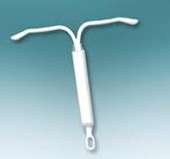
(HealthDay) -- Women who undergo postpartum or interval insertion of Levonorgestrel-releasing Intrauterine System (LNG-IUS) or Copper T 380A (CU-T) intrauterine devices experience weight loss in the two years following insertion, according to a study presented at the annual clinical meeting of the American College of Obstetricians and Gynecologists, held from May 5 to 9 in San Diego.
Erika M. Kwock, M.D., M.P.H., from Kaiser Permanente Northern California in Santa Clara, and colleagues compared weight changes over two years following insertion of LNG-IUS and CU-T in women aged 15 to 44 years. One hundred eleven CU-T and 112 LNG-IUS users were included in the study. Demographic data and clinical predictors of weight gain were collected.
The researchers found that there were no significant differences in demographics or clinical indicators of weight gain between the groups. In both postpartum and interval insertion CU-T users, the percent mean weight change was −1.00 in year one and −0.84 in year two. For LNG-IUS users, the changes were −1.07 and −0.86 in years one and two, respectively.
"Weight loss rather than weight gain was an unexpected finding in postpartum and interval insertion CU-T and LNG-IUS users," the authors write. "These results may help women make informed decisions about their contraception."
More information: Abstract No. 6
More Information
Copyright © 2012 HealthDay. All rights reserved.
-
Weight gain linked to hot flashes after breast cancer
Mar 21, 2012 |
not rated yet |
0
-
Large weight gain raises risk for recurrence among breast cancer survivors
Apr 05, 2011 |
not rated yet |
0
-
Young women often fail to spot their weight gain
Jan 10, 2012 |
not rated yet |
0
-
Research shows that the pill does not deserve its reputation for causing weight gain
Oct 30, 2008 |
not rated yet |
0
-
Pregnancy-related weight gain higher among low-Income minority women, study finds
Nov 12, 2010 |
not rated yet |
0
-
Motion perception revisited: High Phi effect challenges established motion perception assumptions
Apr 23, 2013 |
3 / 5 (2) |
2
-
Anything you can do I can do better: Neuromolecular foundations of the superiority illusion (Update)
Apr 02, 2013 |
4.5 / 5 (11) |
5
-
The visual system as economist: Neural resource allocation in visual adaptation
Mar 30, 2013 |
5 / 5 (2) |
9
-
Separate lives: Neuronal and organismal lifespans decoupled
Mar 27, 2013 |
4.9 / 5 (8) |
0
-
Sizing things up: The evolutionary neurobiology of scale invariance
Feb 28, 2013 |
4.8 / 5 (10) |
14
-
Lagrangian of object with air resistance
1 hour ago
-
Does electromagnetic waves are generated by dc current?
1 hour ago
-
Please check what's in the Ulaby book regarding reflection.
5 hours ago
-
Question in reflection and transmission at oblique incidence.
9 hours ago
-
Is this plasma (picture in thread)
10 hours ago
-
Basic physics understanding. Could someone explain?
12 hours ago
- More from Physics Forums - Classical Physics
More news stories
Bulletin provides guidelines for second-trimester abortion
(HealthDay)—New evidence-based guidelines provide guidance on medical and surgical methods for second-trimester abortion and management of associated complications, according to a practice bulletin published ...
Obstetrics & gynaecology
14 hours ago |
not rated yet |
1
ACOG: Hormone therapy not recommended to prevent CHD
(HealthDay)—Menopausal hormone therapy should not be used for prevention of coronary heart disease, according to a Committee Opinion from the American College of Obstetricians and Gynecologists (ACOG) published ...
Obstetrics & gynaecology
16 hours ago |
not rated yet |
0
Iodine deficiency during pregnancy may adversely affect children's mental development
A study of around 1,000 UK mothers and their children, published in The Lancet, has revealed that iodine deficiency in pregnancy may have an adverse effect on children's mental development. The research raises concerns that t ...
Obstetrics & gynaecology
May 21, 2013 |
not rated yet |
0
72 percent of pregnant women experience constipation and other bowel problems
Nearly three out of four pregnant women experience constipation, diarrhea or other bowel disorders during their pregnancies, a Loyola University Medical Center study has found.
Obstetrics & gynaecology
May 20, 2013 |
not rated yet |
0
Women's reproductive ability may be related to immune system status
New research indicates that women's reproductive function may be tied to their immune status. Previous studies have found this association in human males, but not females.
Obstetrics & gynaecology
May 17, 2013 |
not rated yet |
0
|
Engineered cytomegalovirus protects monkeys from HIV equivalent
(Medical Xpress)—A new study by researchers in the US has shown that an ancient virus can be modified to help in the fight against the simian immunodeficiency virus SIV, which is the equivalent in monkeys ...
Researchers identify first drug targets in childhood genetic tumor disorder
Two mutations central to the development of infantile myofibromatosis (IM)—a disorder characterized by multiple tumors involving the skin, bone, and soft tissue—may provide new therapeutic targets, according to researchers ...
Hormone levels may provide key to understanding psychological disorders in women
Women at a particular stage in their monthly menstrual cycle may be more vulnerable to some of the psychological side-effects associated with stressful experiences, according to a study from UCL.
Going live: Immune cell activation in multiple sclerosis
Biological processes are generally based on events at the molecular and cellular level. To understand what happens in the course of infections, diseases or normal bodily functions, scientists would need to ...
Help at hand for people with schizophrenia
How can healthy people who hear voices help schizophrenics? Finding the answer for this is at the centre of research conducted at the University of Bergen.
Alzheimer's disease, the soft target of the euthanasia debate
(Medical Xpress)—The way Alzheimer's disease is portrayed by advocacy groups and the media is having undue influence on the euthanasia debate, according to a Deakin University nursing ethics professor.