Antidepressants -- not depression -- increase risk of preterm birth, study shows
May 28, 2012 By Bill Hathaway in Obstetrics & gynaecology
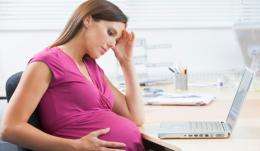
(Medical Xpress) -- Women who are depressed during pregnancy are not at higher risk of giving birth prematurely than non-depressed women but those who take antidepressants during pregnancy seem to be, a new study by Yale researchers shows.
The results, reported May 25 online in the journal Epidemiology, are good news for women who worry that their depression will harm their baby. Researchers also stress that women who take antidepressants during pregnancy should not be overly alarmed.
Women did not ask to be depressed and yet they worry that their depression may affect their baby, said Kimberly Yonkers, professor of psychiatry and of obstetrics, gynecology, and reproductive sciences. This study tells them they should not worry that they are somehow compromising their pregnancy because they are depressed. And when considering whether to take medication for depression, women should understand that the risk of preterm birth is only one of many factors they should weigh.
The study found that taking serotonin reuptake inhibitors (SRIs) during pregnancy significantly increased risk of what is called a late preterm birth. Late preterm birth is defined as at least 34 weeks after gestation but before 37 weeks. Antidepressant use is not associated with early preterm birth, which is much more dangerous to the baby.
Yonkers said that several previous studies suggested depression itself might lead to premature birth. The Yale team studied almost 3,000 pregnant women, including those who were diagnosed as depressed during their pregnancy. After controlling for numerous variables such as health history, age, drug use, and socio-economic status, they found no association between depression and premature birth.
They did find a significant risk of preterm birth among women who were taking anti-depressants. So should depressed women not take antidepressants?
A woman should always consult with her doctor, but if she is symptomatic and suffering the use of antidepressants may be indicated, Yonkers said.
Kathleen Belanger of Yale was senior author of the paper. Megan V. Smith, Nathan Gotman and Haiqun Lin are other Yale-affiliated authors.
Journal reference:
Epidemiology
Provided by
Yale University
-
Stopping meds during pregnancy does not increase risk of depression
Sep 09, 2011 |
not rated yet |
0
-
Preterm births higher among overweight and obese mothers
Jul 21, 2010 |
not rated yet |
0
-
Pre-pregnancy depressed mood may heighten risk for premature birth
Jun 10, 2009 |
not rated yet |
0
-
Study finds residence in US a risk factor for preterm birth
Feb 09, 2012 |
not rated yet |
0
-
Depression during pregnancy can double risk of preterm delivery
Oct 23, 2008 |
not rated yet |
0
-
Motion perception revisited: High Phi effect challenges established motion perception assumptions
Apr 23, 2013 |
3 / 5 (2) |
2
-
Anything you can do I can do better: Neuromolecular foundations of the superiority illusion (Update)
Apr 02, 2013 |
4.5 / 5 (11) |
5
-
The visual system as economist: Neural resource allocation in visual adaptation
Mar 30, 2013 |
5 / 5 (2) |
9
-
Separate lives: Neuronal and organismal lifespans decoupled
Mar 27, 2013 |
4.9 / 5 (8) |
0
-
Sizing things up: The evolutionary neurobiology of scale invariance
Feb 28, 2013 |
4.8 / 5 (10) |
14
-
Indeterminism in Classical Physics
3 hours ago
-
Current in two wires
4 hours ago
-
understanding the dipole model for Rayleigh scattering
6 hours ago
-
question on coriolis effect with drag force
12 hours ago
-
Question of reflection and transmission of TEM wave in normal incidenc
17 hours ago
-
the rudyak-krasnolutski effective potencial
18 hours ago
- More from Physics Forums - Classical Physics
More news stories
Iodine deficiency during pregnancy may adversely affect children's mental development
A study of around 1,000 UK mothers and their children, published in The Lancet, has revealed that iodine deficiency in pregnancy may have an adverse effect on children's mental development. The research raises concerns that t ...
Obstetrics & gynaecology
May 21, 2013 |
not rated yet |
0
72 percent of pregnant women experience constipation and other bowel problems
Nearly three out of four pregnant women experience constipation, diarrhea or other bowel disorders during their pregnancies, a Loyola University Medical Center study has found.
Obstetrics & gynaecology
May 20, 2013 |
not rated yet |
0
Women's reproductive ability may be related to immune system status
New research indicates that women's reproductive function may be tied to their immune status. Previous studies have found this association in human males, but not females.
Obstetrics & gynaecology
May 17, 2013 |
not rated yet |
0
|
Breakthrough for IVF?
Elsevier today announced the publication of a recent study in Reproductive BioMedicine Online on 5-day old human blastocysts showing that those with an abnormal chromosomal composition can be identified by the rate at whic ...
Obstetrics & gynaecology
May 16, 2013 |
not rated yet |
0
Non-communicable diseases account for half of adult female deaths in rural Bangladesh
While global attention has for decades been focused on reducing maternal mortality, population-based data on other causes of death among women of reproductive age has been virtually non-existent. A study conducted by researchers ...
Obstetrics & gynaecology
May 14, 2013 |
not rated yet |
0
Scientists put bowel cancer under the microscope
Researchers from London's Kingston University have begun a two-year study which could help prolong the lives of people with colorectal tumours.
New neuron formation could increase capacity for new learning, at the expense of old memories
New research presented today shows that formation of new neurons in the hippocampus - a brain region known for its importance in learning and remembering - could cause forgetting of old memories by causing a reorganization ...
Are there atheists in foxholes? Study says they're the minority
Ernie Pyle – an iconic war correspondent in World War II – reportedly said "There are no atheists in foxholes." A new joint study between two brothers at Cornell and Virginia Wesleyan found that only ...
Saudi to send animal samples to US in coronavirus probe
Saudi Arabia said Friday it would send samples taken from animals possibly infected with a deadly SARS-like virus to the United States for testing in a bid to find the source of disease.
Engineered cytomegalovirus protects monkeys from HIV equivalent
(Medical Xpress)—A new study by researchers in the US has shown that an ancient virus can be modified to help in the fight against the simian immunodeficiency virus SIV, which is the equivalent in monkeys ...
Help at hand for people with schizophrenia
How can healthy people who hear voices help schizophrenics? Finding the answer for this is at the centre of research conducted at the University of Bergen.